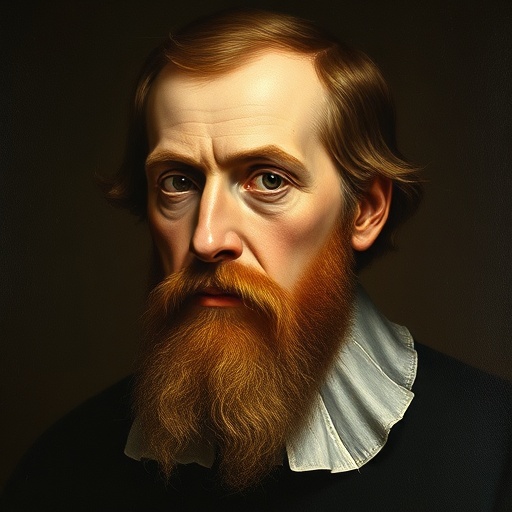
John Calvin — "God will not suffer that one of his children should be lost."
God will not suffer that one of his children should be lost.
God will not suffer that one of his children should be lost.
Click any product to generate a realistic preview. Up to 3 at a time.
* Initial load can take up to 90 seconds — revising the preview in another color is nearly instant.
"Without knowledge of self there is no knowledge of God."
"There is no worse screen to block out the Spirit than an overactive mind."
"The mind of man is an abyss of error."
"It is not in vain that he banishes all those human affections which soften our hearts; that he commands paternal love and all the benevolent feelings between brothers, relations, and friends to cease;…"
"The wicked are justly punished, because they have offended God by their sins."
French theologian whose Institutes of the Christian Religion (1536) systematized Protestant Reformed doctrine, including predestination. Closely associated with Martin Luther (Reformation founder, Calvin's predecessor). For an intellectual contrast, see Jacobus Arminius, Dutch Reformed theologian (1560-1609) — Arminius's rejection of strict double-predestination founded Arminianism — the theological tradition modern Methodism, most evangelicalism, and Pentecostalism descend from. The Calvinist-Arminian debate has divided Protestantism for 400 years.
Found in 1 providers: grok
1 source checked
God actively preserves every person he has chosen — none can ultimately perish or fall from his grace. Salvation is not contingent on human effort or moral consistency but rests entirely on God's sovereign commitment to keep his own. Believers can find unconditional assurance: their standing before God depends not on their own strength but on divine faithfulness that cannot fail or be overcome by human weakness or sin.
Calvin (1509–1564) built his entire theology around God's absolute sovereignty and predestination — the conviction that God elects specific individuals for salvation entirely by divine will, not human merit. This quote embodies his doctrine of perseverance of the saints, a cornerstone of Calvinist theology. As Geneva's reformer, he preached this assurance to a community under constant persecution, grounding their confidence in God's character rather than human faithfulness.
The sixteenth-century Protestant Reformation shattered Europe's religious unity, leaving believers caught between Catholic inquisitions and Protestant persecution alike. Salvation was fiercely contested: could it be lost through sin? Rome taught penance and works; Calvin insisted on grace alone. This promise of God's indefatigable preservation answered the existential terror of ordinary believers who feared damnation despite sincere faith, in an age of constant theological upheaval and spiritual anxiety.
AI-generated insights based on extensive research and information for context. Factual errors? Email [email protected].
Your cart is empty