What it means
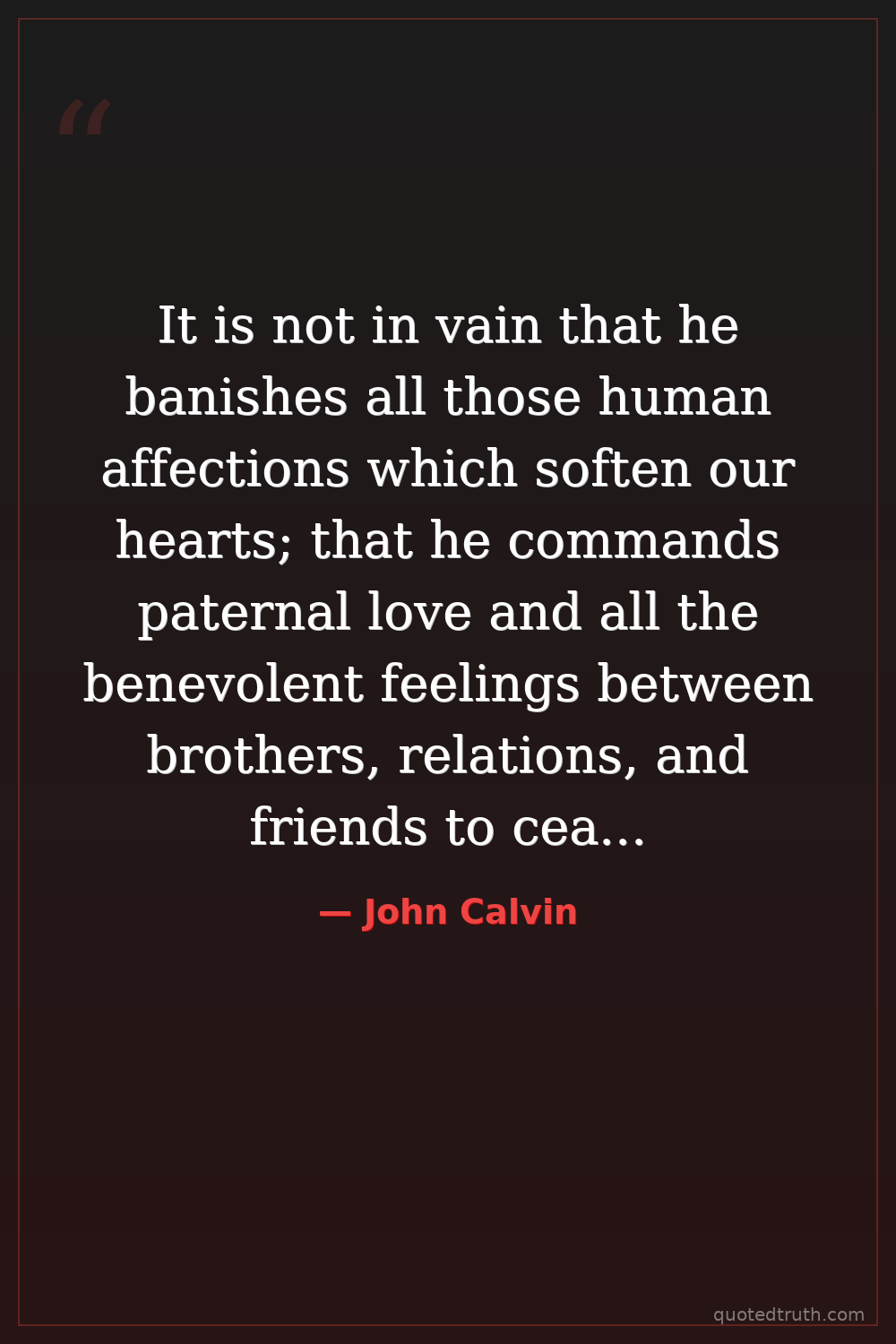
Calvin argues it is entirely purposeful—not cruel—that God demands people extinguish their deepest natural attachments: love for children, bonds with siblings, friends, and relatives. Every human softness that might dilute commitment must yield to sacred purpose. Holy zeal cannot coexist with competing loyalties. Total devotion requires stripping away the very instincts that make us human, leaving only uncompromised religious duty as the governing force of a believer's life.
Relevance to John Calvin
Calvin's theology centered on God's absolute sovereignty, which demanded complete human submission over natural bonds. As Geneva's theocratic ruler, he enforced this literally—sanctioning the execution of Michael Servetus for heresy and exiling dissenters regardless of personal connection. His own austere life, subordinating even grief over his infant son's death to continued ministry, embodied this doctrine. Reformed theology's insistence on total surrender of sentiment over self defined his entire theological system and governance style.
The era
The Protestant Reformation shattered Europe's spiritual and social order simultaneously. Converts faced genuine demands to abandon Catholic family members, reject inherited loyalties, and risk martyrdom. The Schmalkaldic Wars, French Wars of Religion, and widespread persecution made choosing faith over family a literal, life-or-death decision. Calvin wrote for communities facing exile, torture, and execution. His call to transcend human affection was not abstract—Huguenots in France regularly had to choose between family ties and Protestant conviction.
AI-generated insights based on extensive research and information for context. Factual errors? Email [email protected].