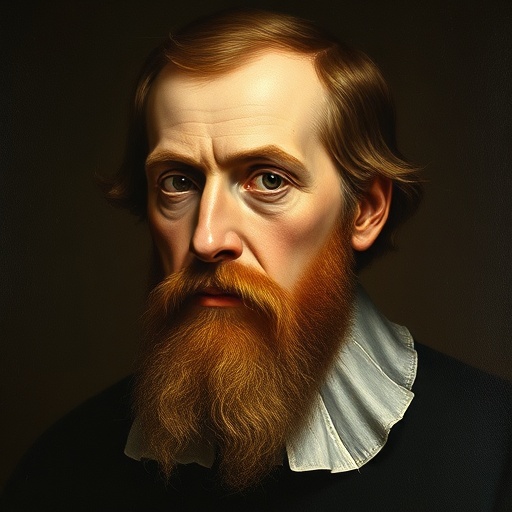
John Calvin — "The mind of man is an abyss of error."
The mind of man is an abyss of error.
The mind of man is an abyss of error.
Click any product to generate a realistic preview. Up to 3 at a time.
* Initial load can take up to 90 seconds — revising the preview in another color is nearly instant.
"God's glory is manifested in the salvation of the elect and the damnation of the reprobate."
"The perdition of the wicked is a manifestation of God's justice."
"The wicked are justly punished, because they have offended God by their sins."
"The whole life of a Christian should be a perpetual exercise of repentance."
"We are never so much ourselves as when we are in Christ."
French theologian whose Institutes of the Christian Religion (1536) systematized Protestant Reformed doctrine, including predestination. Closely associated with Martin Luther (Reformation founder, Calvin's predecessor). For an intellectual contrast, see Jacobus Arminius, Dutch Reformed theologian (1560-1609) — Arminius's rejection of strict double-predestination founded Arminianism — the theological tradition modern Methodism, most evangelicalism, and Pentecostalism descend from. The Calvinist-Arminian debate has divided Protestantism for 400 years.
Found in 1 providers: grok
1 source checked
Human reasoning is not just occasionally mistaken but fundamentally corrupted at its core. The word 'abyss' signals bottomless depth — our minds don't drift into error occasionally; they are constitutively unreliable. In practical terms: you cannot trust your own instincts, logic, or intuition to lead you toward moral truth. Only an external, authoritative source — divine revelation — can correct what human thinking, left to itself, will always get wrong.
Calvin's doctrine of total depravity held that sin corrupts every human faculty — intellect included. His magnum opus, Institutes of the Christian Religion, systematically argued that unaided human reason cannot grasp divine truth or moral law. As a Geneva reformer who exerted strict theological discipline over an entire city, Calvin lived out his distrust of human judgment by subordinating civic and personal life to Scripture's authority over fallible minds.
The 16th-century Renaissance celebrated human reason and potential — a direct intellectual tension Calvin wrote against. The Protestant Reformation challenged both Catholic institutional authority and humanist confidence in unaided reason. As religious wars fractured Europe and the printing press spread competing theologies rapidly, Calvin's Geneva became a theocratic experiment premised on the idea that human governments and minds required Scripture's correction. His pessimism about reason was a deliberate counter to Renaissance optimism.
AI-generated insights based on extensive research and information for context. Factual errors? Email [email protected].
Your cart is empty