Martin Luther — "God writes the Gospel not in the Bible alone, but also on trees, and in the flow…"
God writes the Gospel not in the Bible alone, but also on trees, and in the flowers and clouds and stars.
God writes the Gospel not in the Bible alone, but also on trees, and in the flowers and clouds and stars.
Click any product to generate a realistic preview. Up to 3 at a time.
* Initial load can take up to 90 seconds — revising the preview in another color is nearly instant.
"It was I, Martin Luther, who slew all the peasants in the insurrection, for I commanded them to be slaughtered. All their blood is upon my shoulders. But I cast it on our Lord God who commanded me to …"
"I am rough, boorish, stormy, and altogether warlike. I am born to fight with devils and factions, and to lay waste the kingdom of Satan."
"You must say my sins are not mine; they are not in me at all; they are the sins of another; they are Christ's and none of my business."
"I have held many things in my hands, and I have lost them all; but whatever I have placed in God’s hands, that I still possess."
"Why should the Devil have all the good tunes?"
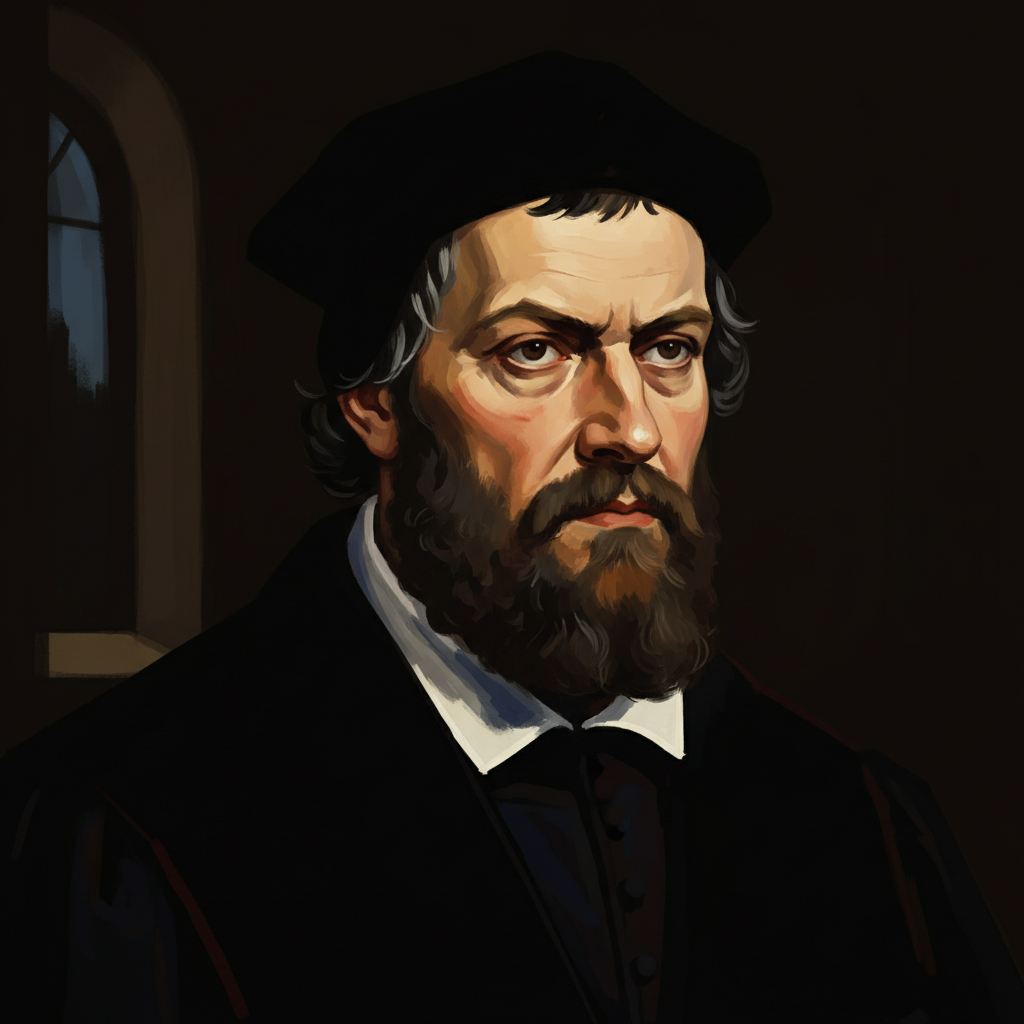
German theologian whose 95 Theses (1517) launched the Protestant Reformation and broke the Catholic Church's monopoly on Western Christianity. Closely associated with Philipp Melanchthon (Lutheran systematizer) and John Calvin (later Reformer who built on Luther's break). For an intellectual contrast, see Pope Leo X, Renaissance pope (1513-1521) — Leo X's indulgence sales triggered Luther's break and Leo excommunicated him in 1521 — Luther's entire Reformation is structured as a direct answer to the indulgence-funded Vatican Leo represented.
Found in 3 providers: gemini,grok,deepseek
3 sources checked
Divine truth and meaning are not confined to sacred scripture. The natural world itself—trees, flowers, clouds, stars—communicates spiritual reality to anyone who pays attention. Creation functions as a second text, open and readable to all. You do not need to be literate or own a book to encounter the sacred; stepping outside and observing the world carefully is itself a form of reading what God has written.
Luther insisted scripture was the supreme authority, yet he also taught that God reveals himself through creation. A former Augustinian monk who loved gardens, music, and simple rural life in Wittenberg, he rejected the idea that holiness belonged only to clergy or cloisters. This saying fits his earthy, accessible theology: ordinary people, ordinary fields, ordinary skies all carry divine meaning without priestly mediation.
In the early 1500s, the Catholic Church controlled biblical interpretation and most laypeople could not read Latin scripture. Luther's 1517 Ninety-Five Theses and his German Bible translation aimed to put truth within reach of common Germans. Meanwhile Renaissance humanism and early natural philosophy were renewing interest in studying nature directly. Luther's claim that God writes on trees and stars democratized revelation at a moment when both church authority and the cosmos itself were being reexamined.
AI-generated insights based on extensive research and information for context. Factual errors? Email [email protected].
Your cart is empty