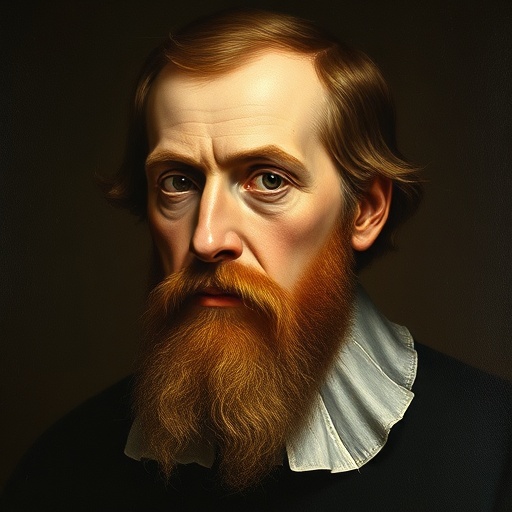
John Calvin — "God's decree is the cause of all things, so that nothing happens but by his will…"
God's decree is the cause of all things, so that nothing happens but by his will and appointment.
God's decree is the cause of all things, so that nothing happens but by his will and appointment.
Click any product to generate a realistic preview. Up to 3 at a time.
* Initial load can take up to 90 seconds — revising the preview in another color is nearly instant.
"The elect are chosen before the foundation of the world."
"God's providence extends to all things, even to the least of them."
"We must live as if we were always in the presence of God."
"A dog barks when his master is attacked. I would be a coward if I saw that God's truth is attacked and yet would remain silent."
"We are not our own; we are God's."
French theologian whose Institutes of the Christian Religion (1536) systematized Protestant Reformed doctrine, including predestination. Closely associated with Martin Luther (Reformation founder, Calvin's predecessor). For an intellectual contrast, see Jacobus Arminius, Dutch Reformed theologian (1560-1609) — Arminius's rejection of strict double-predestination founded Arminianism — the theological tradition modern Methodism, most evangelicalism, and Pentecostalism descend from. The Calvinist-Arminian debate has divided Protestantism for 400 years.
Found in 1 providers: grok
1 source checked
Every event, outcome, and circumstance originates from God's deliberate will — nothing is accidental or outside divine control. This is absolute divine determinism: God doesn't merely permit things to happen, he actively causes them. It strips randomness and human agency of ultimate causal power, placing complete sovereignty over all of reality with God. Fate, fortune, and chance are replaced by purposeful divine appointment governing every moment of existence.
Calvin built his entire theological system around divine sovereignty and double predestination — God eternally elects some for salvation, others for damnation, with no human merit involved. His landmark Institutes of the Christian Religion (1536) systematized this decree-centered framework. As Geneva's dominant religious authority, he structured church governance, civil law, and discipline around it, arguing all human institutions must align with God's sovereign plan. This quote is the logical spine of everything Calvin believed and taught.
The 16th-century Reformation was shattering Catholic Europe's unified authority. Luther's challenge had ignited fierce debates about free will — Erasmus argued for human freedom, Luther denied it — and Calvin radicalized Luther's position further. Religious wars, plague, and political chaos made certainty precious. Asserting that God wills all things gave Reformed communities psychological and theological stability: suffering had purpose, history had direction, and no earthly power could override divine appointment.
AI-generated insights based on extensive research and information for context. Factual errors? Email [email protected].
Your cart is empty