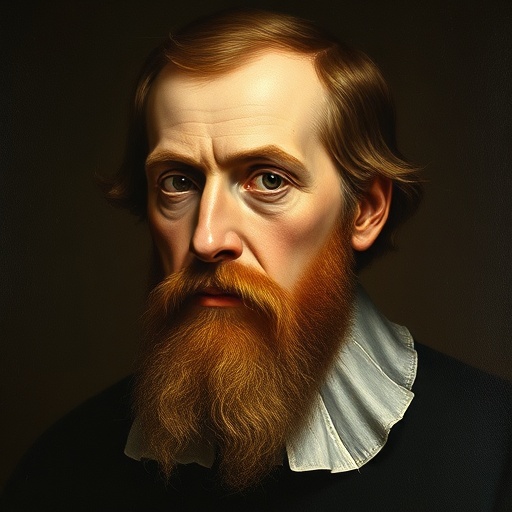
John Calvin — "God's providence extends to all things, even to the least of them."
God's providence extends to all things, even to the least of them.
God's providence extends to all things, even to the least of them.
Click any product to generate a realistic preview. Up to 3 at a time.
* Initial load can take up to 90 seconds — revising the preview in another color is nearly instant.
"The reprobate are left to their own wickedness, and are justly punished for it."
"God never abandons his own."
"The elect are vessels of mercy, and the reprobate are vessels of wrath."
"It is by no means necessary that the righteous should be distinguished from the wicked by external signs."
"Faith is a firm and certain knowledge of God's benevolence toward us."
French theologian whose Institutes of the Christian Religion (1536) systematized Protestant Reformed doctrine, including predestination. Closely associated with Martin Luther (Reformation founder, Calvin's predecessor). For an intellectual contrast, see Jacobus Arminius, Dutch Reformed theologian (1560-1609) — Arminius's rejection of strict double-predestination founded Arminianism — the theological tradition modern Methodism, most evangelicalism, and Pentecostalism descend from. The Calvinist-Arminian debate has divided Protestantism for 400 years.
Found in 1 providers: grok
1 source checked
God's care and control extend over every aspect of existence—nothing is too small or insignificant to escape divine attention. Major historical events and the smallest daily occurrences alike fall under God's sovereign oversight. The idea rejects a distant or indifferent deity, insisting instead on an active, personal God who governs all reality, from the sweep of nations down to the minutest detail of an individual's life.
Calvin was the architect of Reformed theology, and divine providence sat at the absolute center of his system. His Institutes of the Christian Religion devoted extensive treatment to providence, arguing God's sovereignty was total and unconditional. Calvin endured exile from Geneva, persecution, and chronic illness—yet interpreted these hardships as divinely ordained. His doctrine of predestination follows logically: if God governs the least things, He certainly ordains who receives salvation.
Calvin wrote during the Protestant Reformation, a period of violent religious upheaval in 16th-century Europe. The medieval Church's authority was collapsing under challenges from Luther, Zwingli, and Calvin himself. Wars of religion, plague, and political instability made God's governance of chaos a pressing theological question. Calvin's Geneva became a laboratory for Reformed Protestant governance, where the doctrine of providence justified disciplined city life under God's total sovereign rule.
AI-generated insights based on extensive research and information for context. Factual errors? Email [email protected].
Your cart is empty