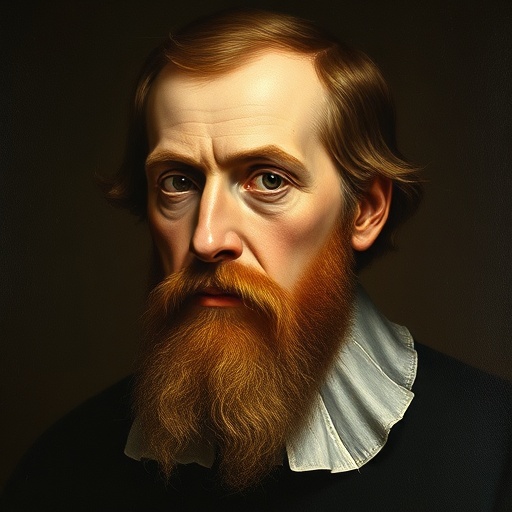
John Calvin — "Faith is a firm and certain knowledge of God's benevolence toward us."
Faith is a firm and certain knowledge of God's benevolence toward us.
Faith is a firm and certain knowledge of God's benevolence toward us.
Click any product to generate a realistic preview. Up to 3 at a time.
* Initial load can take up to 90 seconds — revising the preview in another color is nearly instant.
"All who are truly godly desire to live a holy life."
"God has his reasons for electing some and reprobating others, though these reasons are hidden from us."
"For I stay not to consider the extravagance of those who say that grace is offered equally and promiscuously to all."
"The reprobate are not able to resist the will of God, but are forced to obey it."
"God's sovereignty is absolute."
French theologian whose Institutes of the Christian Religion (1536) systematized Protestant Reformed doctrine, including predestination. Closely associated with Martin Luther (Reformation founder, Calvin's predecessor). For an intellectual contrast, see Jacobus Arminius, Dutch Reformed theologian (1560-1609) — Arminius's rejection of strict double-predestination founded Arminianism — the theological tradition modern Methodism, most evangelicalism, and Pentecostalism descend from. The Calvinist-Arminian debate has divided Protestantism for 400 years.
Found in 1 providers: grok
1 source checked
Faith isn't vague hope or emotional feeling — it's a confident, settled knowledge of God's goodwill directed personally at you. Calvin rejects spiritual uncertainty and insists faith carries intellectual certainty rooted in scripture. "Benevolence" frames God as actively favorable, not distant or punishing. The believer's inner life isn't anxious striving for divine approval but a firm awareness that God's grace is real and specifically directed at them.
Calvin wrote this in his Institutes of the Christian Religion, the systematic masterwork of Reformed theology. As a trained lawyer, he prized precision — defining faith with legal-grade certainty mattered deeply. His entire Geneva project rested on believers accessing God directly through scripture, without priestly mediation. His doctrine of predestination reinforced this further: the elect were meant to know, not merely hope, that God's grace was already and certainly theirs.
The 16th-century Reformation shattered Catholic Europe's monopoly on salvation. Rome taught that God's favor required confession, indulgences, and priestly absolution, leaving ordinary believers in perpetual spiritual anxiety about whether they'd done enough. Calvin's Geneva stood against this: scripture alone, not sacrament, gave certain knowledge of divine grace. The printing press amplified this message across Europe, fueling religious wars and new national churches that replaced priestly authority with individual scriptural conviction.
AI-generated insights based on extensive research and information for context. Factual errors? Email [email protected].
Your cart is empty