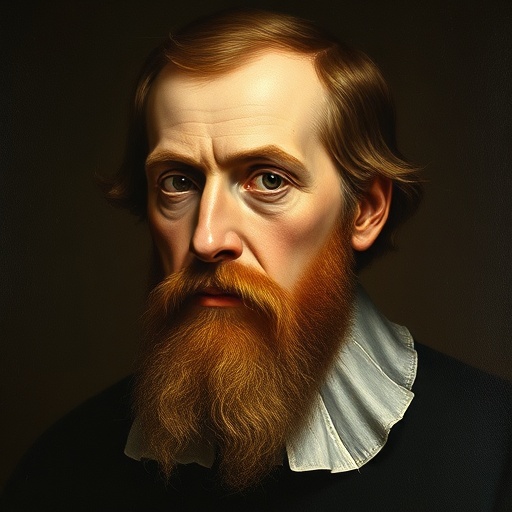
John Calvin — "The reprobate are left to their own wickedness, and are justly punished for it."
The reprobate are left to their own wickedness, and are justly punished for it.
The reprobate are left to their own wickedness, and are justly punished for it.
Click any product to generate a realistic preview. Up to 3 at a time.
* Initial load can take up to 90 seconds — revising the preview in another color is nearly instant.
"For I stay not to consider the extravagance of those who say that grace is offered equally and promiscuously to all."
"There is no worse screen to block out the Spirit than an overactive mind."
"God's ultimate discrimination rests solely on the freedom and sovereign will of God."
"The fact that infants who die before baptism are damned is a dreadful decree, but no one can deny that God foreknew what end man was to have before he created him."
"The greater part of the world, because it despises the Word of God, despises also the whole of true religion."
French theologian whose Institutes of the Christian Religion (1536) systematized Protestant Reformed doctrine, including predestination. Closely associated with Martin Luther (Reformation founder, Calvin's predecessor). For an intellectual contrast, see Jacobus Arminius, Dutch Reformed theologian (1560-1609) — Arminius's rejection of strict double-predestination founded Arminianism — the theological tradition modern Methodism, most evangelicalism, and Pentecostalism descend from. The Calvinist-Arminian debate has divided Protestantism for 400 years.
Found in 1 providers: grok
1 source checked
Those whom God has not chosen for salvation—the reprobate—are abandoned to act according to their own corrupt nature, without divine grace redirecting them. Their wickedness is genuinely theirs, not externally imposed. Because they truly choose and commit evil, God's condemnation of them is entirely just. Calvin resolves the tension between divine sovereignty and human accountability by insisting the reprobate are real moral agents who deserve real punishment.
Calvin's doctrine of double predestination—central to his Institutes of the Christian Religion (1536–1559)—held that God elects some for salvation and passes over others. This quote defends the justice of that arrangement. Calvin spent his career in Geneva enforcing rigorous moral discipline, even having Michael Servetus executed for heresy in 1553. His theology required that divine sovereignty not undermine human moral responsibility, making this precise formulation essential to his entire theological system.
The Protestant Reformation of the 16th century ignited fierce debates about salvation, free will, and predestination. Augustine's centuries-old doctrine was being revived and radicalized. Catholic teaching emphasized human merit; Luther stressed grace alone; Calvin pushed further, asserting God's absolute sovereignty over salvation and damnation alike. The Council of Trent (1545–1563) directly opposed these views. Religious wars erupted across Europe, making theological questions about divine justice and human guilt urgently practical.
AI-generated insights based on extensive research and information for context. Factual errors? Email [email protected].
Your cart is empty