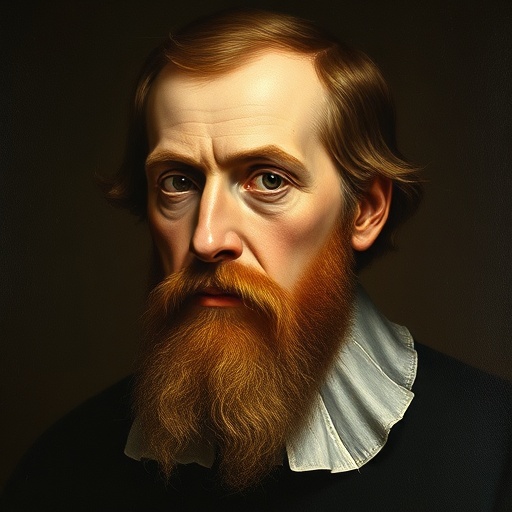
John Calvin — "God's singular decree is the cause of Adam's fall, and through this fall, the da…"
God's singular decree is the cause of Adam's fall, and through this fall, the damnation of his posterity.
God's singular decree is the cause of Adam's fall, and through this fall, the damnation of his posterity.
Click any product to generate a realistic preview. Up to 3 at a time.
* Initial load can take up to 90 seconds — revising the preview in another color is nearly instant.
"God's election is not of him that willeth, nor of him that runneth, but of God that sheweth mercy."
"Therefore, the bondage of the will to sin remains and yet such slavery is a voluntary and willful captivity."
"The elect are saved by God's free grace, without any merit of their own."
"The reason why some are saved and others perish is not to be sought in their own will, but in the secret counsel of God."
"The whole life of a Christian should be a perpetual exercise of repentance."
French theologian whose Institutes of the Christian Religion (1536) systematized Protestant Reformed doctrine, including predestination. Closely associated with Martin Luther (Reformation founder, Calvin's predecessor). For an intellectual contrast, see Jacobus Arminius, Dutch Reformed theologian (1560-1609) — Arminius's rejection of strict double-predestination founded Arminianism — the theological tradition modern Methodism, most evangelicalism, and Pentecostalism descend from. The Calvinist-Arminian debate has divided Protestantism for 400 years.
Found in 1 providers: gemini
1 source checked
God's single predetermined decision is the ultimate cause of Adam's original sin, and through that fall, the eternal damnation of all Adam's descendants. Nothing—not even humanity's first disobedience—happened outside God's sovereign will. God didn't merely foresee the fall; he ordained it. Damnation is therefore not a human accident or a consequence God reluctantly permitted, but a divinely decreed outcome established before creation.
Calvin built his entire theological system around God's absolute sovereignty. His landmark Institutes of the Christian Religion develops predestination as its logical core. As Geneva's spiritual leader, he faced fierce opposition for this doctrine—notably from Jerome Bolsec—but defended it as the only view fully honoring divine omnipotence. His doctrine of double predestination, that God elects some to salvation and decrees others to damnation, defines Calvinism to this day.
Calvin wrote during the Protestant Reformation, when salvation theology was civilization-defining. The Council of Trent (1545–1563) was reaffirming Catholic teaching on free will and human cooperation with grace. Luther had already clashed with Erasmus over human freedom. Calvin's radical predestinarianism sharpened the Reformed position: not merely that grace is irresistible, but that damnation itself is decreed by God. In Geneva's theocratic republic, divine sovereignty was simultaneously theological doctrine and governing political philosophy.
AI-generated insights based on extensive research and information for context. Factual errors? Email [email protected].
Your cart is empty