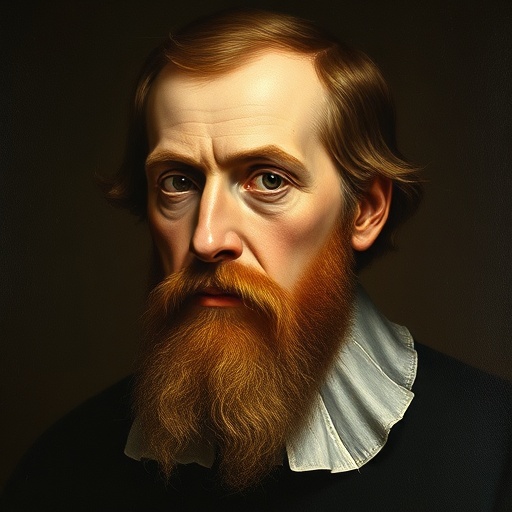
John Calvin — "The reason why some are saved and others perish is not to be sought in their own…"
The reason why some are saved and others perish is not to be sought in their own will, but in the secret counsel of God.
The reason why some are saved and others perish is not to be sought in their own will, but in the secret counsel of God.
Click any product to generate a realistic preview. Up to 3 at a time.
* Initial load can take up to 90 seconds — revising the preview in another color is nearly instant.
"We cannot be sure of our salvation unless we have known our condemnation."
"Our hearts are so prone to idolatry that we cannot but be continually forging new gods for ourselves."
"When God wants to punish a nation, he sends them bad preachers."
"For the mind of man, when it has once been infected with this pest, is so utterly perverse that it is with difficulty restrained from framing for itself, after the example of the devil, some new and u…"
"God, by a just and irreprehensible, but incomprehensible judgment, has predestinated some to eternal life, and others to eternal death."
French theologian whose Institutes of the Christian Religion (1536) systematized Protestant Reformed doctrine, including predestination. Closely associated with Martin Luther (Reformation founder, Calvin's predecessor). For an intellectual contrast, see Jacobus Arminius, Dutch Reformed theologian (1560-1609) — Arminius's rejection of strict double-predestination founded Arminianism — the theological tradition modern Methodism, most evangelicalism, and Pentecostalism descend from. The Calvinist-Arminian debate has divided Protestantism for 400 years.
Found in 1 providers: grok
1 source checked
Predestination — the idea that God, not human choice, determines who receives salvation. It strips any notion that personal virtue, decisions, or deeds can earn eternal life. Salvation belongs entirely to God's sovereign will, hidden from human understanding. This denies that free will plays any role in redemption, placing ultimate authority over human destiny in divine decree rather than individual effort or merit.
Calvin spent decades in Geneva systematizing Protestant theology through his Institutes of the Christian Religion. Trained as a lawyer, he built doctrine with relentless logical rigor. Predestination was his non-negotiable cornerstone — he debated it publicly, exiled opponents over it, and refused to soften it under political pressure. It anchored his entire vision of God's absolute sovereignty and shaped Calvinist church discipline across Europe and the Reformed tradition.
The Catholic Church had spent centuries selling indulgences, implying money and works could buy salvation. Calvin wrote at the Reformation's height, after Luther cracked that system open. The Council of Trent (1545–63) doubled down on human cooperation in salvation as official doctrine. Calvin's predestination was a direct counter-strike, making salvation entirely God's domain — a radical claim that fueled mass conversion, fierce theological debate, and religious wars across Europe.
AI-generated insights based on extensive research and information for context. Factual errors? Email [email protected].
Your cart is empty