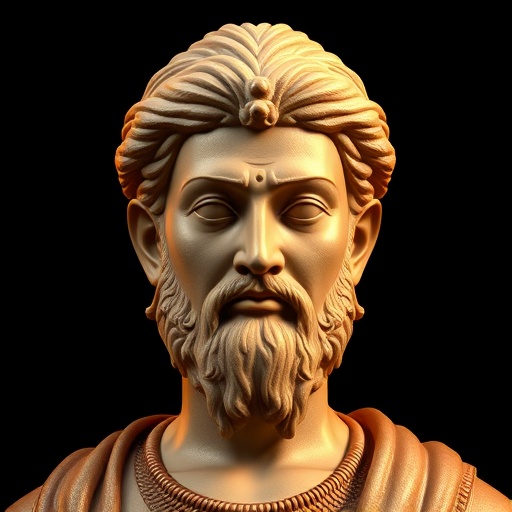
Mahavira — "Happiness and sorrow are the results of one's own actions."
Happiness and sorrow are the results of one's own actions.
Happiness and sorrow are the results of one's own actions.
Click any product to generate a realistic preview. Up to 3 at a time.
* Initial load can take up to 90 seconds — revising the preview in another color is nearly instant.
"The greatest penance is to bear all hardships with equanimity."
"One should not speak ill of others."
"The soul is eternal and never dies."
"The soul is the doer of its own deeds, and the enjoyer of its own fruits."
"The ignorant are caught in the cycle of birth and death."
24th and last Tirthankara of Jainism, whose teachings of strict ahimsa (non-violence), aparigraha (non-attachment), and karma reshaped ancient Indian religion. Closely associated with The Buddha (near-contemporary moral revolutionary, also reacting against Vedic ritualism). For an intellectual contrast, see Vedic Brahmanical ritual sacrifice, the animal-sacrifice-centered Vedic religion of his era — Mahavira's ahimsa demanded total non-violence, including not eating root vegetables that kill the plant — a maximum-distance ethical move from the Vedic priestly tradition that ritually sacrificed cattle and horses. The two cleanest poles of ancient Indian religious ethics.
Found in 1 providers: grok
1 source checked
Your joy and your suffering aren't random or divinely imposed — they flow directly from choices you make. Every action carries consequence, and those consequences return to the person who acted. Blaming fate or others is a form of self-deception; personal accountability is the only honest framework for understanding why life unfolds the way it does.
Mahavira built Jainism's entire ethical architecture around karma — the doctrine that every intentional act, thought, and word binds karmic matter to the soul. He renounced royal life, endured twelve years of ascetic hardship, and refused to harm any living being, all as deliberate karmic discipline. This quote is the core premise justifying that extraordinary self-denial.
In 6th century BCE India, suffering was widely attributed to divine will, caste destiny, or Vedic ritual failure. Brahminical orthodoxy held that priestly intercession could alter fate. Mahavira's insistence that each soul alone authors its condition was a radical democratization — and a direct challenge to ritual authority — at a moment when both Buddhism and Jainism were reshaping Indian religious thought.
AI-generated insights based on extensive research and information for context. Factual errors? Email [email protected].
Your cart is empty