Mahavira — "The soul is eternal and never dies."
The soul is eternal and never dies.
The soul is eternal and never dies.
Click any product to generate a realistic preview. Up to 3 at a time.
* Initial load can take up to 90 seconds — revising the preview in another color is nearly instant.
"What is the use of a lamp when the sun has risen?"
"The greatest penance is to bear all sufferings cheerfully."
"The path of non-violence is the path of enlightenment."
"The path to liberation is difficult, but it is worth pursuing."
"The soul can be liberated from the cycle of birth and death through right faith, right knowledge, and right conduct."
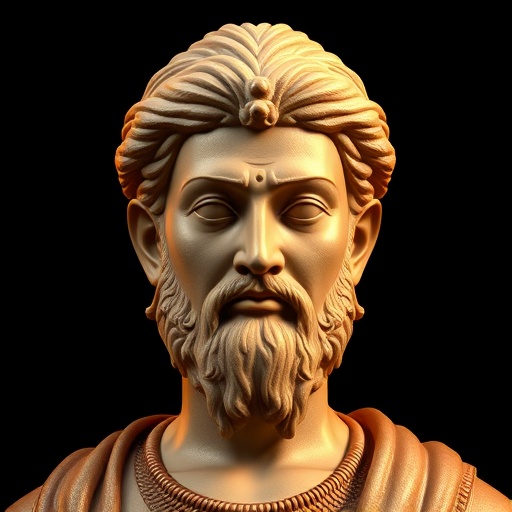
24th and last Tirthankara of Jainism, whose teachings of strict ahimsa (non-violence), aparigraha (non-attachment), and karma reshaped ancient Indian religion. Closely associated with The Buddha (near-contemporary moral revolutionary, also reacting against Vedic ritualism). For an intellectual contrast, see Vedic Brahmanical ritual sacrifice, the animal-sacrifice-centered Vedic religion of his era — Mahavira's ahimsa demanded total non-violence, including not eating root vegetables that kill the plant — a maximum-distance ethical move from the Vedic priestly tradition that ritually sacrificed cattle and horses. The two cleanest poles of ancient Indian religious ethics.
Found in 1 providers: grok
1 source checked
The soul is immortal and persists beyond the physical body's death. Unlike the body which decays, the soul continues its journey through countless rebirths, accumulating or shedding karma. Death is simply a transition — the soul moves to a new existence. This belief implies personal responsibility: every action shapes future lives, and liberation (moksha) — freedom from the cycle of rebirth — is the ultimate goal every soul can achieve.
Mahavira (599–527 BCE) renounced royal wealth at age 30 to seek spiritual liberation through extreme asceticism. Central to his teaching was jiva — the eternal, conscious soul trapped in matter by karma. After 12 years of rigorous fasting and meditation, he attained omniscience. His entire mission centered on freeing the soul from endless rebirths, making this belief not abstract doctrine but the lived purpose behind every sacrifice he made.
Mahavira lived in 6th-century BCE India, the Axial Age, when profound philosophical questioning swept civilizations. In the Gangetic plains, Vedic ritualism dominated but was challenged by the Upanishads redefining the soul as eternal. Simultaneously, Buddhism and other Shramana movements rejected Vedic authority entirely. Asserting the soul's absolute immortality directly distinguished Jainism from Buddhist no-self doctrine and Vedic ritual traditions — a crucial theological stake planted during an era of intense spiritual competition.
AI-generated insights based on extensive research and information for context. Factual errors? Email [email protected].
Your cart is empty