Mahavira — "The ignorant are caught in the cycle of birth and death."
The ignorant are caught in the cycle of birth and death.
The ignorant are caught in the cycle of birth and death.
Click any product to generate a realistic preview. Up to 3 at a time.
* Initial load can take up to 90 seconds — revising the preview in another color is nearly instant.
"Look at the birds, how they live in the present, with no thought for the morrow."
"Conquer your passions and you will conquer the world."
"Killing any living being is killing oneself."
"Know thyself, and thou shalt know the universe and God."
"The body is a temporary abode of the soul."
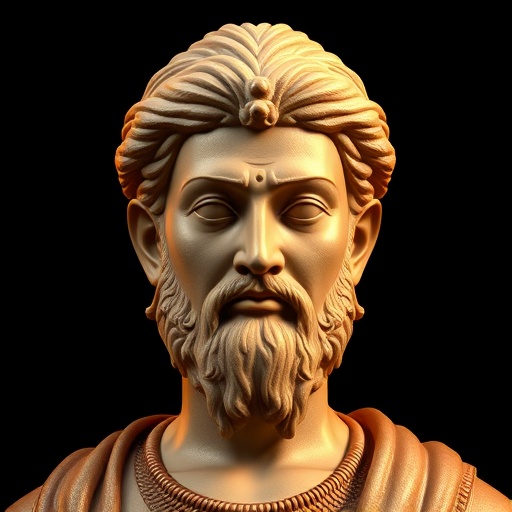
24th and last Tirthankara of Jainism, whose teachings of strict ahimsa (non-violence), aparigraha (non-attachment), and karma reshaped ancient Indian religion. Closely associated with The Buddha (near-contemporary moral revolutionary, also reacting against Vedic ritualism). For an intellectual contrast, see Vedic Brahmanical ritual sacrifice, the animal-sacrifice-centered Vedic religion of his era — Mahavira's ahimsa demanded total non-violence, including not eating root vegetables that kill the plant — a maximum-distance ethical move from the Vedic priestly tradition that ritually sacrificed cattle and horses. The two cleanest poles of ancient Indian religious ethics.
Found in 1 providers: grok
1 source checked
Those without spiritual insight remain trapped in samsara — the endless cycle of rebirth and death driven by accumulated karma. Ignorance means failing to understand the soul's true nature, how karma binds it, or the path to liberation. Without this knowledge, souls keep accumulating karmic matter through desire, passion, and unexamined action, forcing repeated incarnations. Liberation requires overcoming ignorance through right knowledge, right faith, and right conduct.
Mahavira personally broke this cycle. Born a Kshatriya prince around 599 BCE, he renounced wealth and family at 30, enduring 12 years of extreme asceticism before attaining Kevala Jnana — complete omniscience. He spent 30 years afterward teaching that any soul could achieve liberation by conquering ignorance through the Three Jewels: right knowledge, right faith, and right conduct. His entire life embodied the very escape this quote describes.
In 6th-century BCE northeastern India, the Vedic Brahmanical order dominated, tying spiritual merit to ritual sacrifice and priestly intermediaries. Samsara was accepted doctrine, but escape was largely a Brahmin privilege through hereditary rite. Mahavira's Shramana movement directly challenged this hierarchy, insisting individual knowledge and self-discipline — not birth caste or ritual performance — determined liberation. This was a radical democratization of spiritual freedom, threatening the entire caste-based religious establishment.
AI-generated insights based on extensive research and information for context. Factual errors? Email [email protected].
Your cart is empty