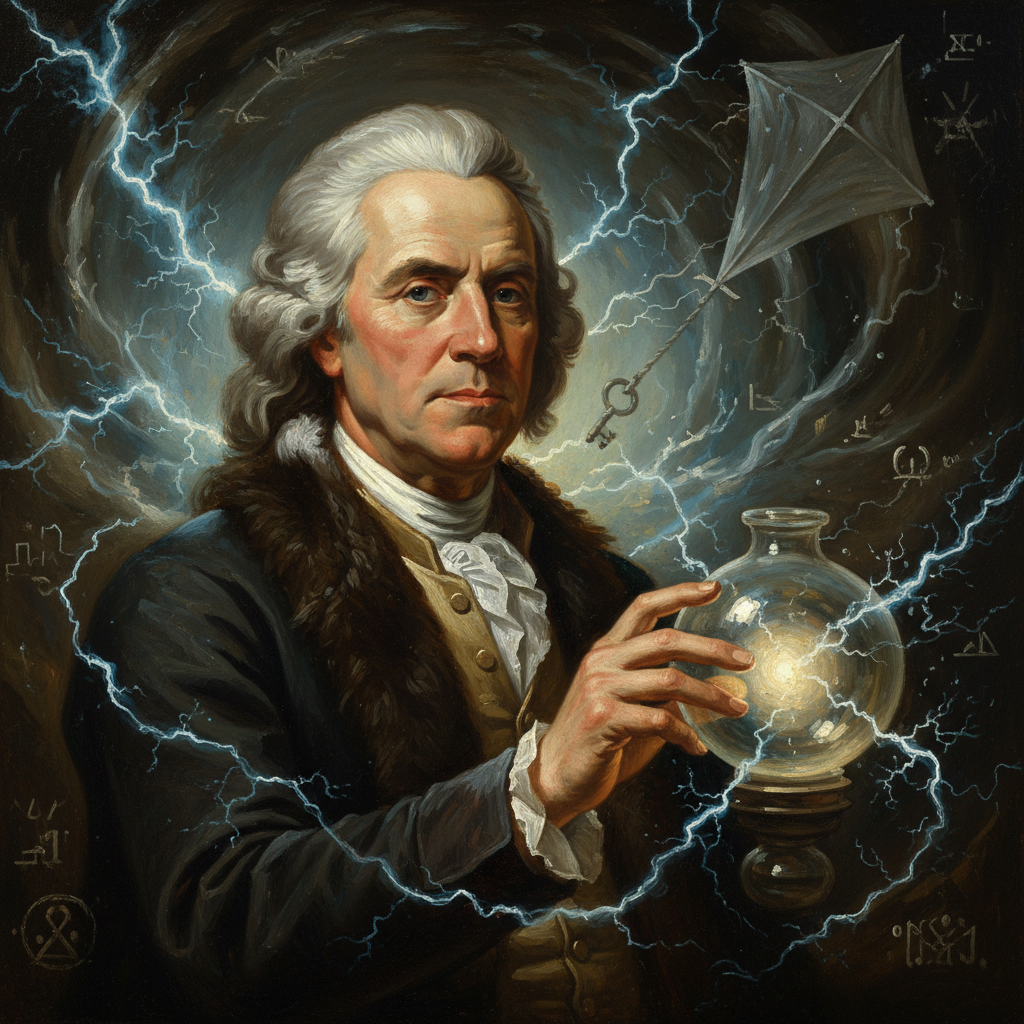
Benjamin Franklin — "He that would live in peace and at ease, must not speak all he knows, nor all he…"
He that would live in peace and at ease, must not speak all he knows, nor all he sees.
He that would live in peace and at ease, must not speak all he knows, nor all he sees.
Click any product to generate a realistic preview. Up to 3 at a time.
* Initial load can take up to 90 seconds — revising the preview in another color is nearly instant.
"In this world nothing can be said to be certain, except death and taxes."
"To succeed, jump as quickly at opportunities as you do at conclusions."
"He that has a Trade, has an Office of Profit and Pleasure."
"The greatest monarch on the proudest throne, is oblig'd to sit upon his own bottom."
"The only things certain in life are death and taxes."
Polymath Founding Father, diplomat, and Poor Richard's Almanack author who helped draft the Declaration of Independence and the Constitution. Closely associated with John Adams (fellow Founder, Massachusetts statesman) and Thomas Jefferson (fellow Declaration drafter). For an intellectual contrast, see Thomas Hutchinson, last royal governor of colonial Massachusetts — Franklin leaked Hutchinson's loyalist correspondence to Boston in 1772 to inflame revolutionary sentiment — Hutchinson represented the colonial-aristocrat crown-loyalty that Franklin's revolution was organized to dismantle.
Found in 1 providers: grok
1 source checked
Discretion is the price of a quiet life. If you want peace and comfort, resist the urge to share everything you know or point out everything you observe. Speaking every truth you hold invites conflict, jealousy, and enemies. Social harmony depends on strategic silence — not dishonesty, but choosing when and what to share. Knowing something doesn't obligate you to say it; sometimes wisdom is recognizing which truths are better left unspoken.
Franklin spent decades as America's chief diplomat — lobbying Parliament in London and securing French military alliance in Paris. Both required knowing exactly when silence outmaneuvered speech. As printer and publisher, he shaped opinion through careful editorial judgment. His Poor Richard's Almanack is full of such practical wisdom. Managing intelligence networks during the Revolution, where a loose word cost lives, he lived this maxim daily. His career proved restraint in speech was as powerful as wit.
Colonial America was a tinderbox of competing loyalties — Crown supporters, Patriots, merchants, clergy, and landowners all watching each other. Published words in pamphlets and newspapers circulated fast and could trigger prosecution for sedition. Taverns and coffeehouses were both information markets and surveillance hubs. Neighbors reported neighbors; business reputation could collapse overnight from a loose word. Political alliances shifted constantly between assemblies and royal governors, making careless speech genuinely dangerous to livelihood and liberty.
AI-generated insights based on extensive research and information for context. Factual errors? Email [email protected].
Your cart is empty