Laozi — "He who values himself more than the world can be entrusted with the world. He wh…"
He who values himself more than the world can be entrusted with the world. He who loves himself more than the world can be charged with the world.
He who values himself more than the world can be entrusted with the world. He who loves himself more than the world can be charged with the world.
Click any product to generate a realistic preview. Up to 3 at a time.
* Initial load can take up to 90 seconds — revising the preview in another color is nearly instant.
"The heavy is the root of the light. The still is the master of the restless."
"The value of teaching without words and accomplishing without action is understood by few in the world."
"The five colors make one blind in the eyes; the five tones make one deaf in the ears."
"Stop thinking, and end your problems."
"The empire is a sacred vessel and cannot be acted on. He who acts on it harms it; he who grasps it loses it."
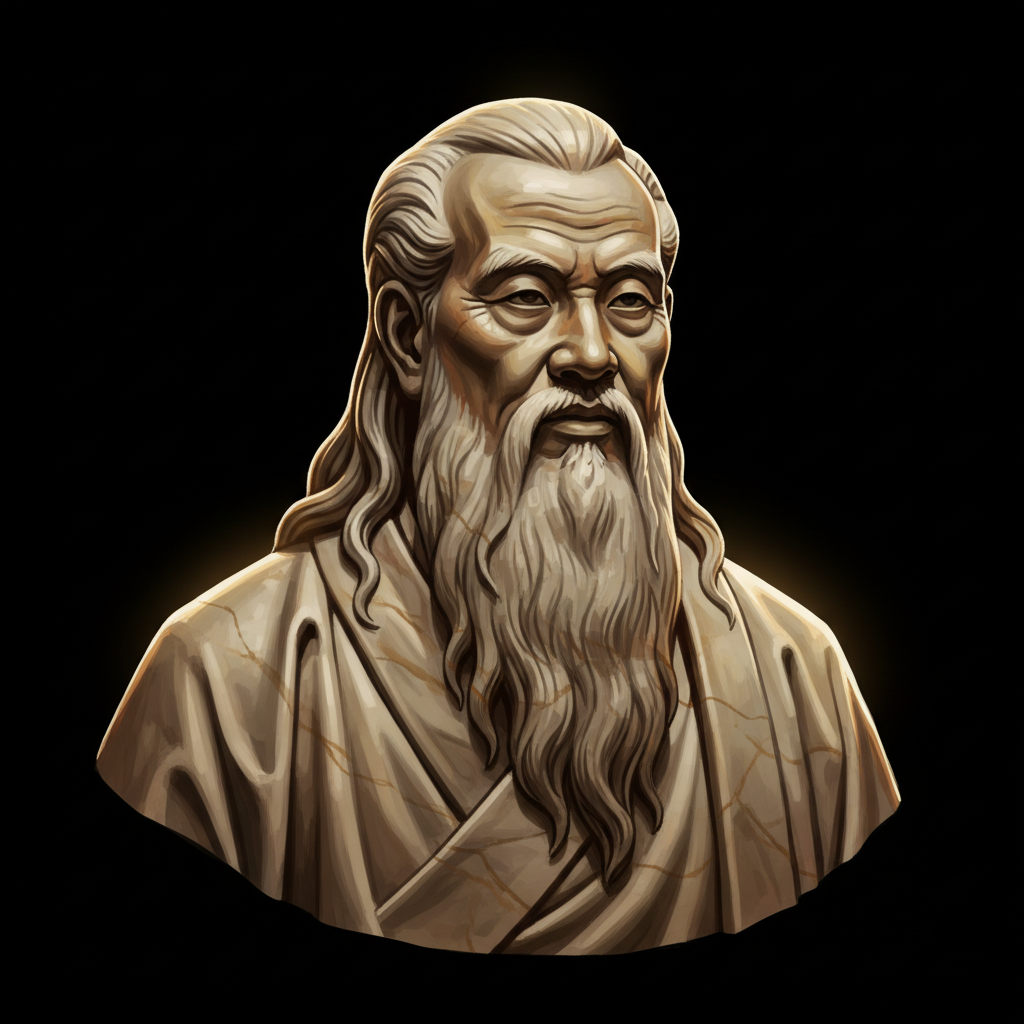
Reputed founder of Taoism and author of the Tao Te Ching, whose wu wei (effortless action) shaped East Asian philosophy. Closely associated with Zhuangzi (later Taoist who extended Laozi's framework). For an intellectual contrast, see Confucius, near-contemporary Chinese sage of social ritual and duty — Confucius systematized social order through ritual and hierarchy; Laozi argued that all such systems were the disease, not the cure — the two founding poles of Chinese moral philosophy.
Found in 1 providers: grok
1 source checked
Real authority belongs to someone whose inner balance isn't dependent on external approval or gain. If you treasure your own integrity above wealth, status, or applause, you won't sell out when tempted. That self-respect makes you trustworthy with power, because you won't exploit the role to fill a personal void. The ruler least hungry for the world is paradoxically the safest one to hand it to.
Laozi reportedly served as keeper of the Zhou royal archives, observing rulers up close before withdrawing in disgust at court corruption. His Tao Te Ching repeatedly warns that grasping leaders ruin states, while the sage who acts without ego governs effortlessly. This saying mirrors his core teaching of wu wei and his personal choice to walk away from power rather than chase it, a living demonstration of the self-valuing detachment he prescribed.
Laozi lived during the late Zhou dynasty's decay, around the 6th century BCE, as feudal lords waged constant wars and ministers plotted assassinations for territory. Rulers hoarded land, taxed peasants into starvation, and treated the realm as personal property. Against this backdrop of grasping ambition, his claim that only the self-contained person deserves authority was a direct rebuke of the warlords and a foundation stone of what would become Taoist political philosophy.
AI-generated insights based on extensive research and information for context. Factual errors? Email [email protected].
Your cart is empty