What it means
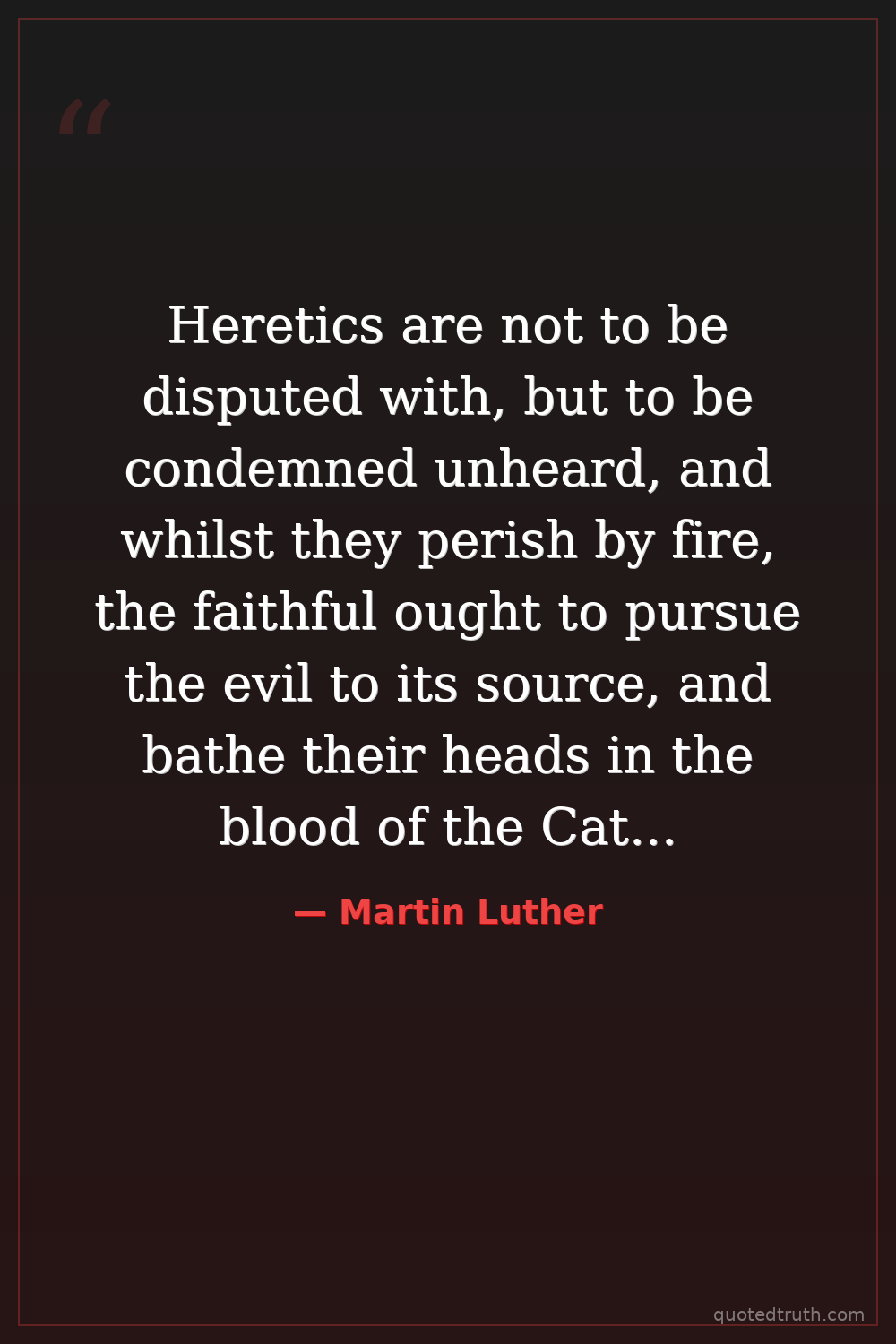
This statement rejects debating religious opponents, arguing heretics should be condemned without a hearing and executed by fire. It calls on believers not to stop there but to trace corruption to its root, violently attacking Catholic bishops and the Pope, whom the speaker labels Satan in human form. It is a call for lethal, top-down purging of religious enemies rather than persuasion or tolerance.
Relevance to Martin Luther
Luther broke with Rome in 1517 and spent his life attacking papal authority, repeatedly calling the Pope the Antichrist. Though he initially favored persuasion, his later writings grew increasingly violent, urging princes to crush Peasants' Revolt rebels and, near the end of his life, Jews. This quote fits that harder Luther: a reformer convinced Rome was demonic and that civil rulers had a duty to wield the sword against spiritual enemies.
The era
In early-modern Europe, religion and state were fused; heresy was a capital crime and burning was standard punishment. The Reformation shattered Western Christendom, triggering decades of wars, peasant uprisings, and confessional massacres. Printing spread polemics faster than councils could answer them, and both Catholic and Protestant authorities executed dissenters. Rhetoric soaked in blood was normal, and Luther's calls against Rome helped legitimize the violent religious politics that would culminate in the Thirty Years' War.
AI-generated insights based on extensive research and information for context. Factual errors? Email [email protected].