What it means
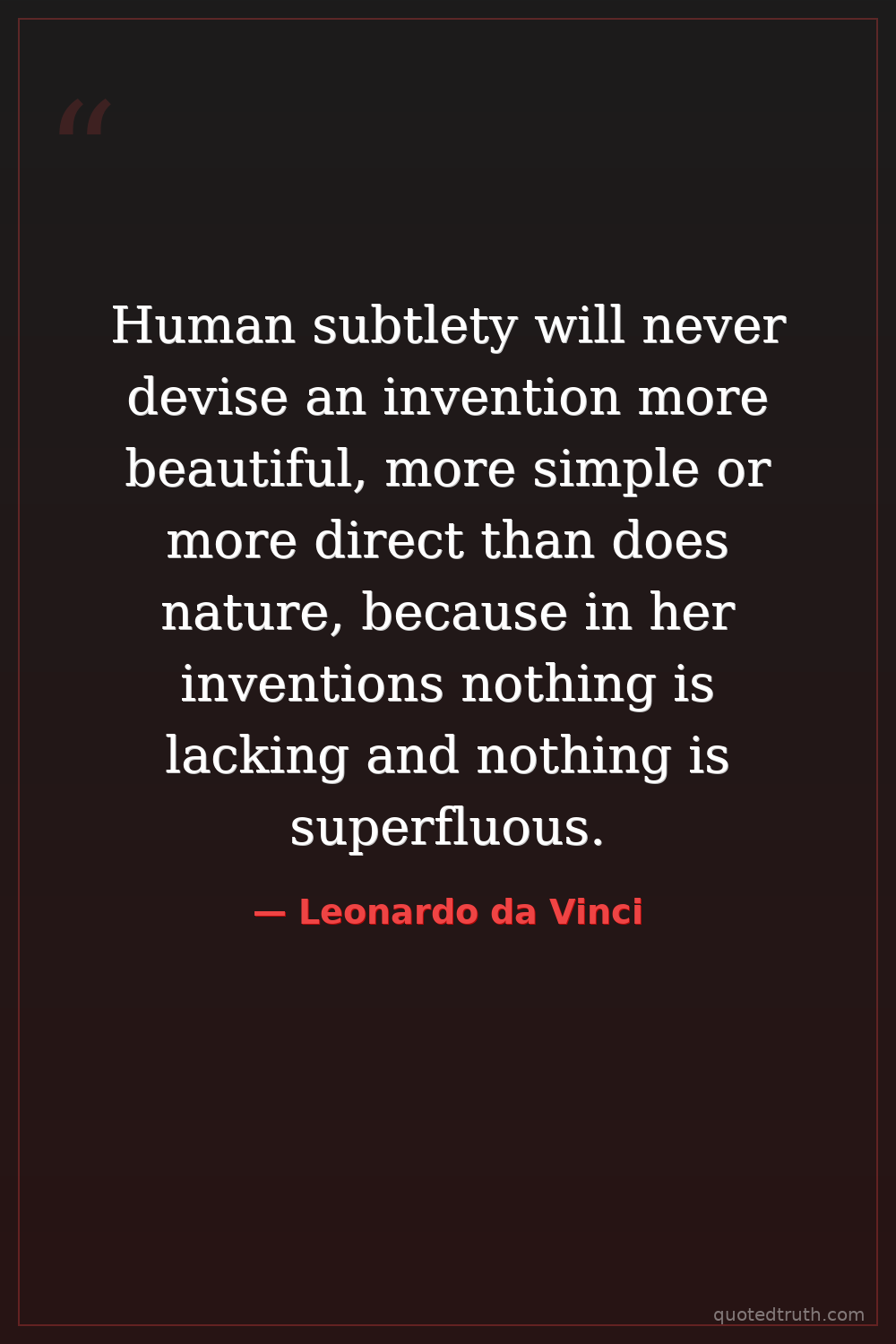
Nature's designs are perfectly optimized — nothing wasted, nothing missing. Human engineering, no matter how clever, cannot match the elegance and efficiency found in natural systems. Every biological structure solves problems with a precision and economy that deliberate invention struggles to replicate. This is a call to study nature as the ultimate teacher of design, engineering, and beauty.
Relevance to Leonardo da Vinci
Da Vinci spent decades dissecting human corpses, studying bird flight, and observing water currents — always mining nature for engineering principles. His flying machine designs copied bird wing anatomy. His anatomical drawings revealed nature's mechanical perfection. This quote captures his core methodology: observe nature first, invent second. It explains why his notebooks overflow with natural observation before any human construction.
The era
The Renaissance was reawakening classical learning while simultaneously launching humanity's first systematic scientific inquiry. Gutenberg's press was spreading knowledge; explorers were mapping unknown continents. Yet da Vinci recognized that amid this explosion of human invention, the natural world — still largely unexplained — demonstrated superior design. This tension between human ambition and natural supremacy defined Renaissance thought, inspiring both humility and obsessive curiosity.
AI-generated insights based on extensive research and information for context. Factual errors? Email [email protected].