What it means
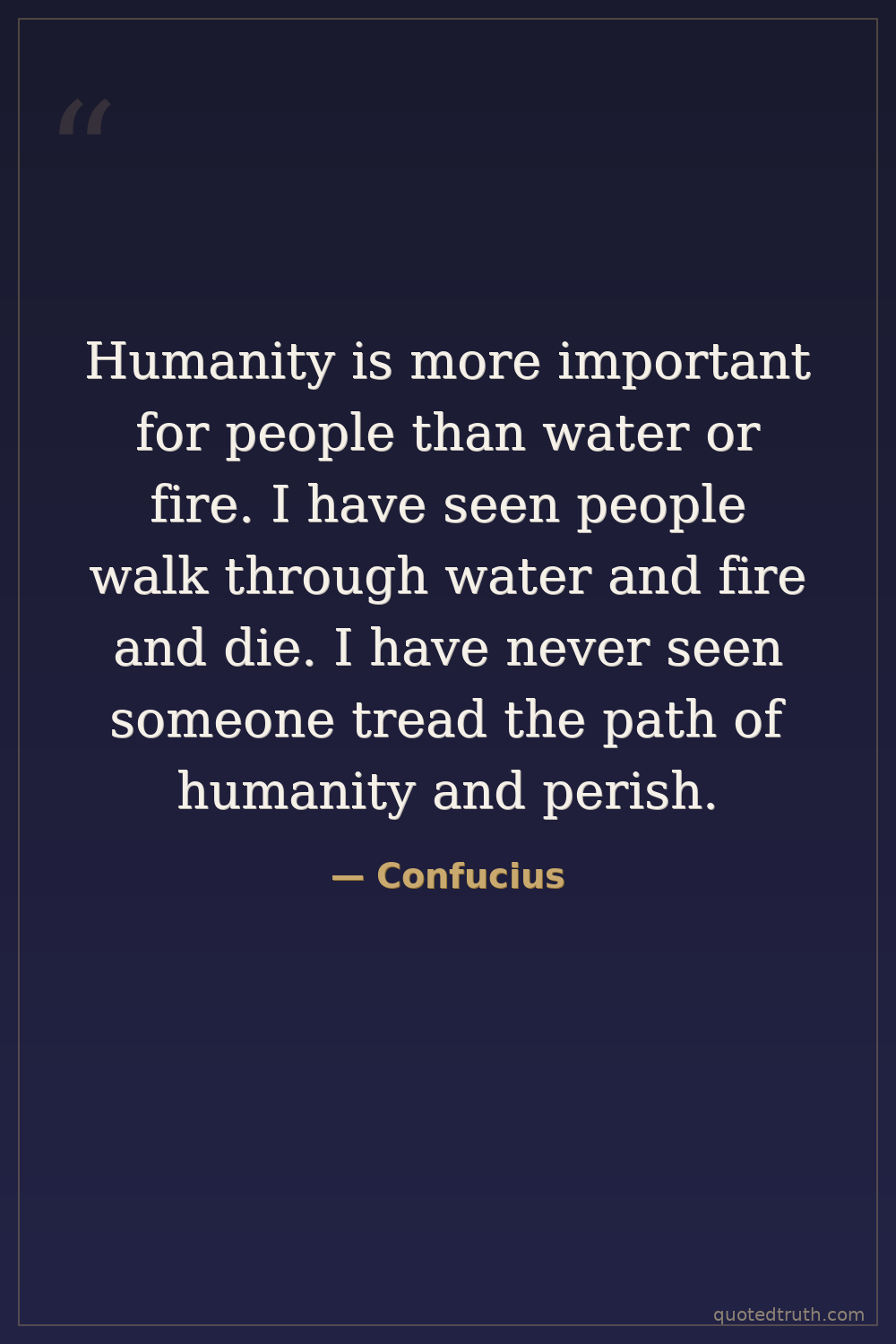
Confucius argues that moral goodness and compassion toward others matter more to human life than even the basic elements we depend on for survival. People can be killed by crossing rivers or fires, but no one is destroyed by living ethically and treating others with kindness. Practicing humanity carries no fatal risk, only benefit, making it the safest and most essential pursuit anyone can commit to.
Relevance to Confucius
Confucius built his entire philosophy around ren, usually translated as humaneness or benevolence, treating it as the highest virtue a person could cultivate. As a traveling teacher and former minor official in the state of Lu, he spent decades urging rulers and students to practice moral self-cultivation over pursuing power or wealth. This saying captures his signature move: elevating ethical character above material necessities, reflecting his belief that virtue shapes a worthwhile life.
The era
Confucius lived during the late Spring and Autumn period, roughly 551 to 479 BCE, when the Zhou dynasty was fragmenting and warring states competed through force and shifting alliances. Ordinary people faced famine, conscription, and violence, while rulers often ignored moral obligations. Against this backdrop of political collapse and social disorder, Confucius offered humaneness as the missing foundation for stable government and peaceful community, arguing character mattered more than military or material strength.
AI-generated insights based on extensive research and information for context. Factual errors? Email [email protected].