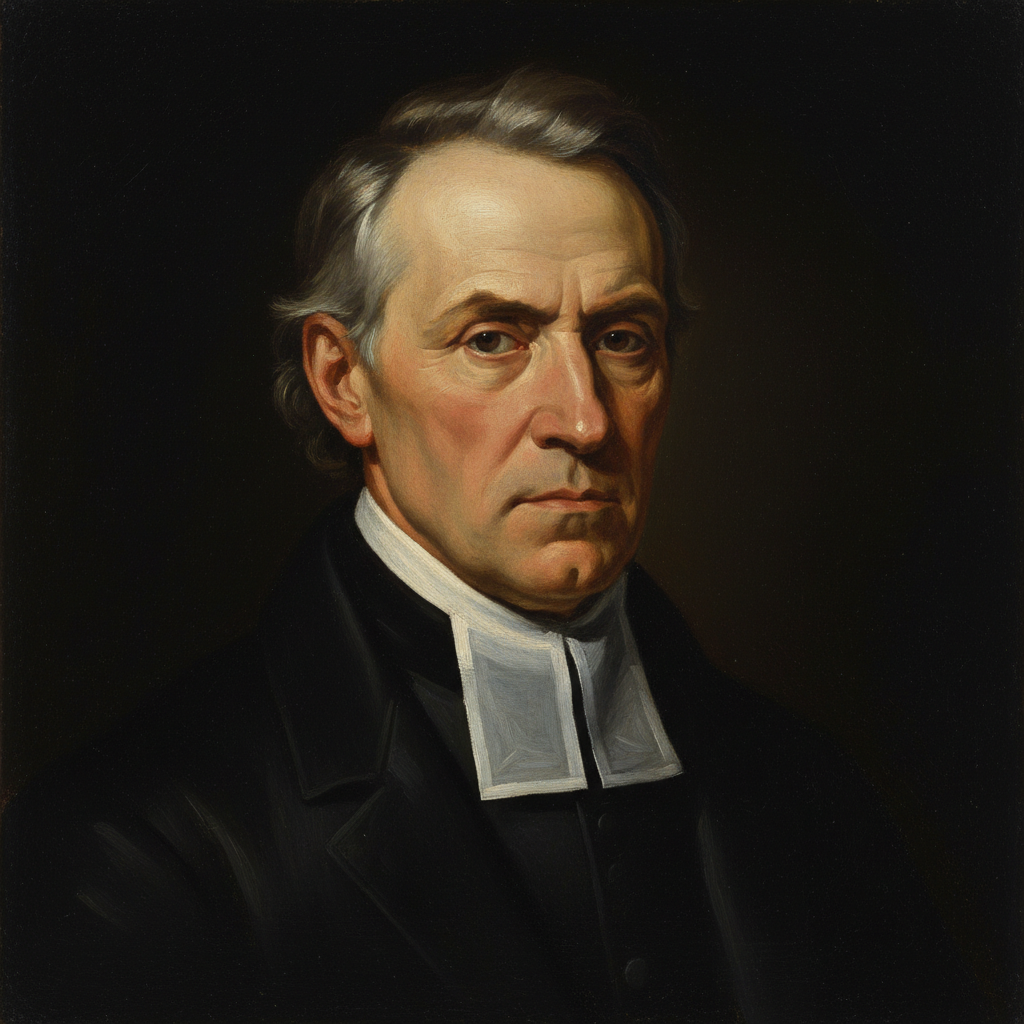
John Wesley — "I am a debtor to all the world, to do all the good I can, in every place, to eve…"
I am a debtor to all the world, to do all the good I can, in every place, to every soul.
I am a debtor to all the world, to do all the good I can, in every place, to every soul.
Click any product to generate a realistic preview. Up to 3 at a time.
* Initial load can take up to 90 seconds — revising the preview in another color is nearly instant.
"I look upon all the world as my parish."
"I have often thought that the reason why so few are saved, is, because so few are willing to be saved."
"I am a creature of a day, passing through life as an arrow through the air. I am a spirit come from God, and returning to God; just hovering a few moments over a great gulf, till, on a sudden, I drop …"
"I have no time to be in a hurry."
"I have not time to be busy."
English Anglican cleric and founder of Methodism, whose open-air preaching and class-meeting structure created the largest 18th-century evangelical revival. Closely associated with Charles Wesley (his hymn-writing brother) and George Whitefield (early co-revivalist, later doctrinal opponent). For an intellectual contrast, see George Whitefield, Calvinist evangelical revivalist — Whitefield's predestinarian Calvinism vs Wesley's free-grace Arminian theology split the early Methodist movement permanently in the 1739-41 break. The founding evangelical Calvinist-Arminian schism — the two parallel evangelical traditions American Christianity descends from.
Found in 1 providers: grok
1 source checked
You owe a debt to every person alive — not money, but good action. No matter where you are or who you encounter, you are obligated to help. Service is not optional charity but something owed. Every soul everywhere has a claim on your effort. Distance, difference, and inconvenience are no excuse for withholding good from anyone. The debt is universal, the obligation endless.
Wesley rode over 250,000 miles on horseback preaching to coal miners, prisoners, and the poor when the established church ignored them. He founded free medical dispensaries, schools for the poor, and opposed slavery in his final years. His theology of social holiness insisted faith must be lived through service. This quote captures his core conviction: salvation was not private — it demanded relentless, universal action on behalf of every suffering person.
Wesley preached during Britain's early Industrial Revolution, when masses flooded into cities facing brutal poverty, disease, and child labor. The Church of England ministered largely to comfortable classes and abandoned the working poor. Enlightenment philosophy was questioning traditional authority while economic inequality deepened. Wesley's insistence on obligation to all the world directly challenged a stratified society that treated poverty as personal moral failure rather than a shared human responsibility.
AI-generated insights based on extensive research and information for context. Factual errors? Email [email protected].
Your cart is empty