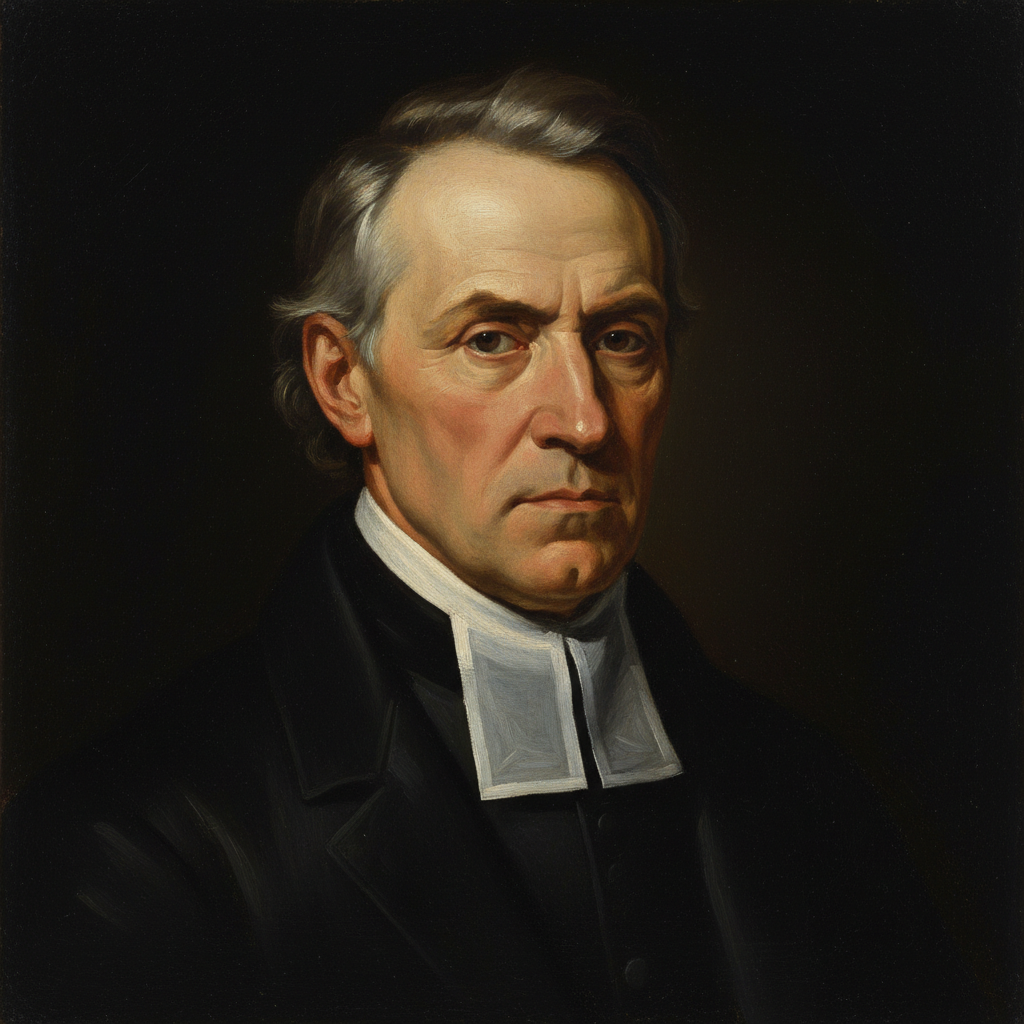
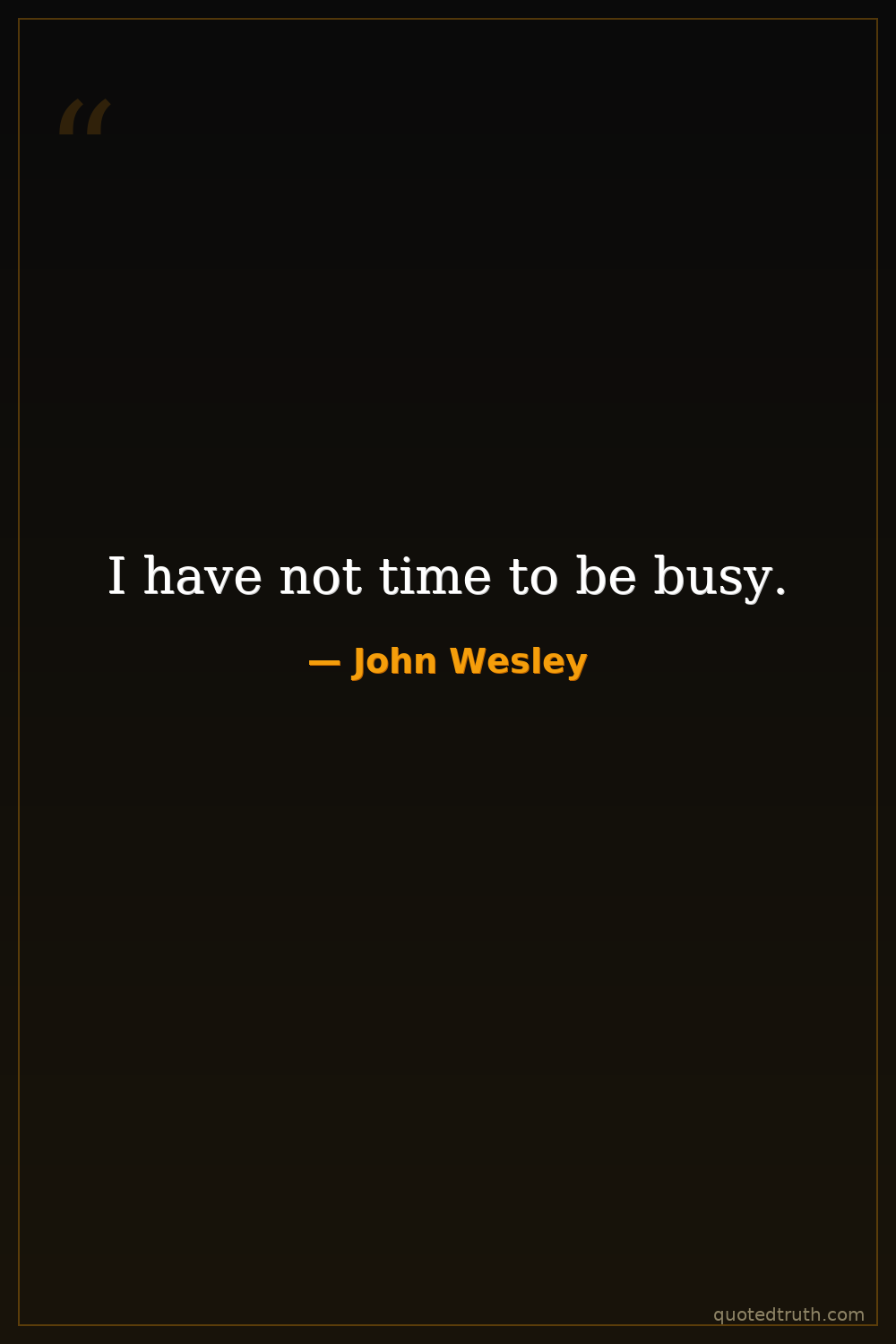
John Wesley — "I have not time to be busy."
I have not time to be busy.
I have not time to be busy.
Click any product to generate a realistic preview. Up to 3 at a time.
* Initial load can take up to 90 seconds — revising the preview in another color is nearly instant.
"The Methodists are a people who profess to pursue a Christian life by Scriptural rules and methods."
"Beware of that smooth, plausible, pleasing voice, 'You may be saved, though you keep your sins.'"
"I believe that all true Christians are brothers and sisters, whatever their denomination."
"Diseases are the instruments of God to punish men for their sins."
"And are we not to use our reason? Unquestionably. But no more than we are to use our hands or feet. We are to use it as a servant, not as a master."
English Anglican cleric and founder of Methodism, whose open-air preaching and class-meeting structure created the largest 18th-century evangelical revival. Closely associated with Charles Wesley (his hymn-writing brother) and George Whitefield (early co-revivalist, later doctrinal opponent). For an intellectual contrast, see George Whitefield, Calvinist evangelical revivalist — Whitefield's predestinarian Calvinism vs Wesley's free-grace Arminian theology split the early Methodist movement permanently in the 1739-41 break. The founding evangelical Calvinist-Arminian schism — the two parallel evangelical traditions American Christianity descends from.
Found in 1 providers: grok
1 source checked
The quote rejects busyness as a virtue in itself. Wesley distinguishes purposeful, deliberate action from scattered, performative occupation that merely looks productive. He claims no time exists for trivial distractions — every hour must serve a clear goal. It's a sharp inversion: the visibly busiest people often accomplish the least. Real effectiveness means eliminating noise, not filling every moment with motion for its own sake.
Wesley's life embodied purposeful intensity. He rose at 4 a.m. daily, rode 250,000 miles on horseback, delivered over 40,000 sermons, and wrote 400-plus publications while founding schools, orphanages, and clinics. His schedule had no room for idle occupation. Every action served his mission of spreading practical holiness and Methodist organization. The quote reflects a man who drew a hard line between useful labor and mere busyness.
Wesley lived through 18th-century Britain's commercial expansion, where merchant culture celebrated visible industry as a sign of virtue and godliness. The Church of England was widely criticized as ceremonially busy but spiritually inert. Wesley's quote pushes back against conflating motion with mission. As Methodism faced hostility from established institutions, disciplined prioritization over scattered activity was both a theological conviction and a practical necessity for sustaining a grassroots reform movement.
AI-generated insights based on extensive research and information for context. Factual errors? Email [email protected].
Your cart is empty