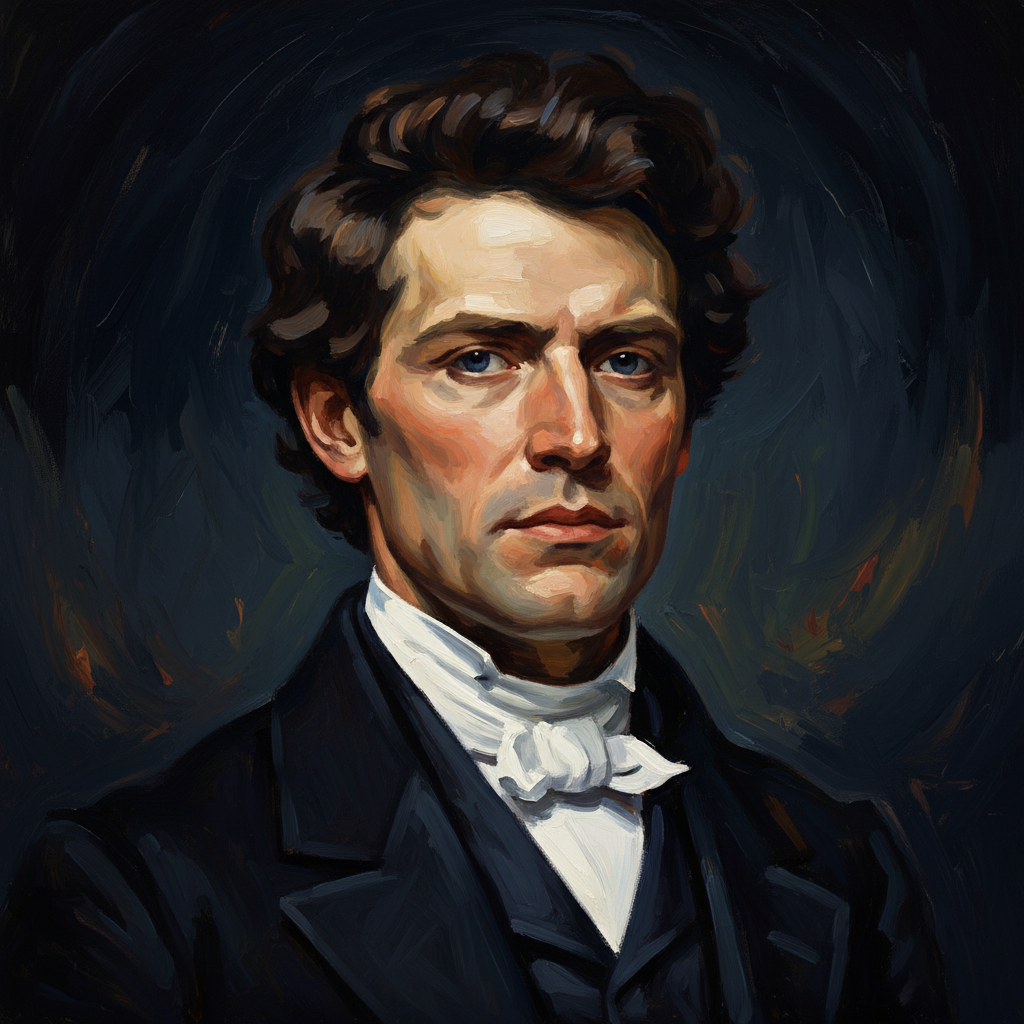
Joseph Smith — "The greatest good we can do to others is to spread the truth."
The greatest good we can do to others is to spread the truth.
The greatest good we can do to others is to spread the truth.
Click any product to generate a realistic preview. Up to 3 at a time.
* Initial load can take up to 90 seconds — revising the preview in another color is nearly instant.
"I am not afraid of death. I have a conscience void of offense toward God and toward all men."
"I am a rough stone, and the sound of the hammer and chisel are continually upon me."
"I have learned for myself that God is a being of great condescension, and that he will reveal himself to man."
"And it shall come to pass, after many days, slaves shall rise up against their masters, who shall be marshaled and disciplined for war."
"I am a Lover of the Constitution of the United States."
Found in 1 providers: grok
1 source checked
The quote argues that sharing truth is the most valuable service one person can offer another. Rather than material help or comfort, revealing what is real and accurate equips people to make better decisions, avoid deception, and live wisely. It places intellectual and moral honesty above emotional reassurance, suggesting that truth — even when uncomfortable — ultimately benefits people more than pleasant falsehoods or silence.
Smith founded the Church of Jesus Christ of Latter-day Saints in 1830, claiming divine revelations had restored lost Christian truths. His entire mission centered on spreading what he called the restored gospel — translating the Book of Mormon, recording new scripture, and dispatching missionaries worldwide. This quote mirrors his self-conception as a prophet uniquely entrusted with divine truth that humanity desperately needed, making truth-spreading not optional but the highest possible calling.
Smith lived during the Second Great Awakening (1790s–1840s), when America experienced intense religious revival and fierce competition among denominations. Dozens of new sects emerged across the frontier, each claiming authentic Christianity. Missionaries flooded the country with tracts and sermons. In this crowded spiritual marketplace, the question of which truth was the truth felt urgent and deeply personal — making the active spread of one's particular revelation feel like a genuine moral imperative.
AI-generated insights based on extensive research and information for context. Factual errors? Email [email protected].
Your cart is empty