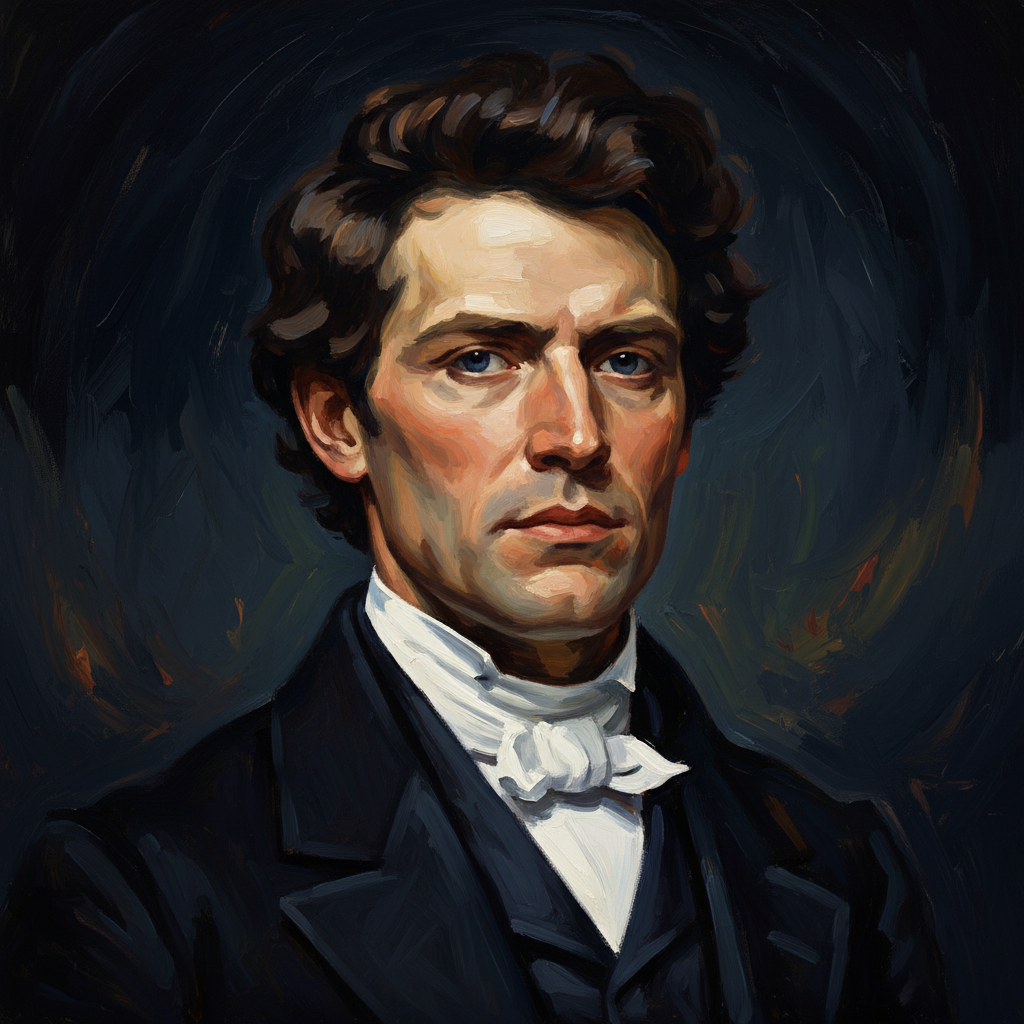
Joseph Smith — "I am a man of hope, and I will hope in God to the end."
I am a man of hope, and I will hope in God to the end.
I am a man of hope, and I will hope in God to the end.
Click any product to generate a realistic preview. Up to 3 at a time.
* Initial load can take up to 90 seconds — revising the preview in another color is nearly instant.
"If men do not comprehend the character of God, they do not comprehend themselves."
"We believe that as we are now God once was, and by the practice of virtue and righteousness, by obedience unto law and authority, He has become what He is, and as He is, man may become, on the same pr…"
"For hundreds of years the world was wrapped in a veil of spiritual darkness, until there was not one fundamental truth belonging to the place of salvation that was not, in the year 1820, so obscured b…"
"The earth was once a garden, and it will be again. And the Saints will inherit it."
"I am a chosen vessel of the Lord to do a great work."
Found in 1 providers: grok
1 source checked
A direct declaration of persistent faith over despair. The speaker commits to trusting God as a defining personal trait — not a passive wish but an active, chosen stance. Whatever hardship arrives, optimism rooted in divine belief is non-negotiable. It's a vow to resist cynicism and doubt through life's entirety, treating hope not as a fleeting emotion but as a deliberate, daily commitment sustained until death.
Smith endured extraordinary adversity — tarred and feathered in Ohio, imprisoned in Liberty Jail for months, repeatedly driven from communities by mob violence, and ultimately assassinated in 1844 at 38. Close followers apostatized, his children died young, and governments turned against him. Yet he founded a new religious movement and expanded it across state lines. This quote reflects the psychological core that sustained him: stubborn, active hope in God's ultimate vindication.
Smith lived during America's Second Great Awakening, a surge of revivalist Christianity that birthed dozens of competing new denominations. Social upheaval — frontier expansion, the economic panic of 1837, anti-Mormon legislation — made religious certainty rare. Missouri issued an extermination order against Mormons in 1838; mobs burned LDS settlements. In this climate of violent religious intolerance, publicly declaring hope in God to 'the end' was a defiant, existential act of spiritual resistance.
AI-generated insights based on extensive research and information for context. Factual errors? Email [email protected].
Your cart is empty