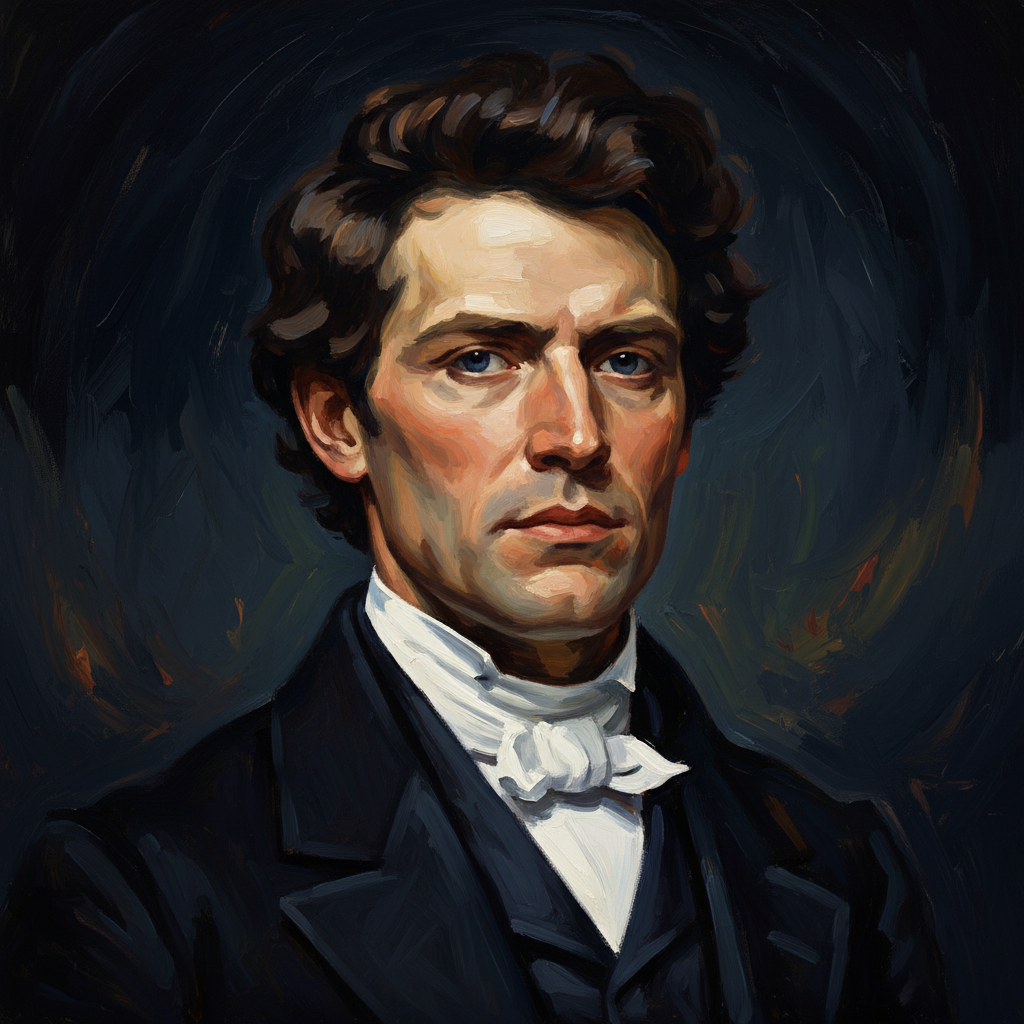
Joseph Smith — "I am a prophet of God, and I know it."
I am a prophet of God, and I know it.
I am a prophet of God, and I know it.
Click any product to generate a realistic preview. Up to 3 at a time.
* Initial load can take up to 90 seconds — revising the preview in another color is nearly instant.
"Come on! ye prosecutors! ye false swearers! All hell, boil over! Ye burning mountains, roll down your lava! for I will come out on the top at last."
"I calculated to be one of the instruments of setting up the kingdom of Daniel, by establishing a theocracy."
"I told them I was a good boy, and if I had done anything wrong, I was willing to be corrected."
"There are two churches only; the one is the church of the Lamb of God, and the other is the church of the devil; wherefore, whoso belongeth not to the church of the Lamb of God belongeth to that great…"
"And the skins of the Lamanites were dark, according to the mark which was set upon their fathers, which was a curse upon them because of their transgression and their rebellion against their brethren.…"
Found in 1 providers: grok
1 source checked
This statement declares absolute certainty in a divine calling. Rather than hedging or seeking external validation, the speaker asserts personal, direct knowledge of prophetic authority. It is the claim that one has received a genuine mission from God, known through inner experience rather than institutional appointment. The precision of 'know' rather than 'believe' makes it a declaration of unshakeable conviction — not faith seeking proof, but certainty already arrived at.
Smith spent his entire adult life defending this exact claim. From his 1820 First Vision — where he said God and Jesus Christ appeared to him personally — to his 1844 death at the hands of a mob in Carthage, Illinois, he never recanted despite imprisonment, tarring, and relentless public ridicule. Everything he built — the Book of Mormon, the LDS Church, his theological innovations — rested on this bedrock assertion that his prophetic calling was real and divinely conferred.
The 1820s–1840s were the height of America's Second Great Awakening — mass revivals, competing prophets, and fervent claims of divine experience across the frontier. New religious movements proliferated while also being violently suppressed. Missouri's governor issued a literal extermination order against Mormons in 1838. In this climate of simultaneous spiritual hunger and institutionalized persecution, boldly declaring oneself a prophet was not rhetorical flourish — it was a life-threatening, legally consequential act of identity.
AI-generated insights based on extensive research and information for context. Factual errors? Email [email protected].
Your cart is empty