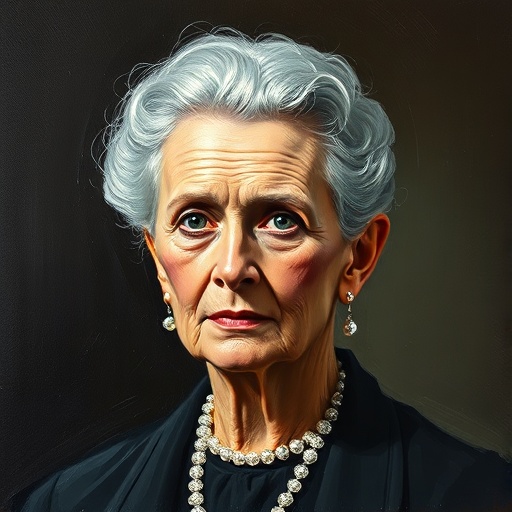
Marie Curie — "I am a woman, and I have done the work of a man."
I am a woman, and I have done the work of a man.
I am a woman, and I have done the work of a man.
Click any product to generate a realistic preview. Up to 3 at a time.
* Initial load can take up to 90 seconds — revising the preview in another color is nearly instant.
"I am a scientist. I am a researcher. I am a discoverer. I am all of these things. And I am proud of it."
"I am among those who think that science has great beauty. A scientist in his laboratory is not merely a technician: he is also a child confronting natural phenomena that impress him as though they wer…"
"I am not afraid of anything. I am only afraid of not being able to do my work."
"Life is not easy for any of us. But what of that? We must have perseverance and above all confidence in ourselves. We must believe that we are gifted for something and that this thing must be attained…"
"You cannot hope to build a better world without improving the individuals."
Found in 1 providers: grok
1 source checked
The speaker declares that despite being female, she has accomplished achievements traditionally reserved for and expected only from men. It is a matter-of-fact statement asserting equal capability, refusing to apologize for her gender while simultaneously refusing to let it diminish her accomplishments. She claims her work stands on its own merit regardless of the biological category society assigned her.
Marie Curie broke into physics and chemistry when universities barely admitted women. She earned two Nobel Prizes (Physics 1903, Chemistry 1911), the first person ever to do so, discovered polonium and radium, and ran her own lab. The Paris Academy of Sciences rejected her membership in 1911 because she was female, even after her second Nobel. This line captures her refusal to accept that ceiling.
Late 19th and early 20th century Europe barred women from most universities, professional societies, and paid scientific posts. Women couldn't vote in France until 1944. Female scientists were routinely uncredited or dismissed as assistants to husbands. Curie worked through WWI running mobile X-ray units at the front. Her public visibility forced institutions to reckon with female intellectual achievement during an era actively debating whether women belonged in higher education at all.
AI-generated insights based on extensive research and information for context. Factual errors? Email [email protected].
Your cart is empty