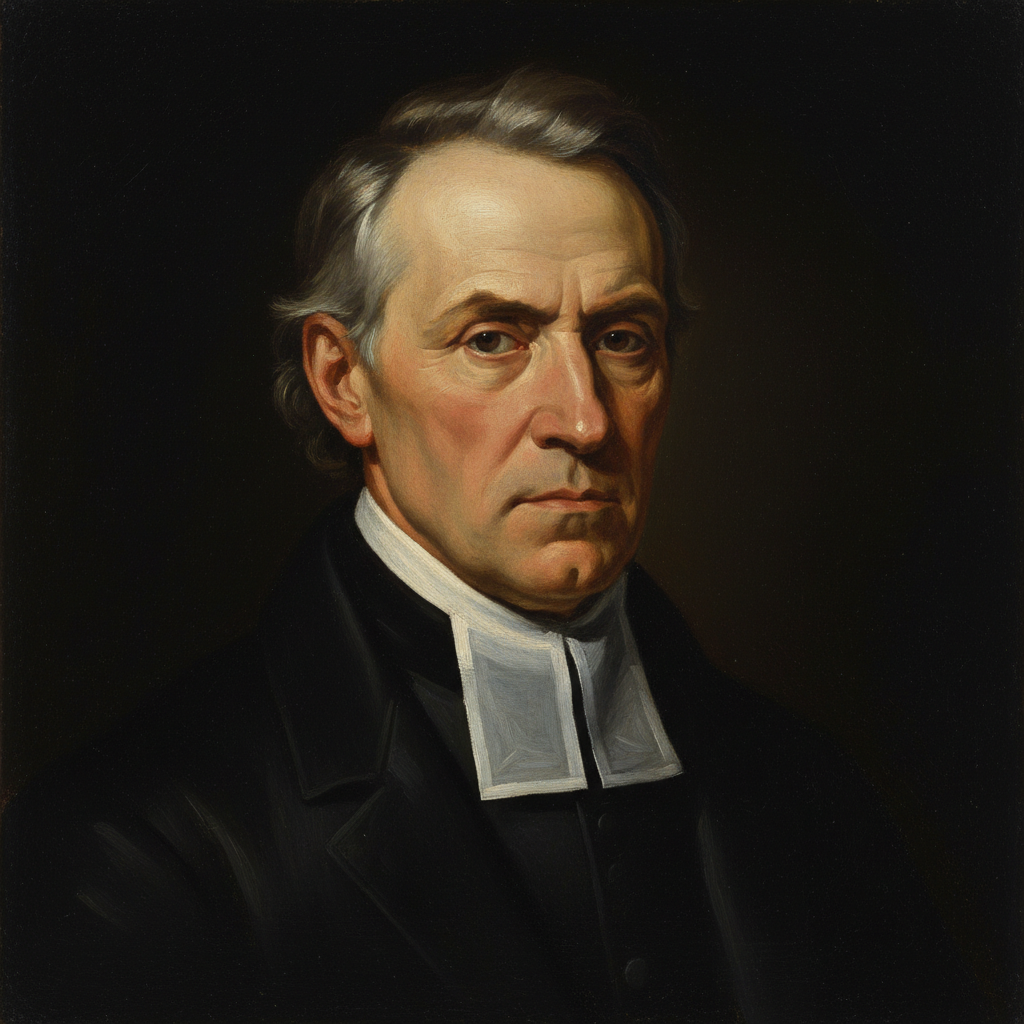
John Wesley — "I am not afraid of giving too much trouble to God. He is able to bear it."
I am not afraid of giving too much trouble to God. He is able to bear it.
I am not afraid of giving too much trouble to God. He is able to bear it.
Click any product to generate a realistic preview. Up to 3 at a time.
* Initial load can take up to 90 seconds — revising the preview in another color is nearly instant.
"I desire no other epitaph, than 'Here lies the friend of all, and the enemy of none.'"
"Preach faith till you have it; and then, because you have it, you will preach faith."
"I cannot but observe, that the Methodists are not a people who are fond of novelties."
"I have often thought that the difference between the Church of England and the Dissenters is not so great as some imagine."
"I do not think that I have ever spent an hour in my life, from the age of twenty-one to this day, without employing it in some useful way."
English Anglican cleric and founder of Methodism, whose open-air preaching and class-meeting structure created the largest 18th-century evangelical revival. Closely associated with Charles Wesley (his hymn-writing brother) and George Whitefield (early co-revivalist, later doctrinal opponent). For an intellectual contrast, see George Whitefield, Calvinist evangelical revivalist — Whitefield's predestinarian Calvinism vs Wesley's free-grace Arminian theology split the early Methodist movement permanently in the 1739-41 break. The founding evangelical Calvinist-Arminian schism — the two parallel evangelical traditions American Christianity descends from.
Found in 1 providers: grok
1 source checked
Don't hold back when bringing your worries, fears, or requests to God — no matter how small or repeated they seem. God's capacity to listen and respond is infinite, so there's no reason for restraint or embarrassment in prayer. Pray boldly, pray often, pray about everything. The timid, transactional approach to God is unnecessary. Bring it all, without apology.
Wesley (1703–1791) built Methodism on giving ordinary working people direct, unmediated access to God. He rode 250,000 miles preaching to miners and factory workers abandoned by the established church. His doctrine of prevenient grace held that God actively pursues every soul. This quote embodies his democratizing conviction: bold, persistent prayer wasn't reserved for clergy or the educated — it was every person's unconditional right.
Eighteenth-century England was rocked by early industrialization — mass displacement, poverty, and a Church of England largely captured by landed gentry, indifferent to laboring classes. Wesley's insistence that God's attention is inexhaustible directly challenged upper-class quietism and working-class fatalism alike. In an era when deference to social superiors was absolute, claiming unlimited access to God was a quietly radical, egalitarian statement about who prayer belonged to.
AI-generated insights based on extensive research and information for context. Factual errors? Email [email protected].
Your cart is empty