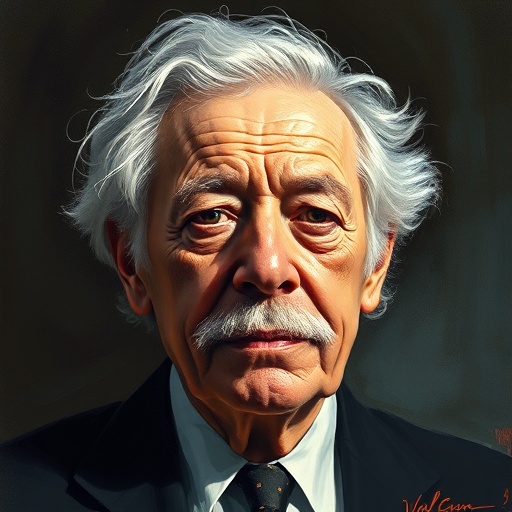
Linus Pauling — "I am not afraid to be wrong, because I know that I can learn from my mistakes."
I am not afraid to be wrong, because I know that I can learn from my mistakes.
I am not afraid to be wrong, because I know that I can learn from my mistakes.
Click any product to generate a realistic preview. Up to 3 at a time.
* Initial load can take up to 90 seconds — revising the preview in another color is nearly instant.
"Science is the search for truth, but it is not the search for certainty. When science is used to search for certainty, it becomes something other than science."
"The best way to have a good idea is to have a lot of ideas."
"I have something that I call my Golden Rule. It goes something like this: 'Do unto others twenty-five percent better than you expect them to do unto you.' … The twenty-five percent is for error."
"The pursuit of knowledge is an endless journey."
"I don't think there's anything wrong with taking a lot of vitamin C."
Found in 1 providers: grok
1 source checked
Being wrong is not shameful — it's part of how understanding deepens. This quote rejects the fear that holds people back from bold thinking or honest inquiry. Mistakes are not endpoints; they're data. Growth requires the willingness to be incorrect, examine why, and adjust. The person who fears error stops trying new things, while the person who accepts it keeps moving forward and improving.
Pauling revolutionized chemistry by proposing electronegativity scales, resonance structures, and the alpha helix — ideas requiring bold guessing. He also famously backed vitamin C megadosing, a position science largely rejected. His peace activism during McCarthyism got his passport revoked, branding him a security threat — proving him willing to be publicly wrong rather than silent. Winning two unshared Nobel Prizes across different disciplines reflects a career built entirely on fearless intellectual risk-taking.
Pauling's most active decades — the 1940s through 1980s — saw science accelerate dramatically: atomic weapons, the DNA double helix, the space race, molecular biology's birth. Cold War pressures made intellectual dissent dangerous; scientists faced loyalty tests and career destruction for wrong opinions. In that climate, declaring publicly that being wrong is acceptable and educational was itself a political stance, not merely a scientific philosophy.
AI-generated insights based on extensive research and information for context. Factual errors? Email [email protected].
Your cart is empty