Carl Linnaeus — "I am not ashamed to confess that I have learned much from women."
I am not ashamed to confess that I have learned much from women.
I am not ashamed to confess that I have learned much from women.
Click any product to generate a realistic preview. Up to 3 at a time.
* Initial load can take up to 90 seconds — revising the preview in another color is nearly instant.
"I have seen the face of God."
"The classes are for the genera, the genera for the species, the species for the individuals."
"I was born to be a botanist, and I have never regretted my choice."
"The more I study nature, the more I am amazed at the Creator."
"God created, Linnaeus arranged. It is astonishing how many new species are discovered every day."
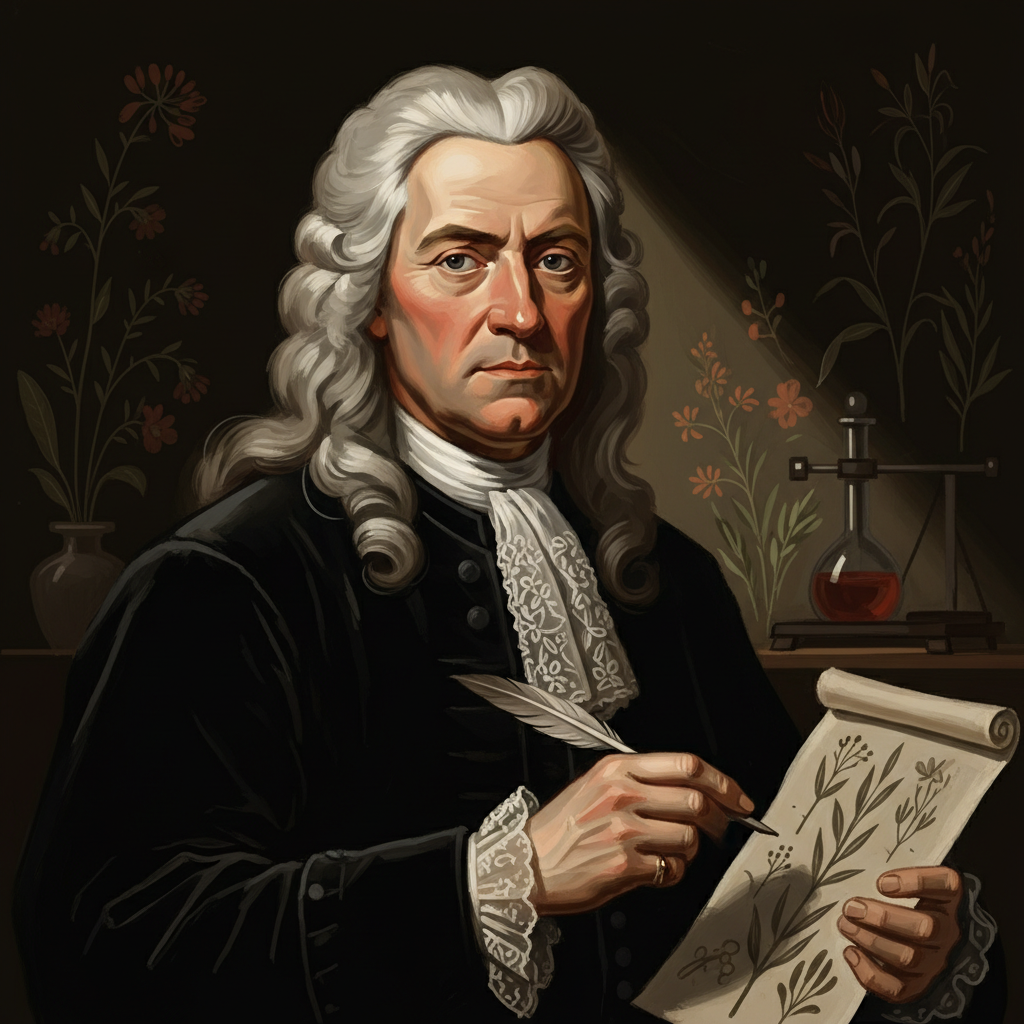
Swedish botanist and the father of modern taxonomy whose Systema Naturae (1735) introduced binomial nomenclature for naming all species. Closely associated with Joseph Banks (British naturalist who carried Linnaean classification on Cook's voyages). For an intellectual contrast, see Comte de Buffon, French naturalist and Histoire Naturelle author (1749-1788) — Buffon explicitly attacked Linnaean fixed-categories taxonomy as artificial and rejected the binomial system; his gradualist, environment-shaped natural history was the explicit alternative. Anticipates the fixed-species-vs-evolution debate Darwin would later resolve.
A somewhat progressive statement for his time, acknowledging female naturalists and contributors.
Date: c. 1760s
ShockingFound in 1 providers: grok
1 source checked
The speaker openly admits that women have been genuine sources of knowledge and insight for him, refusing to feel embarrassed about it. It expresses intellectual humility: valuable learning can come from people society underestimates. Rather than pretending expertise flows only from socially approved channels, it acknowledges that dismissing teachers based on gender is a prejudice, not a principle, and that honest curiosity requires crediting knowledge wherever it is actually found.
Linnaeus built his taxonomic empire through a global network of correspondents, including women naturalists and his own daughters. His daughter Elisabeth Christina contributed original botanical observations he published. Female collectors and illustrators sent him specimens that populated his classifications. His entire method depended on rigorous observation from any reliable source. The quote is consistent with his systematic empiricism: what matters is the accuracy of the data, not the social standing of whoever gathered it.
In 18th-century Europe, women were barred from universities and formal scientific societies entirely. The Enlightenment celebrated reason and observation yet applied both selectively along gender lines. Women participated in natural history as illustrators, collectors, and household herbalists but received little institutional credit. Linnaeus operated during the height of this contradiction: the Scientific Revolution demanded evidence from all available observers, yet convention dismissed female knowledge as informal. His public admission was genuinely countercultural for the 1700s.
AI-generated insights based on extensive research and information for context. Factual errors? Email [email protected].
Your cart is empty