Carl Linnaeus — "God created, Linnaeus arranged. It is astonishing how many new species are disco…"
God created, Linnaeus arranged. It is astonishing how many new species are discovered every day.
God created, Linnaeus arranged. It is astonishing how many new species are discovered every day.
Click any product to generate a realistic preview. Up to 3 at a time.
* Initial load can take up to 90 seconds — revising the preview in another color is nearly instant.
"The whole creation is a song of praise to the Creator."
"I was born to be a botanist, and I have never regretted my choice."
"The knowledge of plants is a science, but the love of plants is an art."
"God created, Linnaeus organized."
"I have been called the Prince of Botanists."
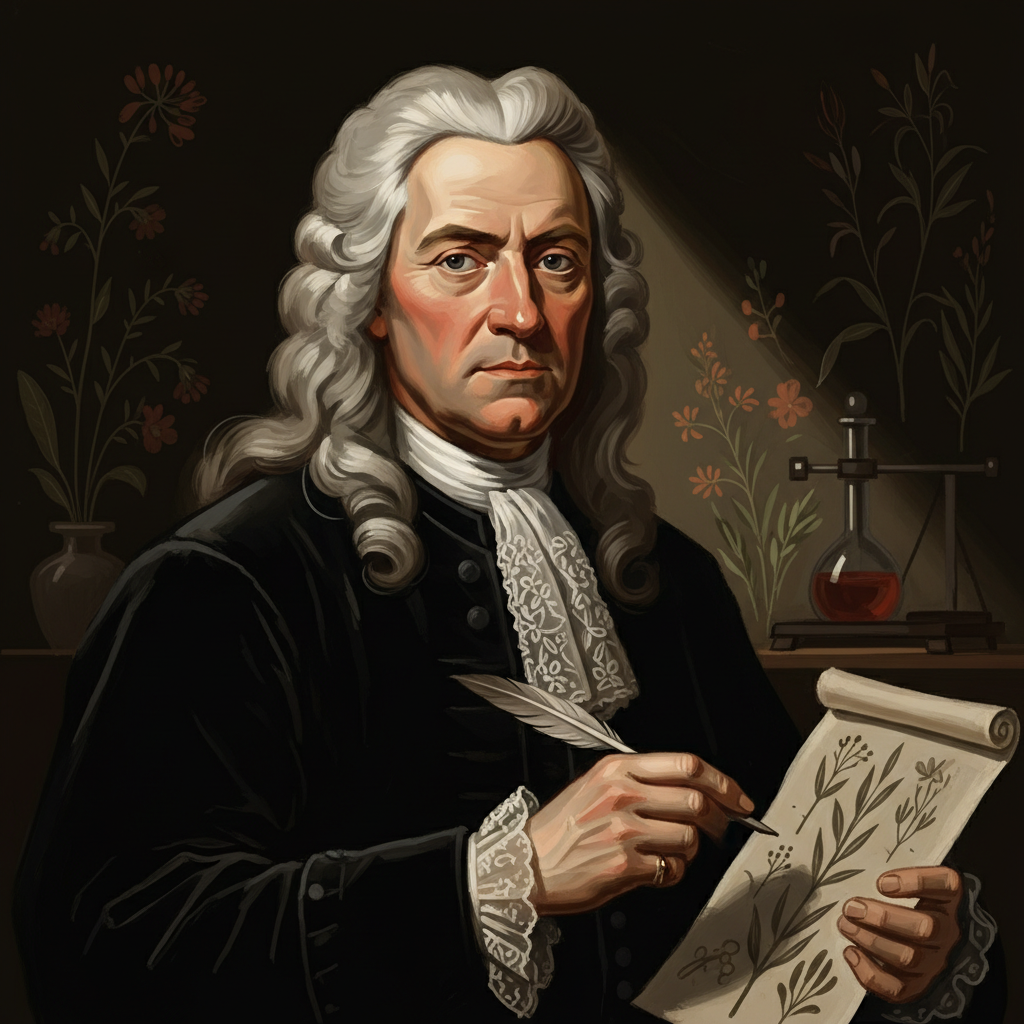
Swedish botanist and the father of modern taxonomy whose Systema Naturae (1735) introduced binomial nomenclature for naming all species. Closely associated with Joseph Banks (British naturalist who carried Linnaean classification on Cook's voyages). For an intellectual contrast, see Comte de Buffon, French naturalist and Histoire Naturelle author (1749-1788) — Buffon explicitly attacked Linnaean fixed-categories taxonomy as artificial and rejected the binomial system; his gradualist, environment-shaped natural history was the explicit alternative. Anticipates the fixed-species-vs-evolution debate Darwin would later resolve.
A combination of his famous dictum and an observation on the ongoing work of discovery.
Date: c. 1750s-1770s
ShockingFound in 1 providers: grok
1 source checked
Nature's diversity is so vast that even after establishing the foundational system for classifying all life, new organisms kept emerging constantly. The speaker acknowledges both divine creation and human intellectual ordering as complementary acts — God provides the raw material of existence, while human reason imposes structure and understanding upon that abundance.
Linnaeus literally invented binomial nomenclature and the hierarchical classification system still used today, publishing Systema Naturae in 1735. He trained disciples called 'apostles' to collect specimens worldwide. His self-referential phrasing — naming himself alongside God — reveals his enormous confidence in taxonomy's importance, while the flood of new species validated his life's work as perpetually necessary.
The 18th century Age of Exploration brought European naturalists specimens from the Americas, Africa, Asia, and the Pacific at unprecedented rates. Colonial expeditions returned with thousands of unknown organisms, overwhelming existing classification attempts. Enlightenment thinkers believed nature could be rationally systematized through observation, making Linnaeus's ordering framework both scientifically revolutionary and deeply aligned with the era's faith in human reason mastering God's creation.
AI-generated insights based on extensive research and information for context. Factual errors? Email [email protected].
Your cart is empty