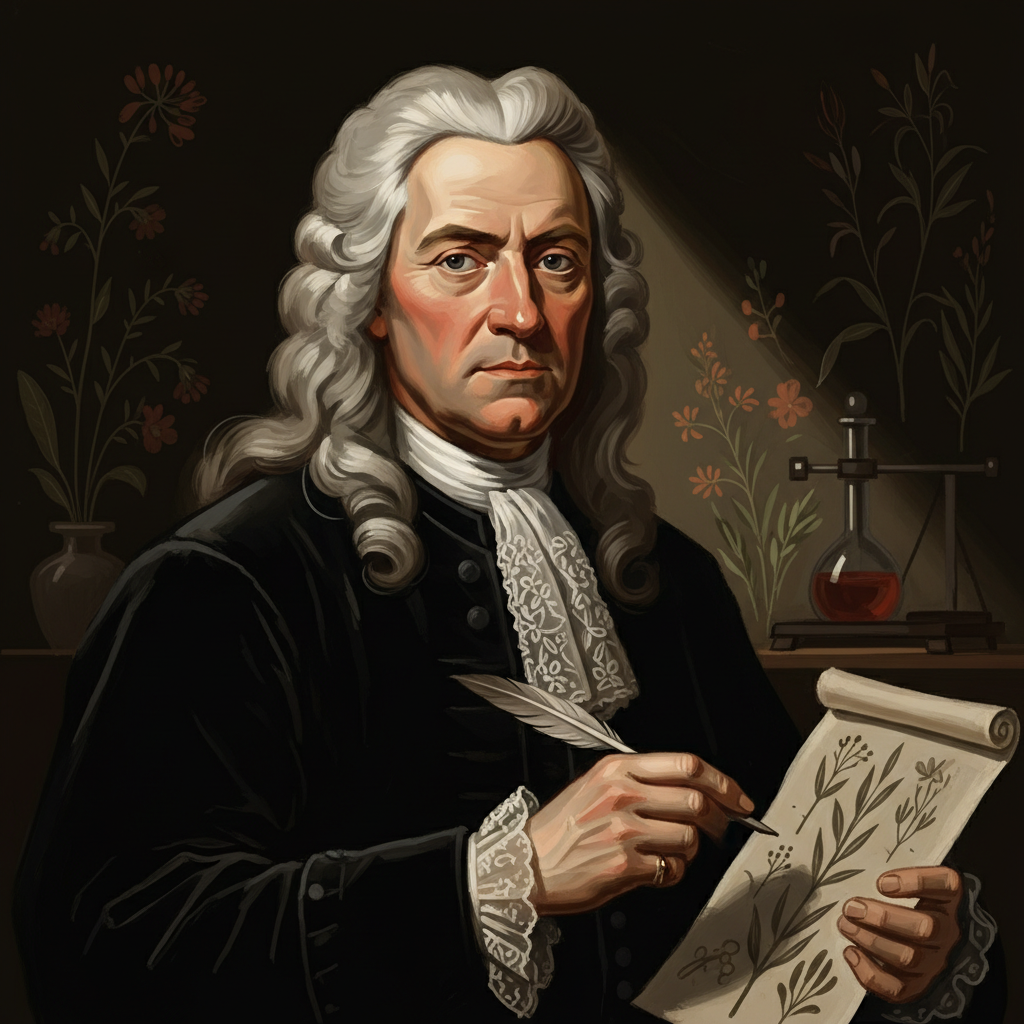
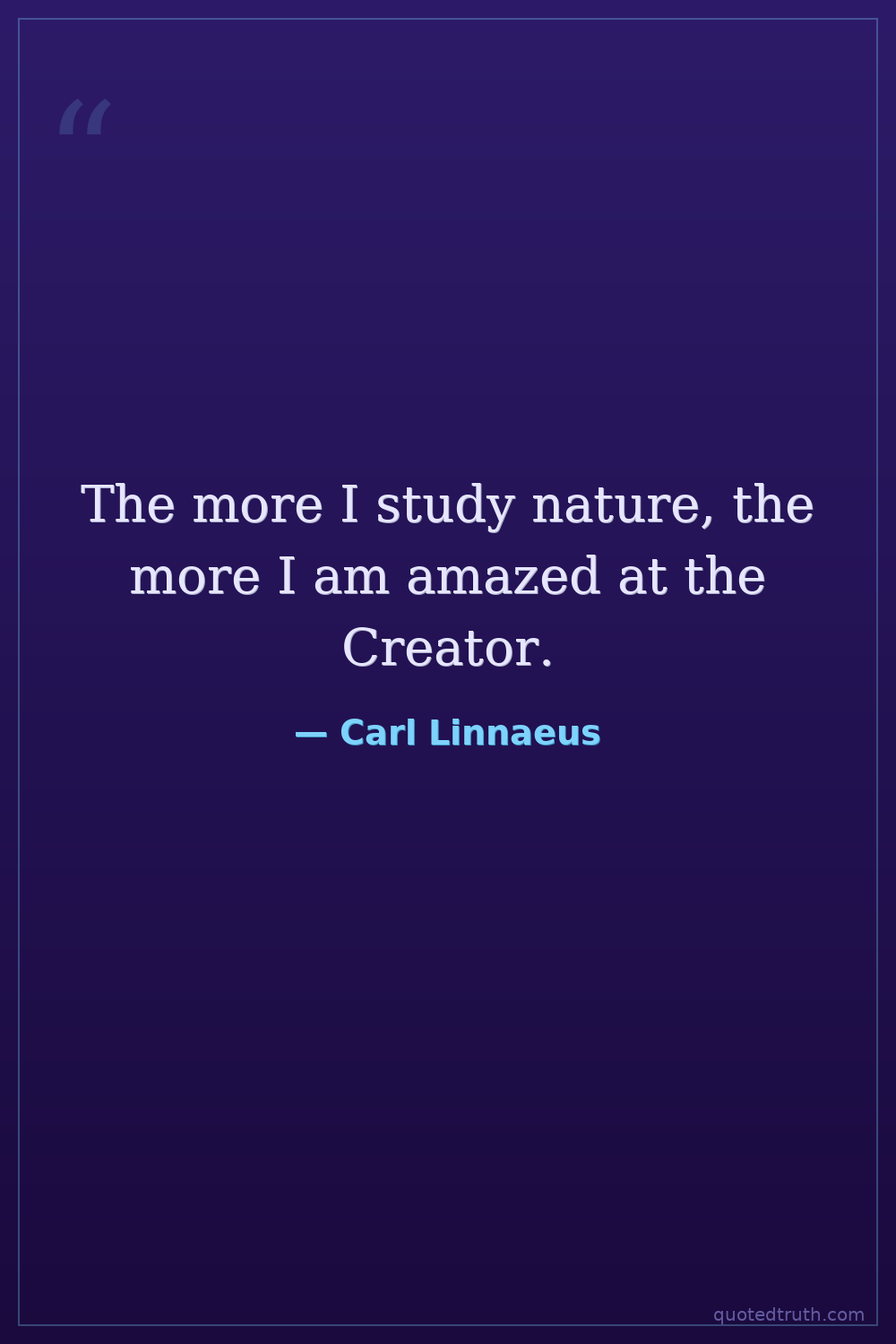
Carl Linnaeus — "The more I study nature, the more I am amazed at the Creator."
The more I study nature, the more I am amazed at the Creator.
The more I study nature, the more I am amazed at the Creator.
Click any product to generate a realistic preview. Up to 3 at a time.
* Initial load can take up to 90 seconds — revising the preview in another color is nearly instant.
"The more I study plants, the more I believe in God."
"The greatest pleasure of a naturalist is to make new discoveries."
"The whole world is a museum, and all its inhabitants are specimens."
"A plant is a living being, but it cannot feel."
"The most important thing in life is to be useful."
Swedish botanist and the father of modern taxonomy whose Systema Naturae (1735) introduced binomial nomenclature for naming all species. Closely associated with Joseph Banks (British naturalist who carried Linnaean classification on Cook's voyages). For an intellectual contrast, see Comte de Buffon, French naturalist and Histoire Naturelle author (1749-1788) — Buffon explicitly attacked Linnaean fixed-categories taxonomy as artificial and rejected the binomial system; his gradualist, environment-shaped natural history was the explicit alternative. Anticipates the fixed-species-vs-evolution debate Darwin would later resolve.
A common expression of his deep religious conviction and admiration for divine creation.
Date: c. 1730s-1770s
EducationalFound in 1 providers: gemini
1 source checked
Deeper knowledge of the natural world intensifies rather than erases wonder. The more you examine how life works—its patterns, structures, and complexity—the harder it becomes to see it as accidental. The quote argues that scientific curiosity and reverence are not opposites: rigorous study amplifies astonishment. It captures the feeling many scientists describe when discovering how intricate and ordered the universe truly is.
Linnaeus spent his career cataloguing thousands of plant and animal species, developing the binomial naming system still used today. A devout Lutheran, he believed taxonomy was literally mapping God's creation—every species he named was evidence of divine order. His Systema Naturae expanded across twelve editions as new specimens arrived from global expeditions. He reportedly called himself God's registrar, reflecting his conviction that classifying life was an act of devotion, not merely science.
Linnaeus worked during the Enlightenment, when European explorers returned from Asia, the Americas, and Africa with thousands of previously unknown species. Natural theology—the idea that studying creation reveals God's design—dominated scientific thought. Naturalists saw cataloguing biodiversity as confirming divine order, not challenging it. This was decades before Darwin; species were considered fixed by God, making each new discovery another confirmation of creation's purposeful complexity rather than evidence against it.
AI-generated insights based on extensive research and information for context. Factual errors? Email [email protected].
Your cart is empty