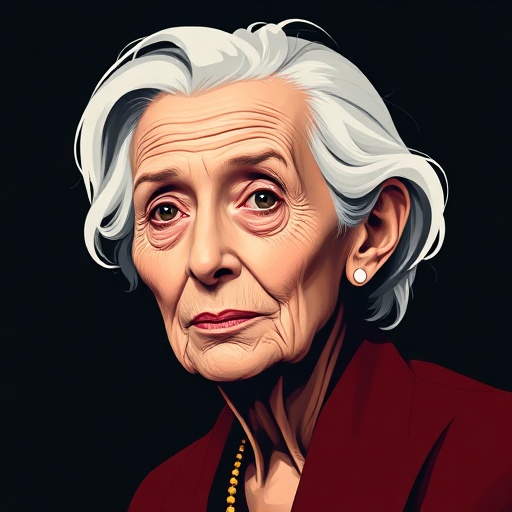
Jane Goodall — "I believe that we can make a difference, one individual at a time."
I believe that we can make a difference, one individual at a time.
I believe that we can make a difference, one individual at a time.
Click any product to generate a realistic preview. Up to 3 at a time.
* Initial load can take up to 90 seconds — revising the preview in another color is nearly instant.
"The world needs more compassion."
"We have so much to learn from the natural world. If we just open our eyes and listen."
"It is our responsibility to protect the planet and all the species that live on it."
"I don't understand why people are so afraid of nature. It's where we come from."
"The loss of biodiversity is a tragedy for all of us."
British primatologist who in 1960 began the longest-running wild primate study at Gombe Stream, transforming our understanding of chimpanzees. Closely associated with Dian Fossey (mountain-gorilla researcher) and Birutė Galdikas (orangutan researcher; together with Goodall and Fossey one of Louis Leakey's 'Trimates'). For an intellectual contrast, see Walter Palmer, American dentist who killed Cecil the Lion in Zimbabwe in 2015 — Palmer represents the trophy-hunting tradition Goodall's life's work has been organized against — the colonial-era hunter-naturalist worldview that treated primates and big game as specimens or trophies, which Goodall's Roots & Shoots and Jane Goodall Institute exist specifically to displace.
Found in 1 providers: grok
1 source checked
Every person has the power to create meaningful change through their own actions and choices. Large-scale transformation doesn't require massive institutions or movements—it begins with individuals deciding to act differently, treat others better, or protect something worth saving. Collective change is simply the accumulation of personal decisions made by ordinary people who refuse to accept that they are powerless.
Goodall built her entire career on this conviction. She left England as a young woman with no formal degree to study chimpanzees in Tanzania's Gombe forest—one person, one mission. After decades of field research, she pivoted to activism, founding Roots & Shoots to mobilize youth globally. Her own trajectory proved that individual commitment, sustained over time, reshapes scientific understanding and conservation policy.
Goodall rose to prominence during the 1960s-70s environmental awakening—Silent Spring, the first Earth Day, growing awareness of species extinction. Yet Cold War geopolitics and industrial expansion made conservation feel futile against systemic forces. Her message directly countered that fatalism, arriving precisely when people needed permission to believe personal choices mattered against overwhelming institutional indifference to ecological collapse.
AI-generated insights based on extensive research and information for context. Factual errors? Email [email protected].
Your cart is empty