What it means
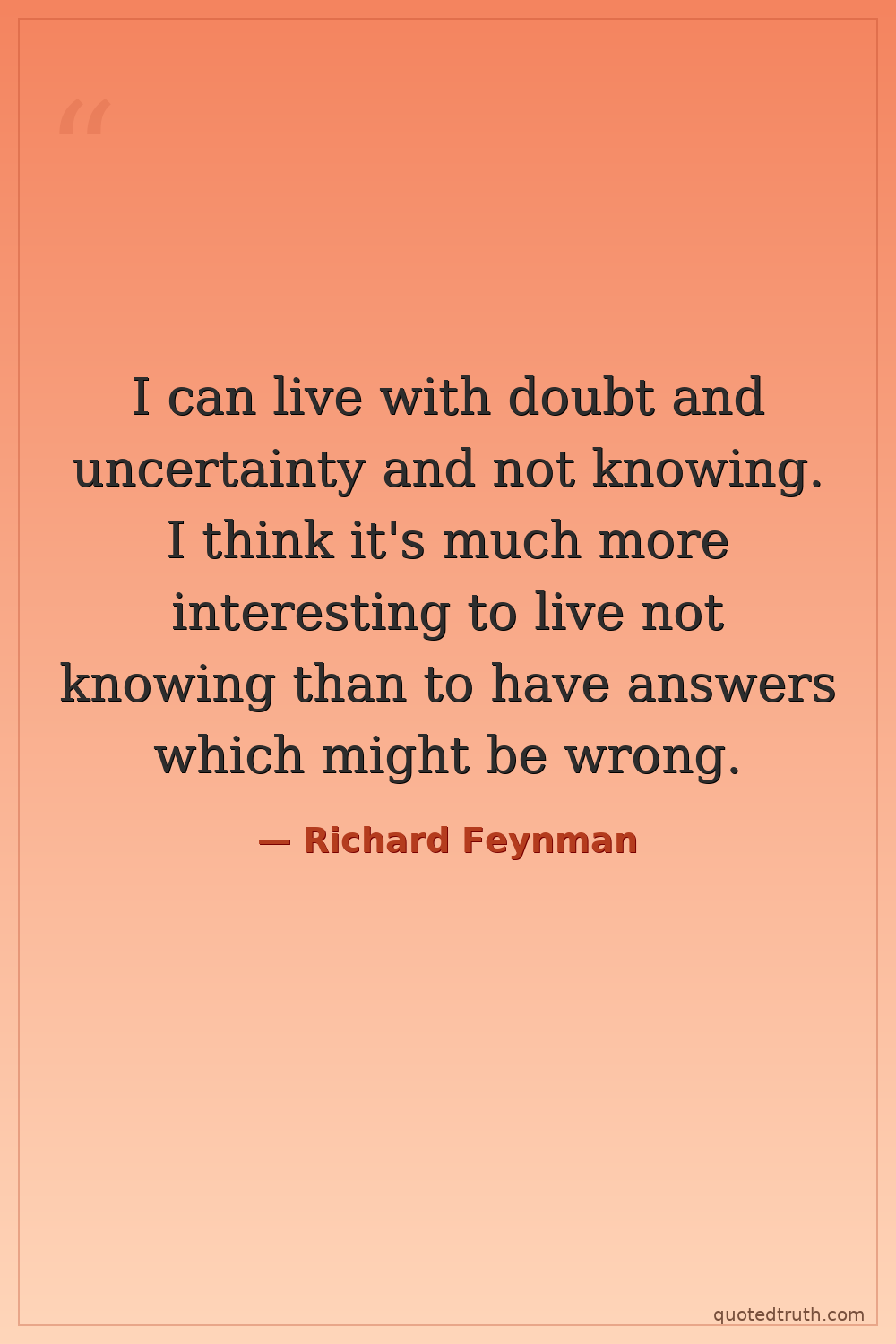
Intellectual honesty means accepting the limits of what we know rather than clinging to comforting but false certainties. Doubt is not a weakness—it's the honest starting position for genuine inquiry. Living with unresolved questions keeps the mind open, curious, and ready to update. Pretending to have answers you haven't earned is worse than admitting ignorance, because wrong certainty stops you from looking further.
Relevance to Richard Feynman
Feynman built his career dismantling false certainty—his bongo-playing, safe-cracking, joke-telling persona reflected genuine comfort with being unconventional and unresolved. As a Manhattan Project physicist who later exposed the Challenger disaster's O-ring failure through simple ice-water demonstration, he trusted observable reality over institutional confidence. His Caltech lectures prized intellectual honesty above all; he famously said the first principle of science is not fooling yourself.
The era
Feynman worked through the Cold War era, when ideological certainty—on both sides—was treated as existential necessity. Science itself was weaponized for prestige: Sputnik, nuclear deterrence, space race. In that climate, admitting uncertainty felt dangerous. Simultaneously, logical positivism was fading and philosophy of science was grappling with Kuhn's paradigm shifts. Feynman's comfort with not-knowing was a quiet rebuke to both political dogmatism and scientific overconfidence.
AI-generated insights based on extensive research and information for context. Factual errors? Email [email protected].