What it means
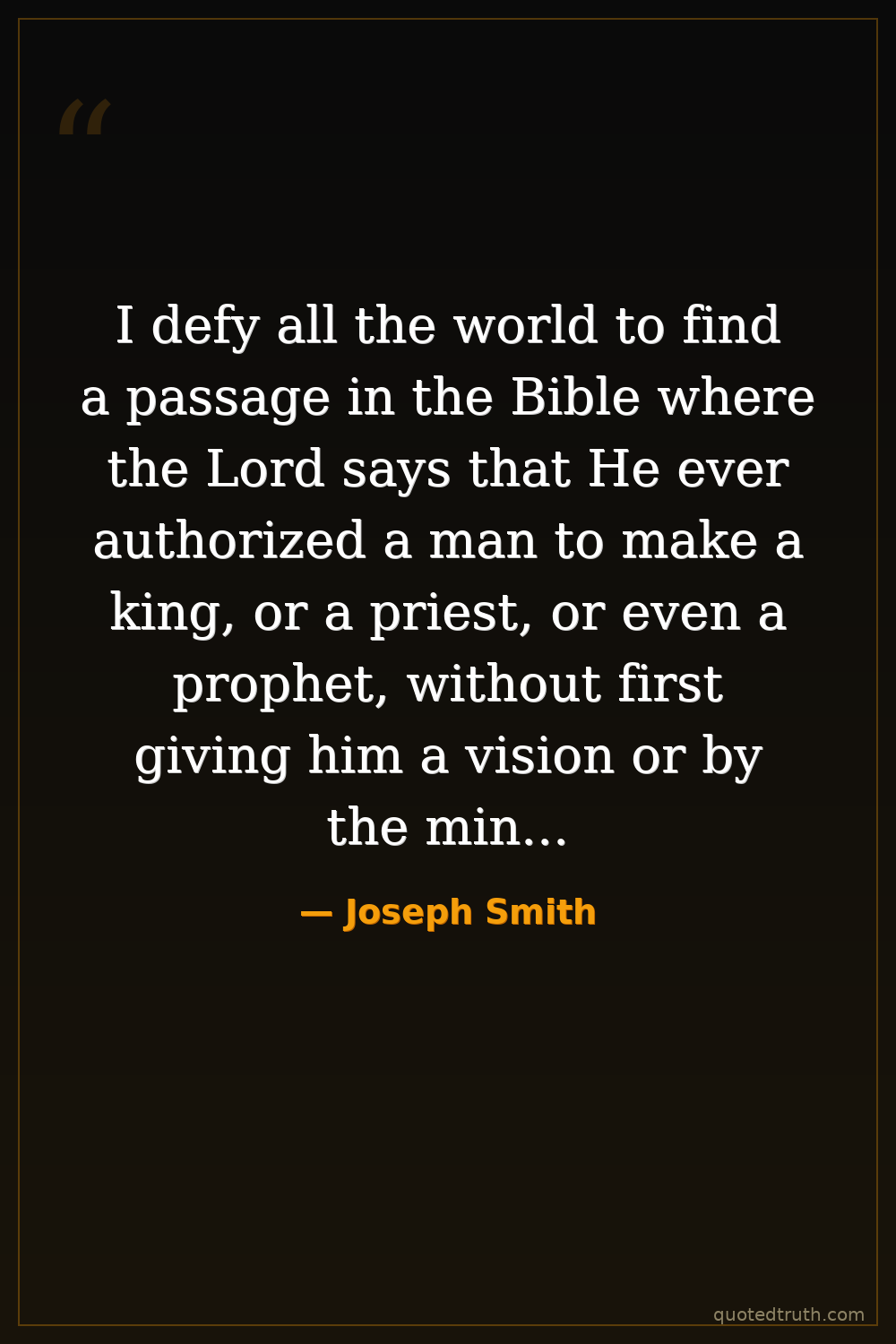
Joseph Smith challenges anyone to find a Bible passage where God authorized a leader — king, priest, or prophet — without supernatural confirmation first. His point: legitimate divine authority always comes through direct experience, a vision or angelic messenger, not human appointment alone. Institutional succession or self-proclamation isn't enough. Real calling requires real supernatural contact, and he argues scripture consistently proves this standard.
Relevance to Joseph Smith
This quote is a direct defense of Smith's own divine credentials. He claimed a First Vision in 1820, angelic visits from Moroni delivering golden plates, and John the Baptist restoring priesthood authority. By anchoring his argument in biblical pattern, Smith reframes attacks on his legitimacy — if critics accept Moses, Samuel, and Paul as genuine prophets, they must accept the same supernatural-calling standard applies to him.
The era
Smith delivered this argument during the Second Great Awakening of the 1820s–1840s, when America was flooded with competing revival movements, new denominations, and fierce debates over who held authentic religious authority. Protestant splinter groups had fractured from Rome and Canterbury, yet each claimed legitimacy. Questions of divine succession versus personal revelation were urgent and contested, making Smith's biblical challenge a pointed shot at every rival claim to spiritual leadership.
AI-generated insights based on extensive research and information for context. Factual errors? Email [email protected].