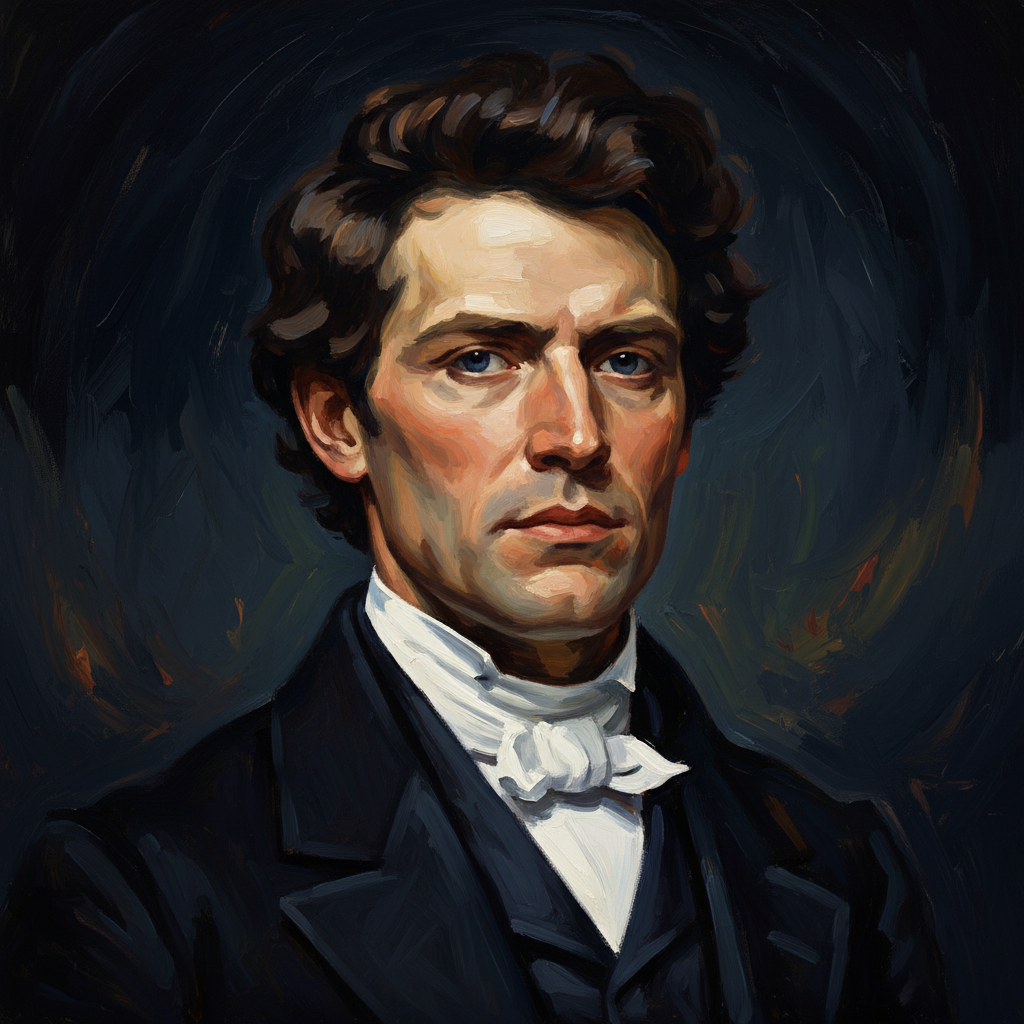
Joseph Smith — "If I am to be a martyr, I am willing to be one."
If I am to be a martyr, I am willing to be one.
If I am to be a martyr, I am willing to be one.
Click any product to generate a realistic preview. Up to 3 at a time.
* Initial load can take up to 90 seconds — revising the preview in another color is nearly instant.
"If I am to be damned for going to hell with my friends, I will go to hell with my friends."
"If I were to be saved and go to heaven, and see any man there that I had not endeavored to save, I would feel worse there than I would in hell."
"It is our divine destiny to be heirs of eternal life, to become 'priests and kings . . . [and] gods, even the sons of God . . . [and to] dwell in the presence of God . . . forever and ever.'"
"I have learned for myself that God is a being of great condescension, and that he will reveal himself to man."
"I am willing to die for a cause, but not for a lie."
History of the Church, Vol. 6, p. 555 (Letter to Emma Smith, June 27, 1844)
Date: 1844
WisdomFound in 1 providers: grok
1 source checked
The quote expresses unconditional commitment to one's beliefs — a willingness to die rather than recant or flee. It's not a desire for death but an acceptance that standing firm may cost everything. The speaker refuses to let threat of violence dictate their choices. In plain terms: I know this could kill me, and I'm choosing my convictions anyway. It draws a hard line between survival and integrity.
Joseph Smith founded the Church of Jesus Christ of Latter-day Saints in 1830, immediately igniting fierce opposition. Mobs attacked him, Missouri's governor issued a literal extermination order, and Illinois proved equally hostile. He spoke knowing enemies actively sought his death. On June 27, 1844, a mob stormed Carthage Jail and shot him — making him literally the martyr he'd contemplated. His willingness was not rhetorical; it was biographical prophecy fulfilled within his lifetime.
The 1830s–1840s saw explosive religious pluralism during America's Second Great Awakening, when new sects competed fiercely for converts. Anti-Mormon sentiment was especially violent — armed militias expelled entire communities from Missouri and Illinois. The word martyr carried immediate weight in a Protestant culture saturated with stories of early Christian sacrifice. Smith's era treated religious nonconformity not as merely controversial but as grounds for mob justice, expulsion, and murder sanctioned by state governors.
AI-generated insights based on extensive research and information for context. Factual errors? Email [email protected].
Your cart is empty