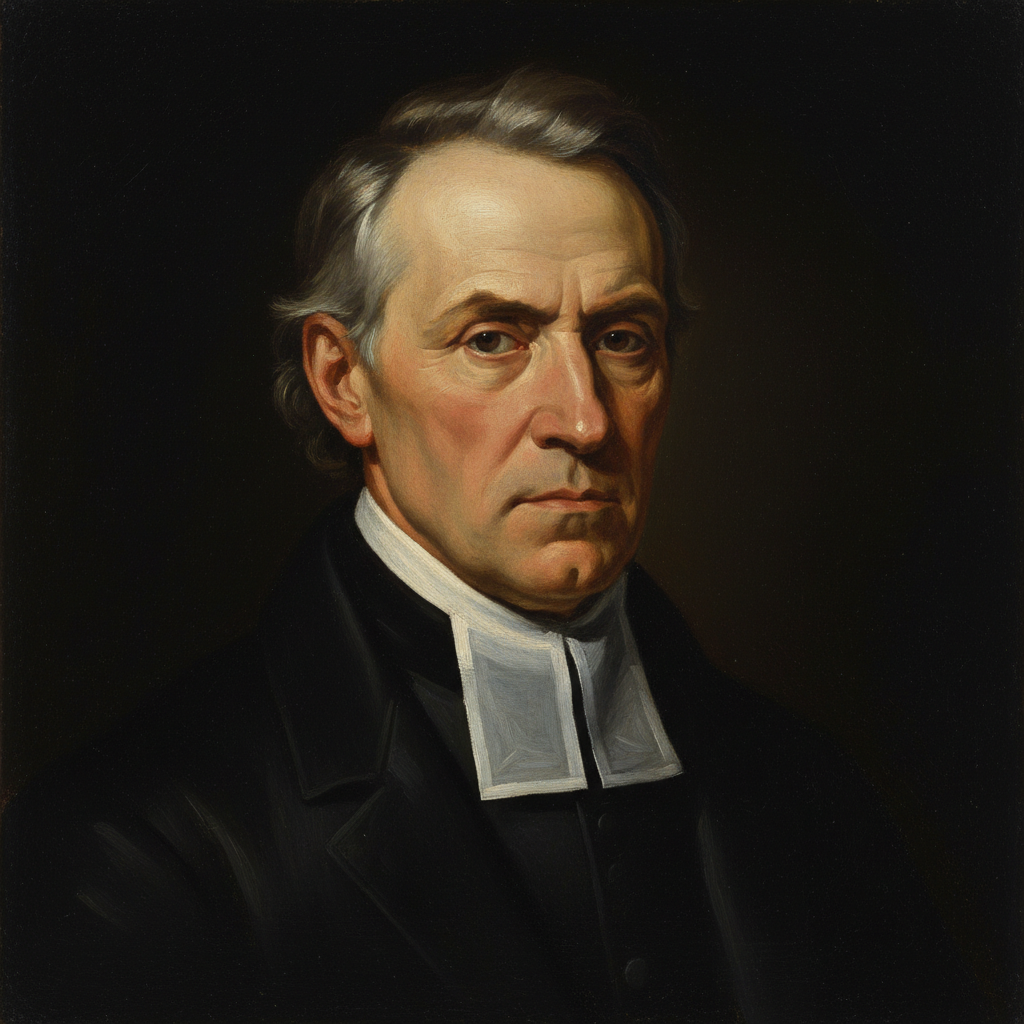
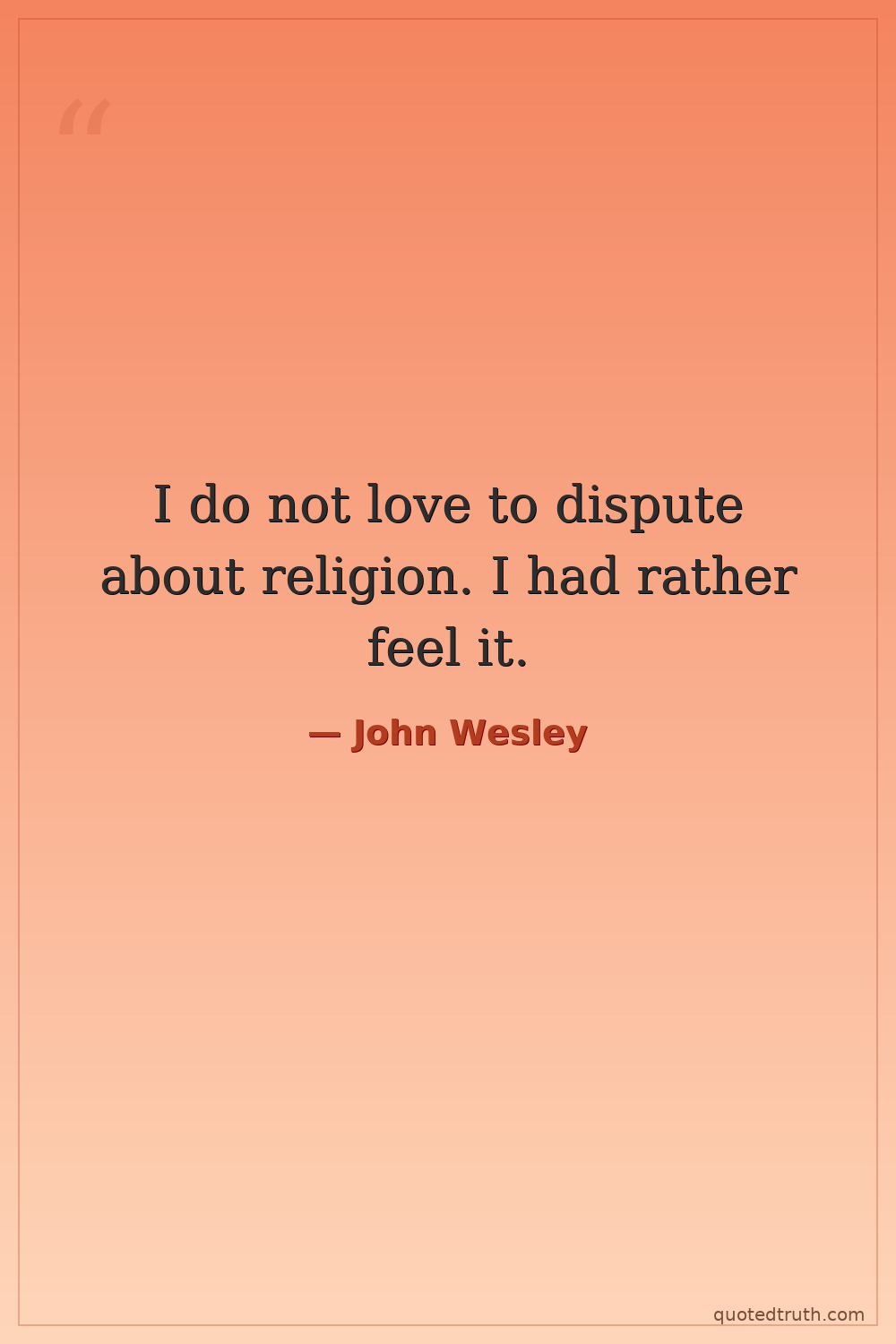
John Wesley — "I do not love to dispute about religion. I had rather feel it."
I do not love to dispute about religion. I had rather feel it.
I do not love to dispute about religion. I had rather feel it.
Click any product to generate a realistic preview. Up to 3 at a time.
* Initial load can take up to 90 seconds — revising the preview in another color is nearly instant.
"I have often thought, that if I were to choose a carriage to ride in, it should be a plain one."
"The rich, the honourable, the great, will hardly enter into the kingdom of heaven."
"The greatest enemy to human happiness is the love of money."
"I cannot but observe, that the Methodists are not a people who are fond of novelties."
"I have often thought, that if I were to choose a servant, it should be one that needed no wages."
English Anglican cleric and founder of Methodism, whose open-air preaching and class-meeting structure created the largest 18th-century evangelical revival. Closely associated with Charles Wesley (his hymn-writing brother) and George Whitefield (early co-revivalist, later doctrinal opponent). For an intellectual contrast, see George Whitefield, Calvinist evangelical revivalist — Whitefield's predestinarian Calvinism vs Wesley's free-grace Arminian theology split the early Methodist movement permanently in the 1739-41 break. The founding evangelical Calvinist-Arminian schism — the two parallel evangelical traditions American Christianity descends from.
Found in 1 providers: grok
1 source checked
Expresses a preference for lived, experiential faith over intellectual argument. Religious debates and theological disputes matter less than personally experiencing faith — feeling grace, transformation, and God's presence in daily life. Rather than winning doctrinal arguments, Wesley prizes the inner emotional reality of belief. Faith, in his view, is something to be felt and inhabited, not merely defended or dissected in abstract theological combat.
Wesley built Methodism around heartfelt personal religious experience — spiritual disciplines, accountability groups, and field preaching to working-class crowds. His 1738 Aldersgate moment, when he felt his heart 'strangely warmed,' defined his entire ministry. He clashed with Calvinists and Anglicans alike but consistently avoided prolonged theological combat in favor of practical holiness. This sentiment captures his lifelong conviction that authentic Christianity must be experientially lived, not merely debated in pulpits or pamphlets.
Wesley lived in 18th-century Britain (1703–1791), when Enlightenment rationalism dominated intellectual culture and the Church of England had grown cold and formal. Fierce theological disputes divided Anglicans, Calvinists, Catholics, and Dissenters. The Methodist and evangelical revivals — including America's Great Awakening — arose as emotional counter-movements emphasizing felt conversion over scholastic debate. Denominational in-fighting was common and bitter, making Wesley's preference for felt faith a practical stance against religious fragmentation.
AI-generated insights based on extensive research and information for context. Factual errors? Email [email protected].
Your cart is empty