John Wesley — "The greatest enemy to human happiness is the love of money."
The greatest enemy to human happiness is the love of money.
The greatest enemy to human happiness is the love of money.
Click any product to generate a realistic preview. Up to 3 at a time.
* Initial load can take up to 90 seconds — revising the preview in another color is nearly instant.
"I do not love to dispute about religion. I had rather feel it."
"The Lord is at hand; therefore fear not."
"When I have money, I get rid of it quickly, lest it find a way into my heart."
"I am a creature of a day, passing through life as an arrow through the air. I am a spirit come from God, and returning to God; just hovering a few moments over a great gulf, till, on a sudden, I drop …"
"I have been reading a book of travels. I do not know when I have been so much amused. It is a pity that so few of our travellers write like rational creatures."
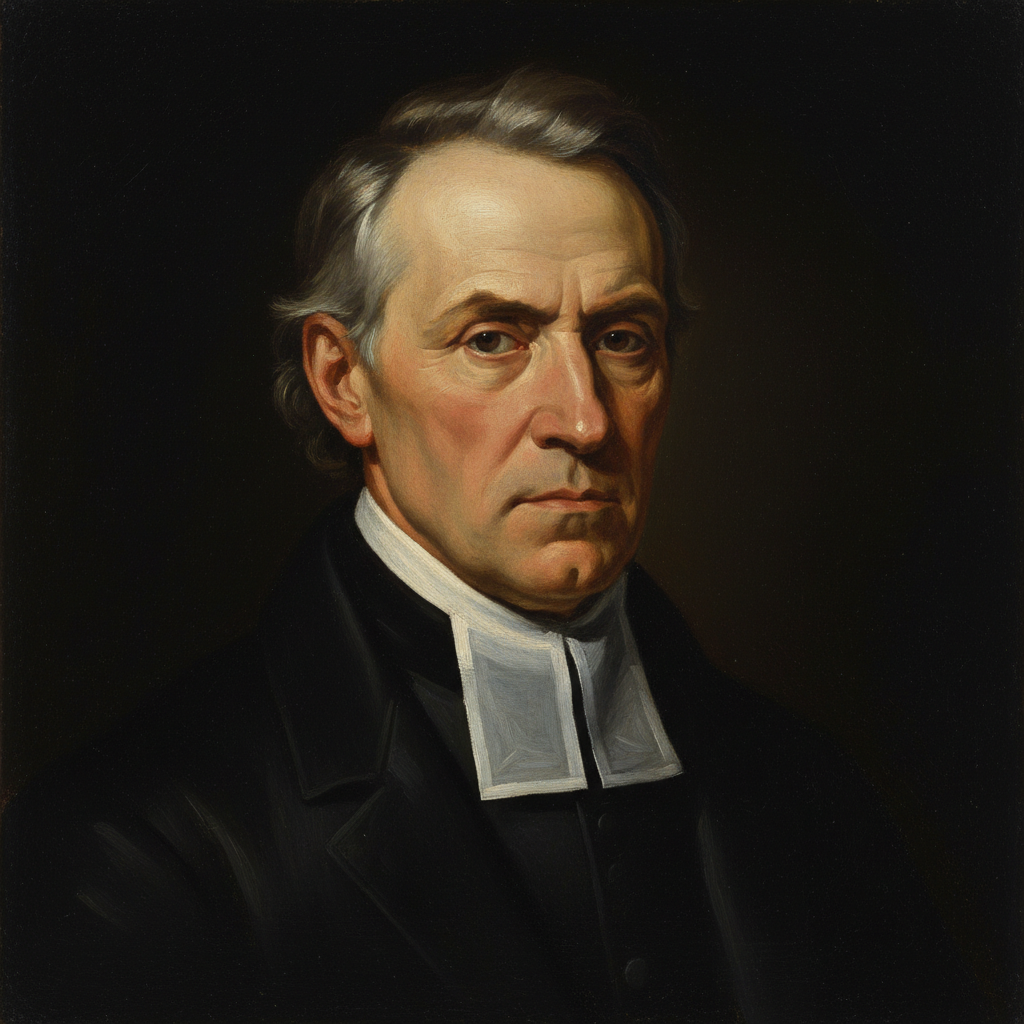
English Anglican cleric and founder of Methodism, whose open-air preaching and class-meeting structure created the largest 18th-century evangelical revival. Closely associated with Charles Wesley (his hymn-writing brother) and George Whitefield (early co-revivalist, later doctrinal opponent). For an intellectual contrast, see George Whitefield, Calvinist evangelical revivalist — Whitefield's predestinarian Calvinism vs Wesley's free-grace Arminian theology split the early Methodist movement permanently in the 1739-41 break. The founding evangelical Calvinist-Arminian schism — the two parallel evangelical traditions American Christianity descends from.
Found in 1 providers: grok
1 source checked
Prioritizing wealth above all else corrodes genuine happiness. When money becomes the central pursuit of life, it crowds out relationships, integrity, and spiritual fulfillment. The person chasing riches sacrifices present contentment for perpetual wanting, never arriving at satisfaction. True happiness requires valuing people, purpose, and character over financial accumulation.
Wesley lived this principle radically, earning substantial income through his writings yet dying with almost nothing, having given away tens of thousands of pounds during his lifetime. His famous financial motto was 'earn all you can, save all you can, give all you can.' He preached extensively to England's poorest industrial workers, understanding firsthand how wealth obsession destroyed communities and souls.
Wesley preached during Britain's Industrial Revolution dawn, when enclosure movements displaced rural peasants and early factories created brutal working conditions driven purely by profit. The emerging merchant class was accumulating unprecedented wealth while laborers suffered grinding poverty. This wealth gap, justified by emerging capitalist ideology, made Wesley's warning about money's corrupting power urgently relevant to both rich exploiters and desperate poor.
AI-generated insights based on extensive research and information for context. Factual errors? Email [email protected].
Your cart is empty