John Wesley — "I have often thought, that if I were to choose a servant, it should be one that …"
I have often thought, that if I were to choose a servant, it should be one that needed no wages.
I have often thought, that if I were to choose a servant, it should be one that needed no wages.
Click any product to generate a realistic preview. Up to 3 at a time.
* Initial load can take up to 90 seconds — revising the preview in another color is nearly instant.
"Satan has no objection to our being religious, provided we are not too religious."
"I know no other book in the world, that contains so many strong and clear proofs of the being and perfections of God, and of the truth of our holy religion, as the Bible."
"I have often thought, that if I were to choose a text to preach from, it should be 'God is love.'"
"The world is my parish."
"It is a melancholy proof of the blindness and ignorance of mankind, that they are not aware of the evil of sin."
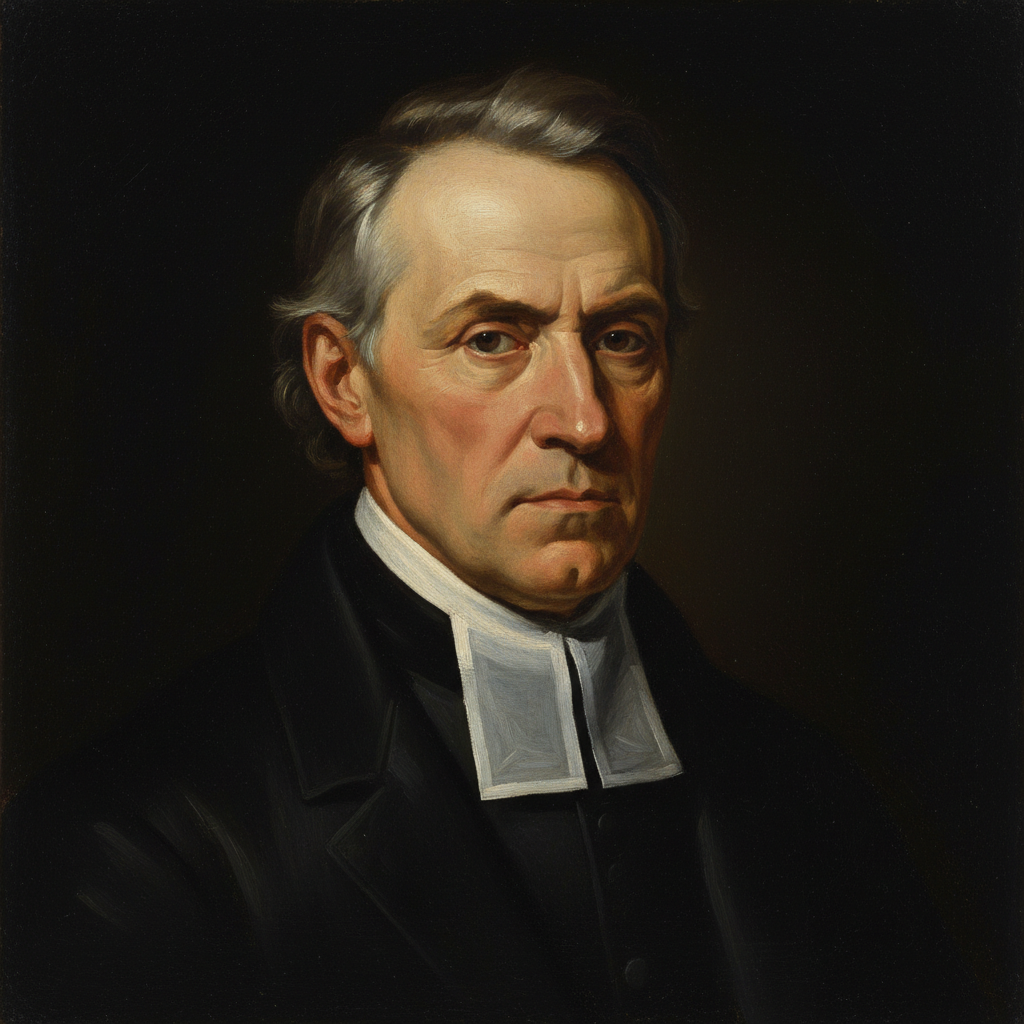
English Anglican cleric and founder of Methodism, whose open-air preaching and class-meeting structure created the largest 18th-century evangelical revival. Closely associated with Charles Wesley (his hymn-writing brother) and George Whitefield (early co-revivalist, later doctrinal opponent). For an intellectual contrast, see George Whitefield, Calvinist evangelical revivalist — Whitefield's predestinarian Calvinism vs Wesley's free-grace Arminian theology split the early Methodist movement permanently in the 1739-41 break. The founding evangelical Calvinist-Arminian schism — the two parallel evangelical traditions American Christianity descends from.
Found in 1 providers: grok
1 source checked
The most trustworthy helper is one who serves from inner conviction rather than financial need. When a person works solely for a paycheck, their commitment ends when the money stops. Someone driven by duty, love, or principle needs no external incentive to remain loyal and diligent. The quote champions intrinsic motivation over transactional exchange, arguing that genuine service comes from character, not compensation.
Wesley lived with radical frugality, giving away most of what he earned throughout his life. He built Methodism on unpaid lay preachers and class leaders who served from spiritual conviction, not salary. His entire ministry operated on the belief that authentic Christian service must come from grace and love, not reward. Wesley himself worked relentlessly into old age, motivated entirely by religious duty rather than earthly gain.
In 18th-century England, domestic service was ubiquitous and wages were a constant source of tension between masters and servants. Wesley ministered primarily to the working poor — coal miners, factory hands, and laborers — at the dawn of the Industrial Revolution. In an era where class divisions defined every relationship, the idea of service transcending wage-labor was radical, challenging the transactional economy that governed most English social arrangements.
AI-generated insights based on extensive research and information for context. Factual errors? Email [email protected].
Your cart is empty