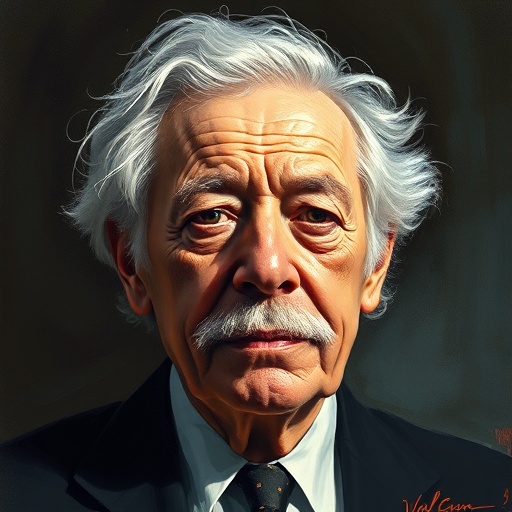
Linus Pauling — "I have always been an optimist, and I believe that the future is bright."
I have always been an optimist, and I believe that the future is bright.
I have always been an optimist, and I believe that the future is bright.
Click any product to generate a realistic preview. Up to 3 at a time.
* Initial load can take up to 90 seconds — revising the preview in another color is nearly instant.
"The best way to learn is to teach."
"I am not afraid to be wrong, because I know that I can learn from my mistakes."
"You can't just have a good idea. You have to have a lot of good ideas."
"The only way to discover the limits of the possible is to go beyond them into the impossible."
"I think that the future of medicine is in prevention, not in treatment."
Found in 1 providers: grok
1 source checked
Optimism is a deliberate stance toward the future — choosing to believe that things will improve rather than decay. It is not naivety but a sustained orientation that drives effort, persistence, and engagement with unsolved problems. The speaker is declaring that this forward-looking confidence has been a consistent feature of their character, not a passing mood, and that it continues to shape how they interpret what comes next.
Pauling's optimism was empirically grounded: he won two unshared Nobel Prizes — Chemistry in 1954 and Peace in 1962 — demonstrating faith that both science and diplomacy could reshape the world. His decades-long campaign against nuclear testing, dismissed by government officials and peers alike, required sustained optimism against real institutional resistance. His late-career advocacy for vitamin C, controversial as it was, reflected the same forward confidence.
Pauling lived through the Manhattan Project, Cold War nuclear proliferation, McCarthyism, and the Vietnam War — an era when pessimism about civilization's survival was entirely rational. His 1962 Peace Prize came one year after he helped organize the 1961 anti-nuclear Pugwash Conference. Declaring optimism publicly in that climate was a political and moral act, not a platitude, pushing back against the fatalism that nuclear standoff had normalized across Western intellectual culture.
AI-generated insights based on extensive research and information for context. Factual errors? Email [email protected].
Your cart is empty