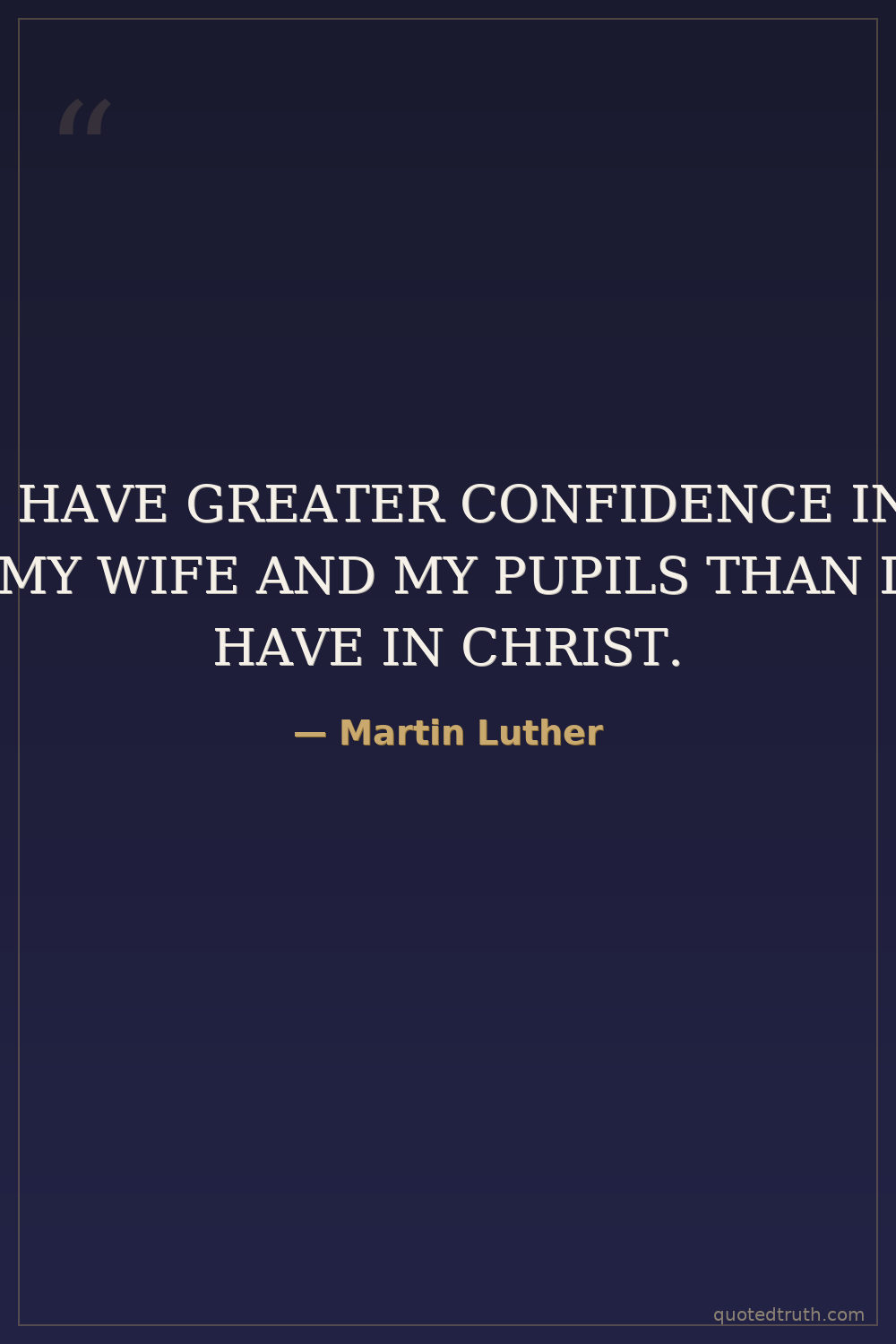
Martin Luther — "I HAVE GREATER CONFIDENCE IN MY WIFE AND MY PUPILS THAN I HAVE IN CHRIST."
I HAVE GREATER CONFIDENCE IN MY WIFE AND MY PUPILS THAN I HAVE IN CHRIST.
I HAVE GREATER CONFIDENCE IN MY WIFE AND MY PUPILS THAN I HAVE IN CHRIST.
Click any product to generate a realistic preview. Up to 3 at a time.
* Initial load can take up to 90 seconds — revising the preview in another color is nearly instant.
"Let the wife make her husband glad to come home and let him make her sorry to see him leave."
"If any man doth ascribe of salvation, even the very least, to the free will of man, he knoweth nothing of grace, and he hath not learnt Jesus Christ aright."
"I am like a ripe nut; I am ready to fall."
"Nor let ministers cease studying until they have discovered and are sure that they have taught the devil to death and have become more learned than God himself and all His saints."
"You owe nothing to God except faith and confession. In all other things He lets you do whatever you like. You may do as you please, without any danger of conscience whatsoever."
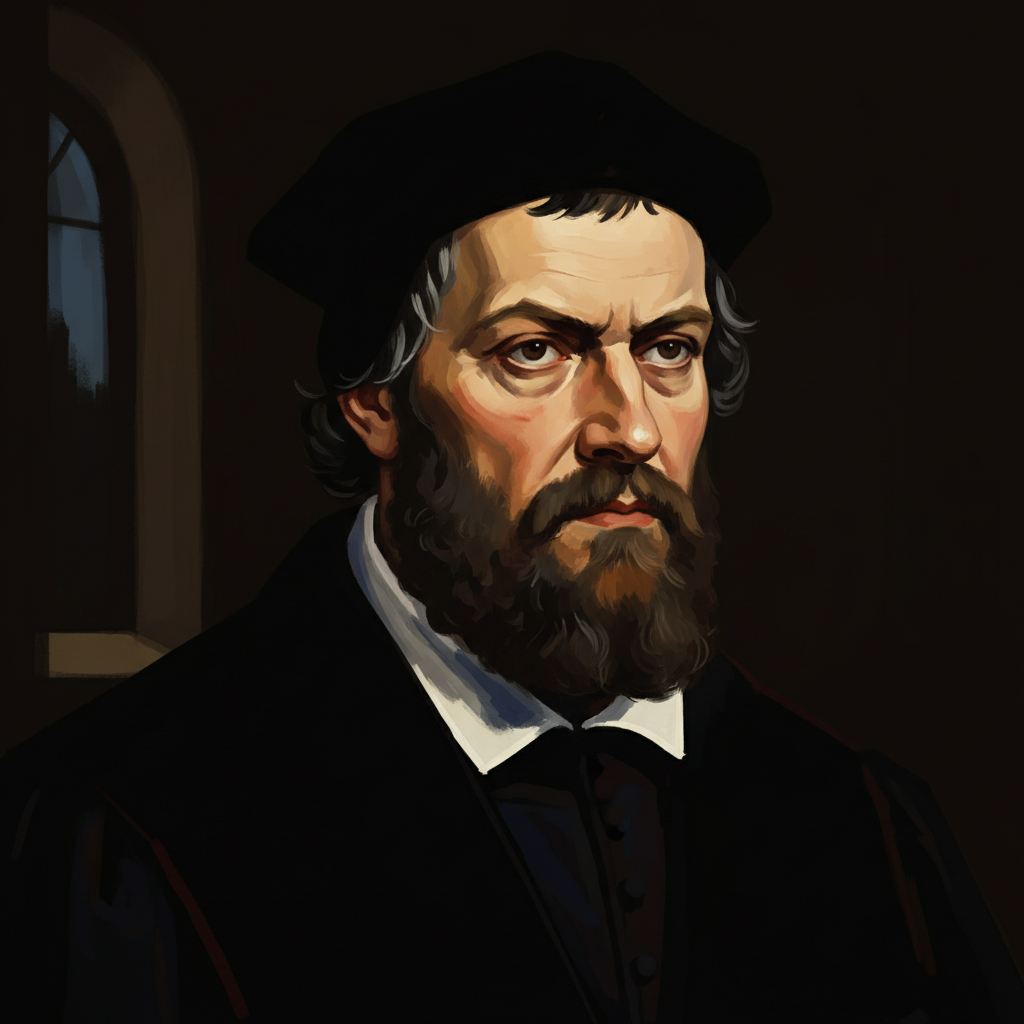
German theologian whose 95 Theses (1517) launched the Protestant Reformation and broke the Catholic Church's monopoly on Western Christianity. Closely associated with Philipp Melanchthon (Lutheran systematizer) and John Calvin (later Reformer who built on Luther's break). For an intellectual contrast, see Pope Leo X, Renaissance pope (1513-1521) — Leo X's indulgence sales triggered Luther's break and Leo excommunicated him in 1521 — Luther's entire Reformation is structured as a direct answer to the indulgence-funded Vatican Leo represented.
Found in 1 providers: gemini
1 source checked
Luther admits that in moments of doubt, he finds it easier to trust the people right in front of him—his wife and students—than to trust Christ, whom he cannot see. It is a blunt confession that human faith is fragile, that believing in something invisible and distant is harder than relying on familiar faces, and that even a famous reformer struggled daily with the gap between belief and visible proof.
Luther spent his life insisting salvation comes by faith alone, yet he was also a family man who married former nun Katharina von Bora in 1525 and a professor at Wittenberg who mentored generations of students. This quote captures his trademark honesty: rather than posing as a spiritual superhero, he confessed his struggles openly. His household and lecture hall were his daily ministry, and he trusted the tangible bonds formed there.
In the early modern period following Luther's 1517 Ninety-Five Theses, faith was a life-or-death public matter, with reformers and Catholics accusing each other of heresy. Admitting doubt about Christ could be dangerous, yet Luther's Table Talk writings recorded such candid remarks for students at his Wittenberg home. The Reformation reshaped Europe, encouraging personal Bible reading and clerical marriage, which made Luther's domestic life with Katharina itself a theological statement.
AI-generated insights based on extensive research and information for context. Factual errors? Email [email protected].
Your cart is empty