Martin Luther — "Whoever sticks his nose in every corner will get it stuck."
Whoever sticks his nose in every corner will get it stuck.
Whoever sticks his nose in every corner will get it stuck.
Click any product to generate a realistic preview. Up to 3 at a time.
* Initial load can take up to 90 seconds — revising the preview in another color is nearly instant.
"If any man doth ascribe of salvation, even the very least, to the free will of man, he knoweth nothing of grace, and he hath not learnt Jesus Christ aright."
"These are the Scriptures which make fools of all the wise and understanding, and are open only to the small and simple, as Christ says in Matthew 11:25."
"I have held many things in my hands, and I have lost them all; but whatever I have placed in God’s hands, that I still possess."
"Safe-conduct on the highways should be abolished completely for the Jews."
"You are an extraordinary creature, being neither God nor man. Perhaps you are the devil himself."
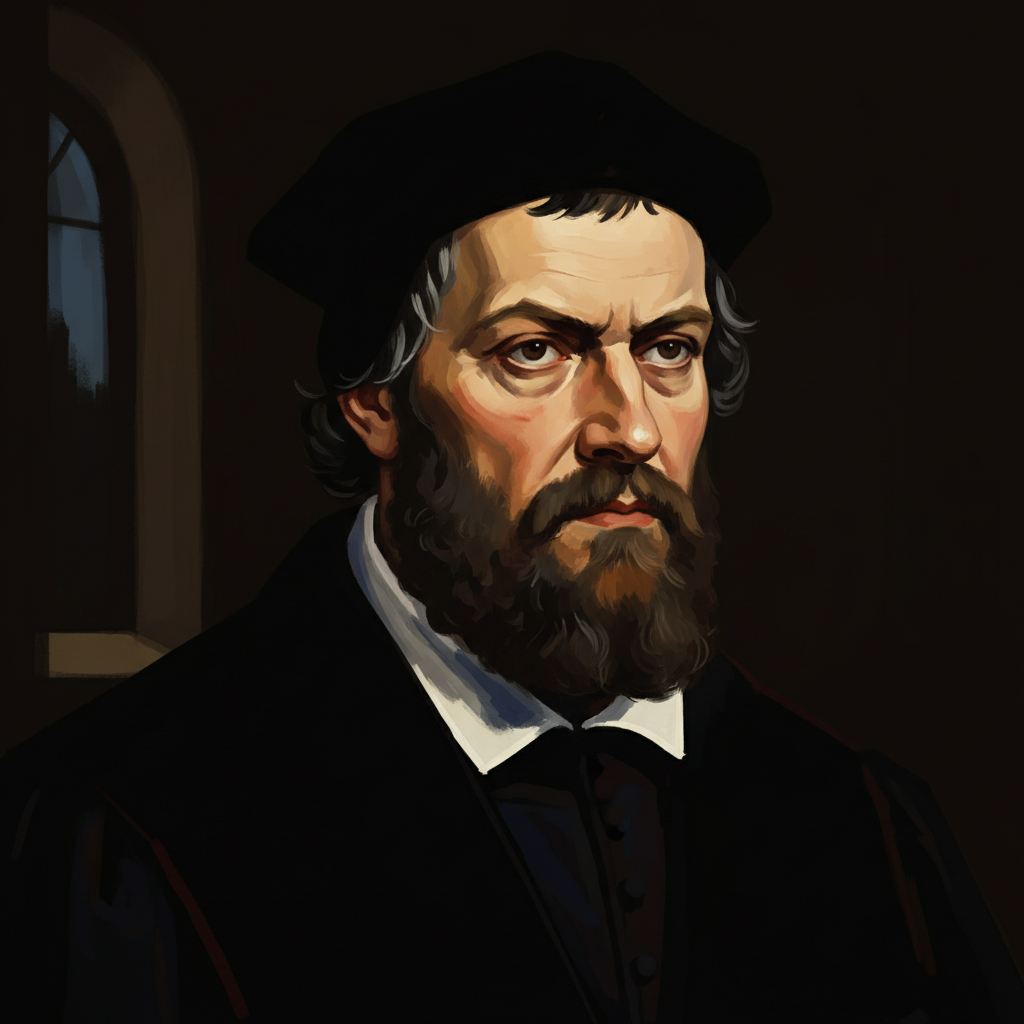
German theologian whose 95 Theses (1517) launched the Protestant Reformation and broke the Catholic Church's monopoly on Western Christianity. Closely associated with Philipp Melanchthon (Lutheran systematizer) and John Calvin (later Reformer who built on Luther's break). For an intellectual contrast, see Pope Leo X, Renaissance pope (1513-1521) — Leo X's indulgence sales triggered Luther's break and Leo excommunicated him in 1521 — Luther's entire Reformation is structured as a direct answer to the indulgence-funded Vatican Leo represented.
Found in 1 providers: gemini
1 source checked
Being nosy and meddling in everyone else's business will eventually backfire on you. If you insist on poking around where you don't belong, you'll get caught, humiliated, or trapped in situations you can't easily escape. It's a warning against excessive curiosity, gossip, and interference. Mind your own affairs, because people who constantly probe into matters that aren't theirs inevitably pay a price for their intrusion.
Luther was famously blunt, earthy, and fond of plain German proverbs, many preserved in his Table Talk. As a monk-turned-reformer who challenged the papacy, he knew firsthand the cost of 'sticking his nose' into powerful institutions, yet he also distrusted gossip and idle meddling among parishioners. His pastoral writings repeatedly urged Christians to tend their own callings rather than judge neighbors, reflecting both his combative public life and his domestic moral teaching.
Early modern Europe in the 1500s was a dense, surveillance-heavy world of small towns, guilds, and parish life where neighbors policed each other's morals, religion, and politics. The Reformation intensified this: informers reported heretics, Catholic and Protestant authorities hunted dissenters, and rumor could mean prison or execution. Against this backdrop of inquisitions, religious wars, and constant suspicion, a proverb warning against prying had sharp survival value, not just folksy wisdom.
AI-generated insights based on extensive research and information for context. Factual errors? Email [email protected].
Your cart is empty