John Wesley — "I have no time to be little."
I have no time to be little.
I have no time to be little.
Click any product to generate a realistic preview. Up to 3 at a time.
* Initial load can take up to 90 seconds — revising the preview in another color is nearly instant.
"I have been in this city for over a year, yet I have not seen one instance of a truly awakened soul."
"I have often thought, that if I were to choose a place to preach in, it should be in the open air."
"I found myself much out of order, and apprehended that my end was near. I had no fear of death, but I was concerned for the cause of God, which I apprehended would suffer by my removal."
"Diseases are the instruments of God to punish men for their sins."
"The best of all is, God is with us."
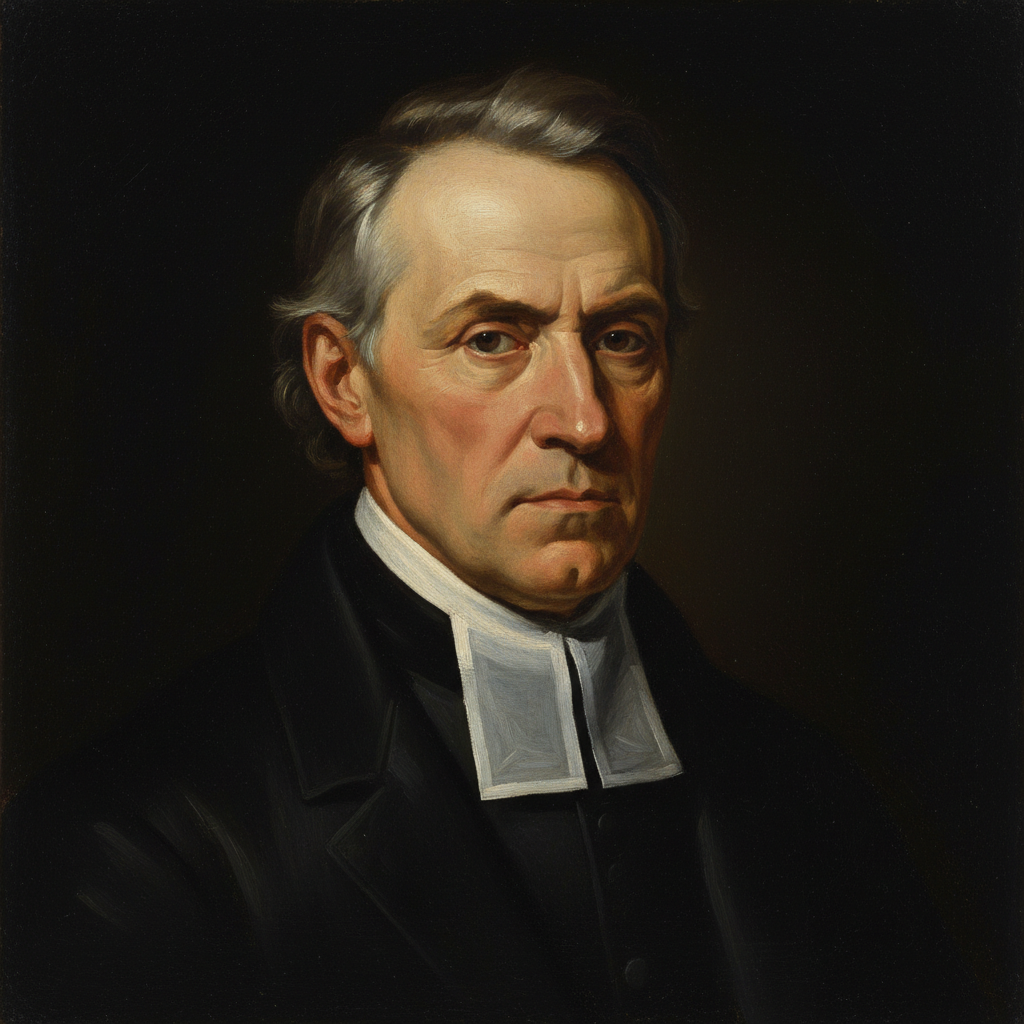
English Anglican cleric and founder of Methodism, whose open-air preaching and class-meeting structure created the largest 18th-century evangelical revival. Closely associated with Charles Wesley (his hymn-writing brother) and George Whitefield (early co-revivalist, later doctrinal opponent). For an intellectual contrast, see George Whitefield, Calvinist evangelical revivalist — Whitefield's predestinarian Calvinism vs Wesley's free-grace Arminian theology split the early Methodist movement permanently in the 1739-41 break. The founding evangelical Calvinist-Arminian schism — the two parallel evangelical traditions American Christianity descends from.
Found in 1 providers: grok
1 source checked
The quote rejects pettiness, grudges, ego, and trivial distractions. Wesley is declaring that life is too short and the work too urgent to waste energy on small-minded squabbles, personal slights, or inconsequential concerns. It is a commitment to operating at the largest scale of purpose available — refusing to let pride, gossip, or minor disputes crowd out what genuinely matters. Greatness demands protecting your attention fiercely.
Wesley traveled over 250,000 miles on horseback, preached roughly 40,000 sermons, wrote and published hundreds of works, founded schools, organized poverty relief, and campaigned against slavery — all before his death at 87. He rose at 4 a.m. daily for decades. His life was a sustained assault on wasted time. When institutional clergy dismissed his field preaching as undignified, he called that concern exactly the kind of littleness he refused to indulge.
Eighteenth-century Britain was fracturing under early industrialization — rural workers crowded into brutal urban slums, largely abandoned by a complacent Church of England consumed with internal politics and social rank. Wesley's era rewarded class snobbery and ecclesiastical protocol over genuine ministry. His Methodist movement was born in deliberate defiance of that smallness, taking salvation directly to miners and factory workers. The quote captures the reformer's imperative: enormous suffering demanded enormous response, not institutional timidity.
AI-generated insights based on extensive research and information for context. Factual errors? Email [email protected].
Your cart is empty