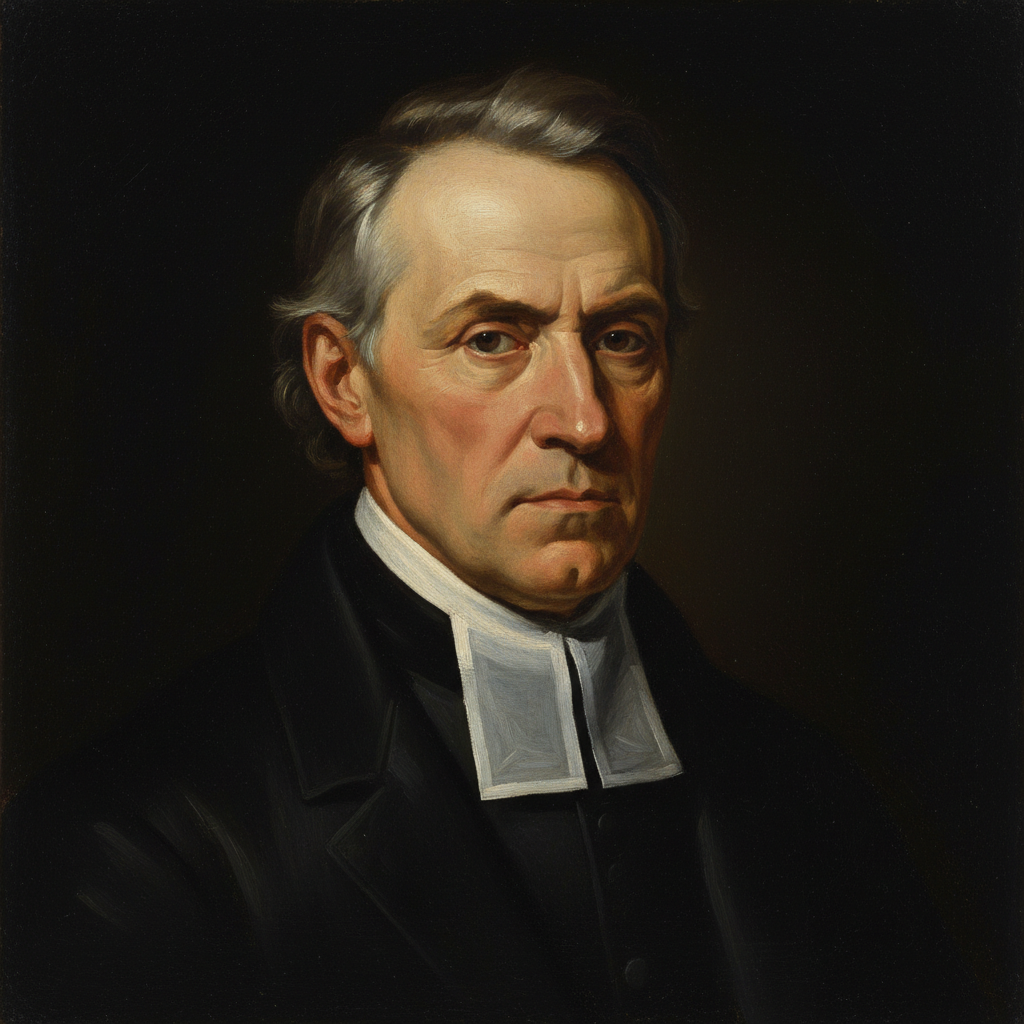
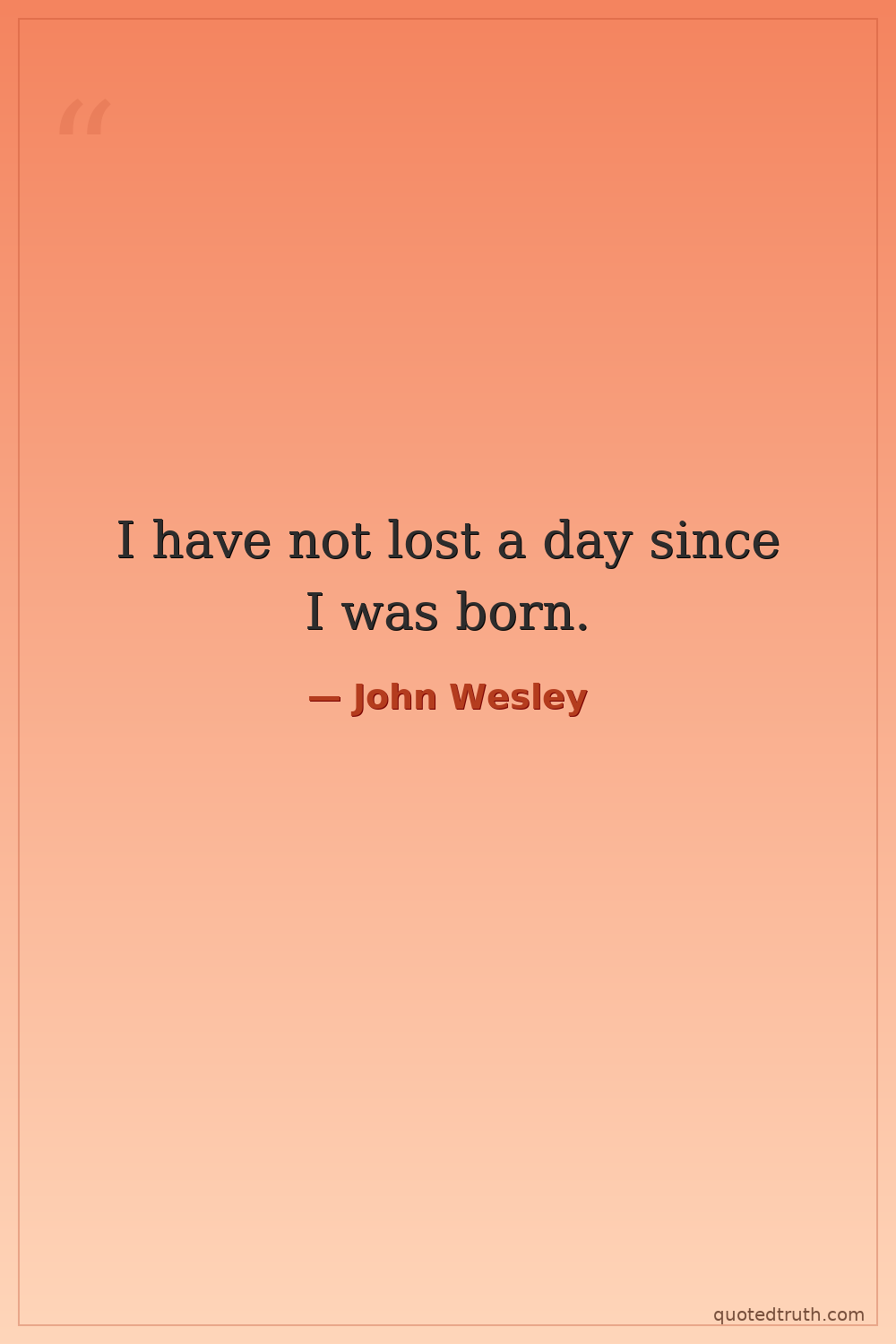
John Wesley — "I have not lost a day since I was born."
I have not lost a day since I was born.
I have not lost a day since I was born.
Click any product to generate a realistic preview. Up to 3 at a time.
* Initial load can take up to 90 seconds — revising the preview in another color is nearly instant.
"What a work has God wrought in our day!"
"What is the secret of your strength? I answer, the power of prayer."
"I am not careful about my life or my death. I know that I am in the hands of God."
"I have often thought, that if I were to choose a language to speak, it should be Greek."
"I have often observed, that the more a man knows, the more he is sensible of his ignorance."
English Anglican cleric and founder of Methodism, whose open-air preaching and class-meeting structure created the largest 18th-century evangelical revival. Closely associated with Charles Wesley (his hymn-writing brother) and George Whitefield (early co-revivalist, later doctrinal opponent). For an intellectual contrast, see George Whitefield, Calvinist evangelical revivalist — Whitefield's predestinarian Calvinism vs Wesley's free-grace Arminian theology split the early Methodist movement permanently in the 1739-41 break. The founding evangelical Calvinist-Arminian schism — the two parallel evangelical traditions American Christianity descends from.
Found in 1 providers: grok
1 source checked
The quote asserts a life of total purposefulness — that not a single day has been squandered on idleness or triviality. Every hour has been spent intentionally and productively. It conveys radical accountability for how time is used, the claim of a person who measures their life not by years but by whether each day served something worthwhile. A declaration of zero wasted time from birth to the present moment.
Wesley was legendary for relentless productivity — riding over 250,000 miles on horseback, preaching an estimated 40,000 sermons, rising at 4 AM daily, and writing hundreds of books and pamphlets, maintaining this pace into his eighties. Methodism itself was named for its disciplined method of structured devotion. This quote captures his core conviction that time is a sacred trust from God, never to be squandered but fully redeemed through ceaseless labor and service.
Wesley lived during 18th-century Britain, a period of early industrialization, Enlightenment rationalism, and profound social inequality. England's working poor faced grinding poverty, rampant alcoholism, and spiritual neglect while the established Church largely ignored them. Against aristocratic leisure culture and institutional complacency, Wesley's declaration of never wasting a day embodied the Protestant work ethic at its most radical — modeling for his followers that every hour carried moral weight and evangelical opportunity.
AI-generated insights based on extensive research and information for context. Factual errors? Email [email protected].
Your cart is empty