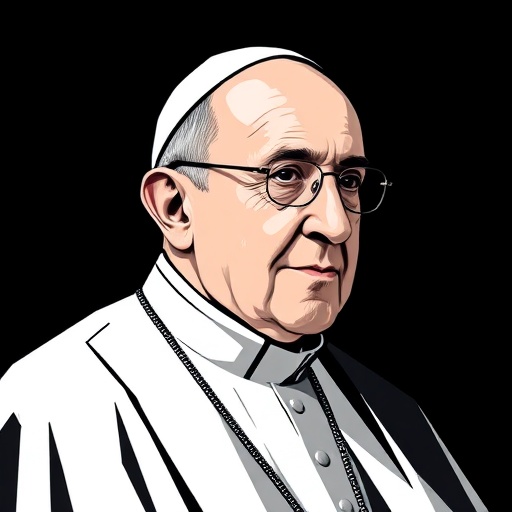
Pope Francis — "I have not lost my peace. I would not know how to live without peace."
I have not lost my peace. I would not know how to live without peace.
I have not lost my peace. I would not know how to live without peace.
Click any product to generate a realistic preview. Up to 3 at a time.
* Initial load can take up to 90 seconds — revising the preview in another color is nearly instant.
"I am a sinner, and I need the mercy of God."
"Corruption is the gangrene of a people."
"The Lord always forgives, always. It is we who get tired of asking for forgiveness."
"Sometimes when I see a clericalist, I suddenly become anticlerical."
"A little bit of mercy makes the world less cold and more just."
First Latin American and Jesuit pope (2013-), who has steered the Catholic Church toward pastoral inclusion on LGBTQ pastoral care, divorced Catholics, and climate. Closely associated with Pope John XXIII (the Vatican II reformer pope) and Cardinal Walter Kasper (his theological ally on pastoral reform). For an intellectual contrast, see Cardinal Raymond Burke, American traditionalist cardinal, former head of the Vatican Apostolic Signatura — Burke is the public face of Catholic traditionalism that views Francis's pastoral approach as doctrinally dangerous — he has formally challenged Amoris Laetitia and other Francis reforms.
Found in 1 providers: grok
1 source checked
Inner peace isn't a luxury here — it's as essential as oxygen. This quote declares that no external chaos, criticism, or conflict can strip away an interior calm deliberately cultivated and fiercely protected. It's not denial of hardship but commitment to a stable center that makes functioning possible. Modern readers recognize this as radical emotional resilience: choosing not to be consumed by noise, anxiety, or the relentless expectations of a fractured world.
Jorge Mario Bergoglio, trained as a Jesuit, grounds his life in Ignatian spirituality, where inner consolation — a felt sense of peace — signals alignment with God's will. As pope since 2013, he has weathered relentless pressure: clergy abuse scandals, Vatican financial corruption, fierce traditionalist backlash against his reforms, and hostility from powerful factions. He chose not to live in the papal palace, rejected privileges, and repeatedly described simplicity and prayer as his anchors.
Francis leads during a period of unprecedented global turbulence: the COVID-19 pandemic killed millions and shattered social trust; the Ukraine and Gaza conflicts deepened international divisions; the clergy sex abuse crisis forced reckoning within the Church itself; and Western societies fracture along political and cultural lines. Against this backdrop, a global spiritual leader affirming unshakeable personal peace is both countercultural and pastoral — a deliberate signal that meaning survives catastrophe.
AI-generated insights based on extensive research and information for context. Factual errors? Email [email protected].
Your cart is empty