Carl Linnaeus — "I have not seen the genus Homo. I have seen many individuals."
I have not seen the genus Homo. I have seen many individuals.
I have not seen the genus Homo. I have seen many individuals.
Click any product to generate a realistic preview. Up to 3 at a time.
* Initial load can take up to 90 seconds — revising the preview in another color is nearly instant.
"The number of species is fixed and unchanging."
"The Creator's hand is visible in every part of creation."
"The world is a book, and those who do not travel read only one page."
"The earth is a paradise, but men make it a hell."
"I have been called a second Adam."
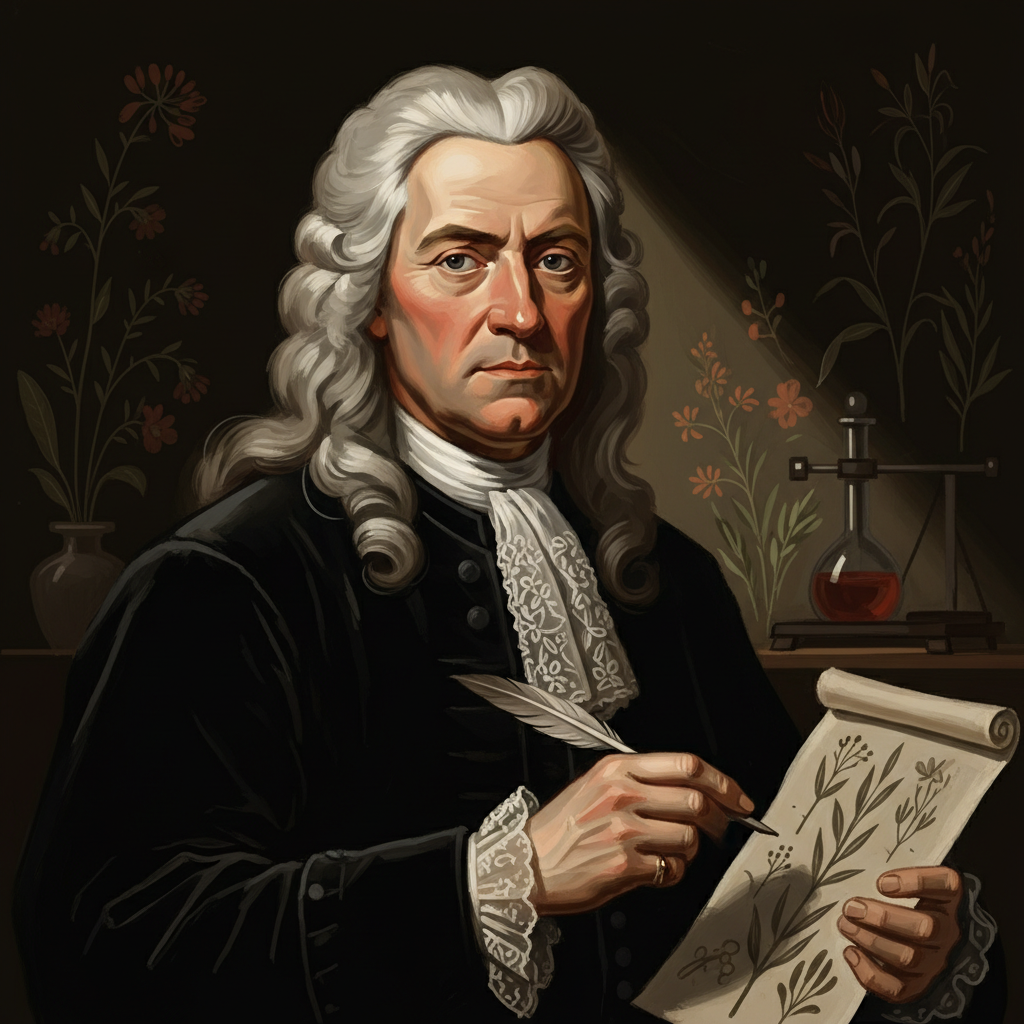
Swedish botanist and the father of modern taxonomy whose Systema Naturae (1735) introduced binomial nomenclature for naming all species. Closely associated with Joseph Banks (British naturalist who carried Linnaean classification on Cook's voyages). For an intellectual contrast, see Comte de Buffon, French naturalist and Histoire Naturelle author (1749-1788) — Buffon explicitly attacked Linnaean fixed-categories taxonomy as artificial and rejected the binomial system; his gradualist, environment-shaped natural history was the explicit alternative. Anticipates the fixed-species-vs-evolution debate Darwin would later resolve.
A statement reflecting his empirical approach and perhaps a subtle critique of overly abstract classifications of humans, attributed.
Date: Uncertain (attributed)
WisdomFound in 1 providers: gemini
1 source checked
The speaker is pointing out that abstract categories like 'humanity' or 'the human species' exist only as mental constructs. In the real world, you never encounter the category itself, only specific, unique people. It's a reminder that general labels are useful shorthand but shouldn't be mistaken for actual things. Every person you meet is concrete and individual, while the group they belong to is an idea imposed on top.
Linnaeus built his career on creating genus-and-species categories, most famously placing humans in Homo sapiens. This remark shows his awareness that taxonomy is a tool, not a discovery of something tangible. He classified thousands of plants, animals, and minerals, yet recognized that the classes themselves are abstractions. It reflects the careful empiricist beneath the system-builder: trust what specimens show you, treat the label as a convenience.
In the early modern period, naturalists were racing to impose order on a flood of specimens arriving from global voyages. Linnaeus's Systema Naturae (1735) gave Europe a universal ranking scheme just as Enlightenment thinkers debated whether categories reflected real essences or human conventions. Nominalism versus realism was a live philosophical dispute, and natural history sat at its center. His comment lands inside that tension between cataloging nature and admitting the catalog is man-made.
AI-generated insights based on extensive research and information for context. Factual errors? Email [email protected].
Your cart is empty