Carl Linnaeus — "I have been called a second Adam."
I have been called a second Adam.
I have been called a second Adam.
Click any product to generate a realistic preview. Up to 3 at a time.
* Initial load can take up to 90 seconds — revising the preview in another color is nearly instant.
"It is not God, but people themselves who shorten their lives by not keeping physically fit."
"Homo sapiens, nosce te ipsum. (Man, know thyself.)"
"I was born on a farm, and I have always loved the countryside."
"I have seen the Creator in His works."
"The names of plants are the foundation of botany."
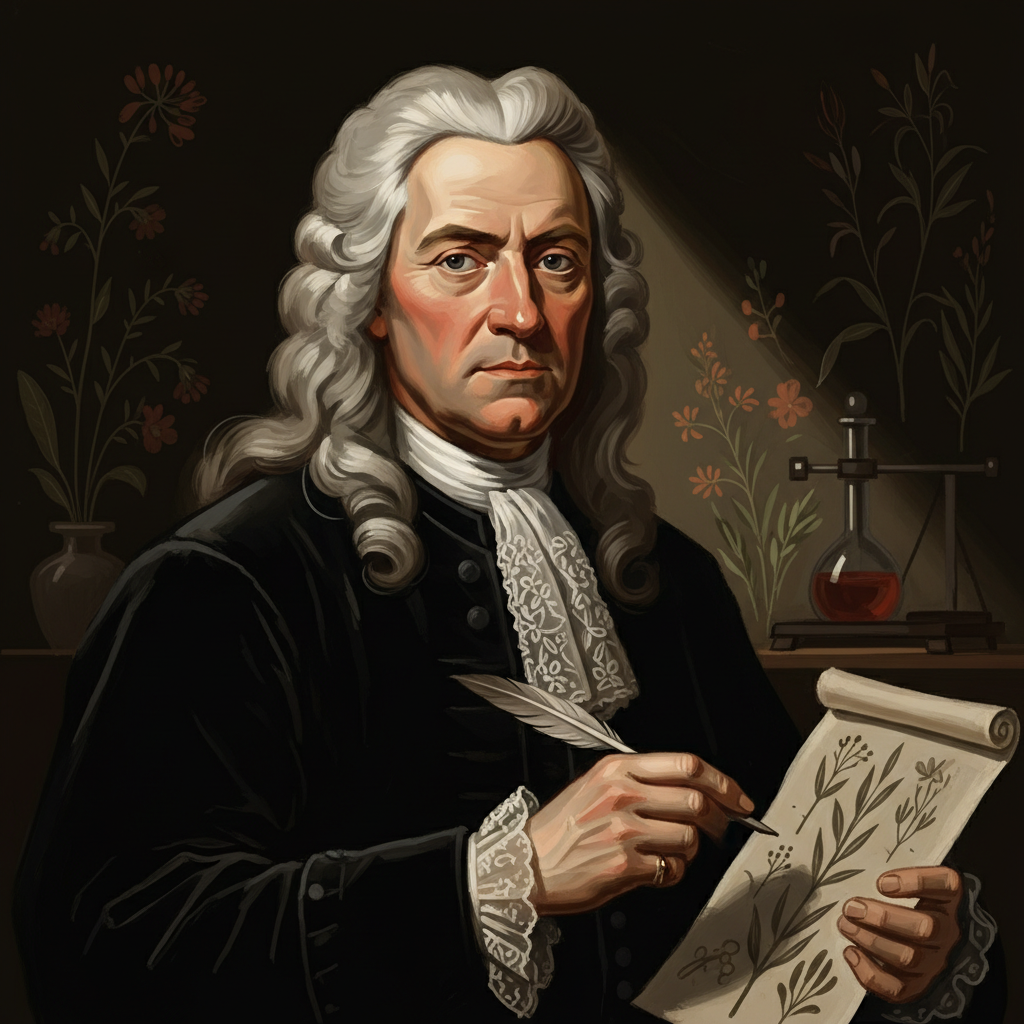
Swedish botanist and the father of modern taxonomy whose Systema Naturae (1735) introduced binomial nomenclature for naming all species. Closely associated with Joseph Banks (British naturalist who carried Linnaean classification on Cook's voyages). For an intellectual contrast, see Comte de Buffon, French naturalist and Histoire Naturelle author (1749-1788) — Buffon explicitly attacked Linnaean fixed-categories taxonomy as artificial and rejected the binomial system; his gradualist, environment-shaped natural history was the explicit alternative. Anticipates the fixed-species-vs-evolution debate Darwin would later resolve.
A highly boastful claim, comparing himself to the biblical figure who named all creation.
Date: c. 1760s
ShockingFound in 1 providers: grok
1 source checked
The quote invokes the biblical Adam, the first man tasked by God with naming every creature in Eden. Linnaeus draws a direct parallel to his own life's work: systematically naming and classifying every living organism on Earth. He positions himself as the person who gave nature its universal language, imposing rational order on biological chaos by assigning every species a precise, permanent scientific name still used today.
Linnaeus created binomial nomenclature—the two-part Latin naming system—in Systema Naturae (1735), personally naming over 12,000 species. He openly declared "God creates, Linnaeus arranges," revealing both his religious conviction and prodigious ego. A Swedish botanist who rose from humble origins to international fame, he believed cataloguing creation was a divine calling. The Adam comparison wasn't false modesty—it reflected his genuine, celebrated stature as the father of taxonomy.
In the 18th-century Enlightenment, European expeditions to the Americas, Africa, and Asia flooded naturalists with thousands of unknown specimens, creating urgent need for a universal classification system. Natural theology—the idea that studying nature revealed God's design—dominated European intellectual life. Naming and ordering creation was considered both scientific and sacred work. Linnaeus's system arrived precisely when Europe needed it, making him the authority who brought rational coherence to an overwhelming flood of new discoveries.
AI-generated insights based on extensive research and information for context. Factual errors? Email [email protected].
Your cart is empty