John Wesley — "It is a melancholy proof of the blindness and ignorance of mankind, that they ar…"
It is a melancholy proof of the blindness and ignorance of mankind, that they are not aware of the evil of sin.
It is a melancholy proof of the blindness and ignorance of mankind, that they are not aware of the evil of sin.
Click any product to generate a realistic preview. Up to 3 at a time.
* Initial load can take up to 90 seconds — revising the preview in another color is nearly instant.
"I have not much time to spare for trifles."
"Reading the Scripture, I find there no other way to heaven than the way of holiness."
"Catch on fire with enthusiasm and people will come for miles to watch you burn."
"I have often thought that the greatest proof of the goodness of God to man, is that he has given him a wife."
"I conceive slavery to be such a thing as is odious to the God of love."
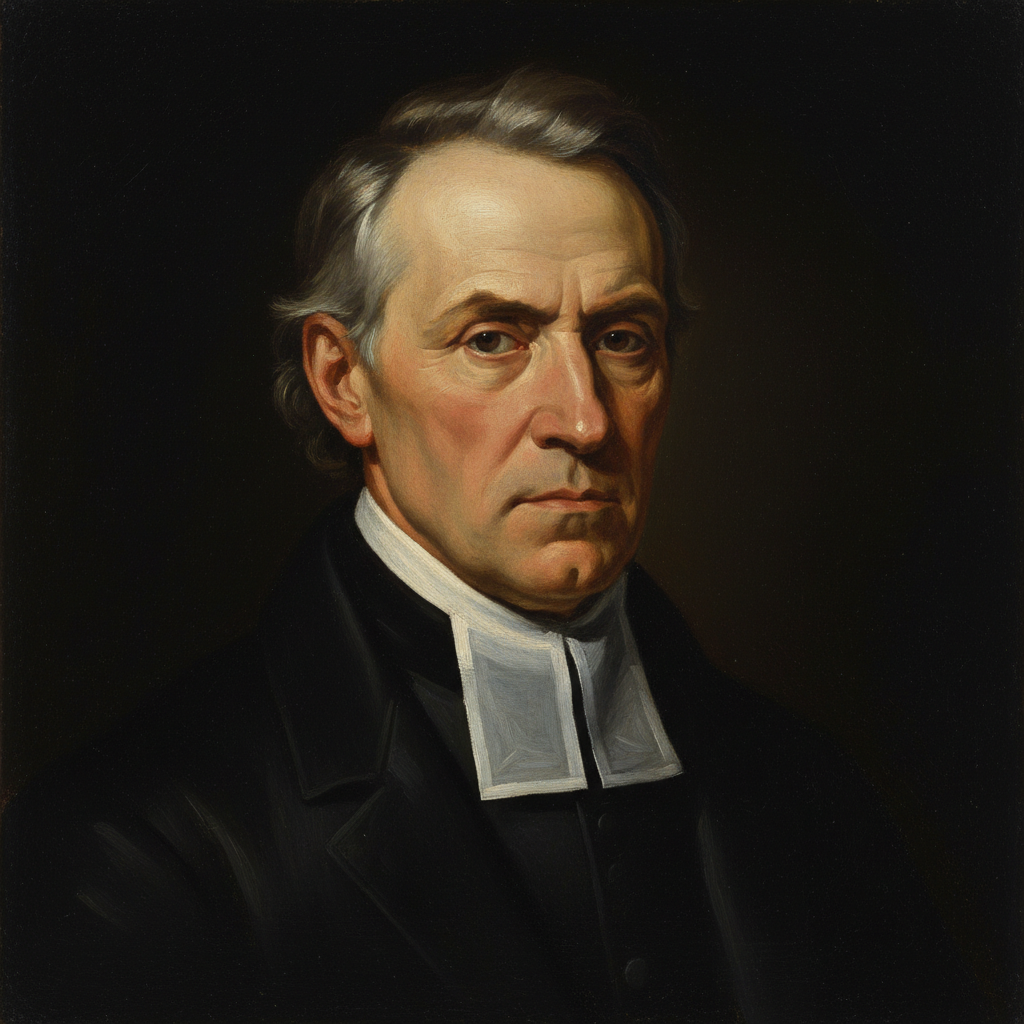
English Anglican cleric and founder of Methodism, whose open-air preaching and class-meeting structure created the largest 18th-century evangelical revival. Closely associated with Charles Wesley (his hymn-writing brother) and George Whitefield (early co-revivalist, later doctrinal opponent). For an intellectual contrast, see George Whitefield, Calvinist evangelical revivalist — Whitefield's predestinarian Calvinism vs Wesley's free-grace Arminian theology split the early Methodist movement permanently in the 1739-41 break. The founding evangelical Calvinist-Arminian schism — the two parallel evangelical traditions American Christianity descends from.
Found in 1 providers: grok
1 source checked
Wesley observes that it is profoundly sad that humans fail to recognize the true destructiveness of sin. The tragedy is self-reinforcing: spiritual blindness prevents its own diagnosis. People living in moral harm cannot perceive that harm because it clouds their judgment from within. He is not merely criticizing wrongdoing but lamenting a deeper incapacity — humans lack the inner sight to recognize what is already corrupting them.
Wesley spent decades as a field preacher, traveling 250,000 miles on horseback to warn ordinary Britons of sin's consequences. As Methodism's founder, his doctrine of sanctification held that Christians must actively grow toward holiness — but only if they first acknowledge sin's power. His pastoral journals record endless encounters with people indifferent to their moral state, making this quote a direct expression of his lifelong evangelical frustration.
Wesley preached from 1739 through the early Industrial Revolution, when thousands flooded English cities and traditional parish churches failed the working poor. The Enlightenment promoted human reason as self-sufficient while deism stripped Christianity of moral urgency. Gin addiction, child labor, and poverty were rampant yet socially normalized. Wesley saw this moral numbness — disasters accepted as ordinary life — as precisely the blindness his revival movement was designed to shatter.
AI-generated insights based on extensive research and information for context. Factual errors? Email [email protected].
Your cart is empty