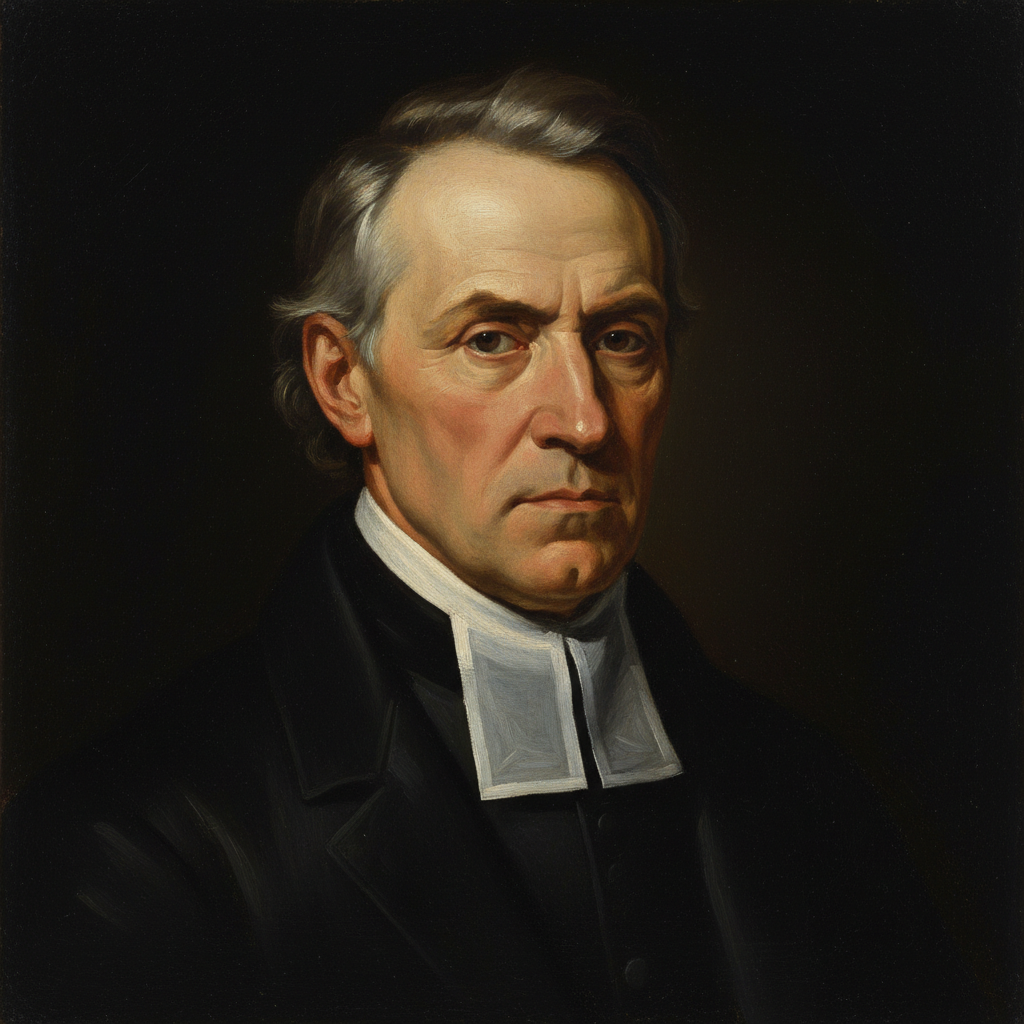
John Wesley — "I have often wished, that all the books in the world were burnt, except the Bibl…"
I have often wished, that all the books in the world were burnt, except the Bible.
I have often wished, that all the books in the world were burnt, except the Bible.
Click any product to generate a realistic preview. Up to 3 at a time.
* Initial load can take up to 90 seconds — revising the preview in another color is nearly instant.
"I have often thought, that if I were to choose a text to preach from, it should be 'God is love.'"
"God grant that I may never live to be useless!"
"I am a creature of a day, passing through life as an arrow through the air. I am a spirit come from God, and returning to God; just hovering a few moments over a great gulf, till, on a sudden, I drop …"
"I am a debtor to all the world, to do all the good I can, in every place, to every soul."
"I have often thought that the grand reason why the generality of Christians are so cold and lifeless, is because they do not believe the Bible."
English Anglican cleric and founder of Methodism, whose open-air preaching and class-meeting structure created the largest 18th-century evangelical revival. Closely associated with Charles Wesley (his hymn-writing brother) and George Whitefield (early co-revivalist, later doctrinal opponent). For an intellectual contrast, see George Whitefield, Calvinist evangelical revivalist — Whitefield's predestinarian Calvinism vs Wesley's free-grace Arminian theology split the early Methodist movement permanently in the 1739-41 break. The founding evangelical Calvinist-Arminian schism — the two parallel evangelical traditions American Christianity descends from.
Found in 1 providers: grok
1 source checked
The speaker wishes all books except the Bible could be destroyed, expressing that scripture alone contains sufficient truth and wisdom for human life. He views other books as distractions, corruptions, or inferior sources compared to divine revelation. It reflects radical prioritization of sacred text over human knowledge, scholarship, and accumulated literary tradition — a declaration that nothing written by human hands rivals God's word.
Wesley spent his life preaching, writing, and organizing Methodist societies, yet paradoxically was a prolific author himself. This reflects his Evangelical conviction that scripture is the supreme authority — his famous 'quadrilateral' placed Bible first. His Oxford training gave him vast learning, yet his heart religion drove him to subordinate all human wisdom to biblical truth, especially during his transformative Aldersgate experience in 1738.
The 18th century saw explosive growth in print culture, the Enlightenment's elevation of human reason, and encyclopedists cataloguing all knowledge independently of religion. Wesley's era witnessed Voltaire, Hume, and Rousseau challenging biblical authority. His statement pushes back against this intellectual tide, asserting scripture's supremacy precisely when educated society increasingly questioned it and secular philosophy competed directly with religious tradition for moral and intellectual authority.
AI-generated insights based on extensive research and information for context. Factual errors? Email [email protected].
Your cart is empty