What it means
Harvey marvels that trained experts — anatomists and physicians — cannot reach consensus on something as fundamental as how the heart beats and what the pulse represents. He is noting the intellectual chaos surrounding a basic bodily function. This opening frames his entire investigation: if specialists contradict each other on a core question, only careful direct observation can settle the matter. His wonder is genuine but also rhetorical, positioning himself as the one to finally resolve it.
Relevance to William Harvey
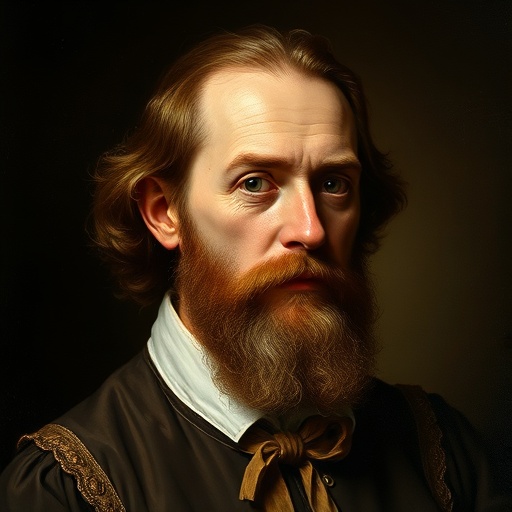
Harvey spent decades dissecting over 80 animal species and human cadavers before publishing De Motu Cordis in 1628. Trained at Padua under Fabricius, he inherited hands-on anatomical inquiry. His frustration at expert disagreement drove him to measure and calculate — estimating the heart pumps roughly 245 liters per hour, making recycled blood the only logical conclusion. Confusion in others was his invitation to investigate systematically rather than defer to inherited authority.
The era
In the early 1600s, Galen's 2nd-century theories — including blood being continuously produced in the liver and consumed by tissues — still dominated medicine. Vesalius had exposed anatomical errors in 1543, cracking ancient authority, but no unified replacement existed. Competing schools offered contradictory explanations for basic physiology. Harvey published amid the Scientific Revolution's core tension between classical textual authority and direct empirical observation, making his bewilderment at expert disagreement a pointed critique of Scholastic medicine.
AI-generated insights based on extensive research and information for context. Factual errors? Email [email protected].