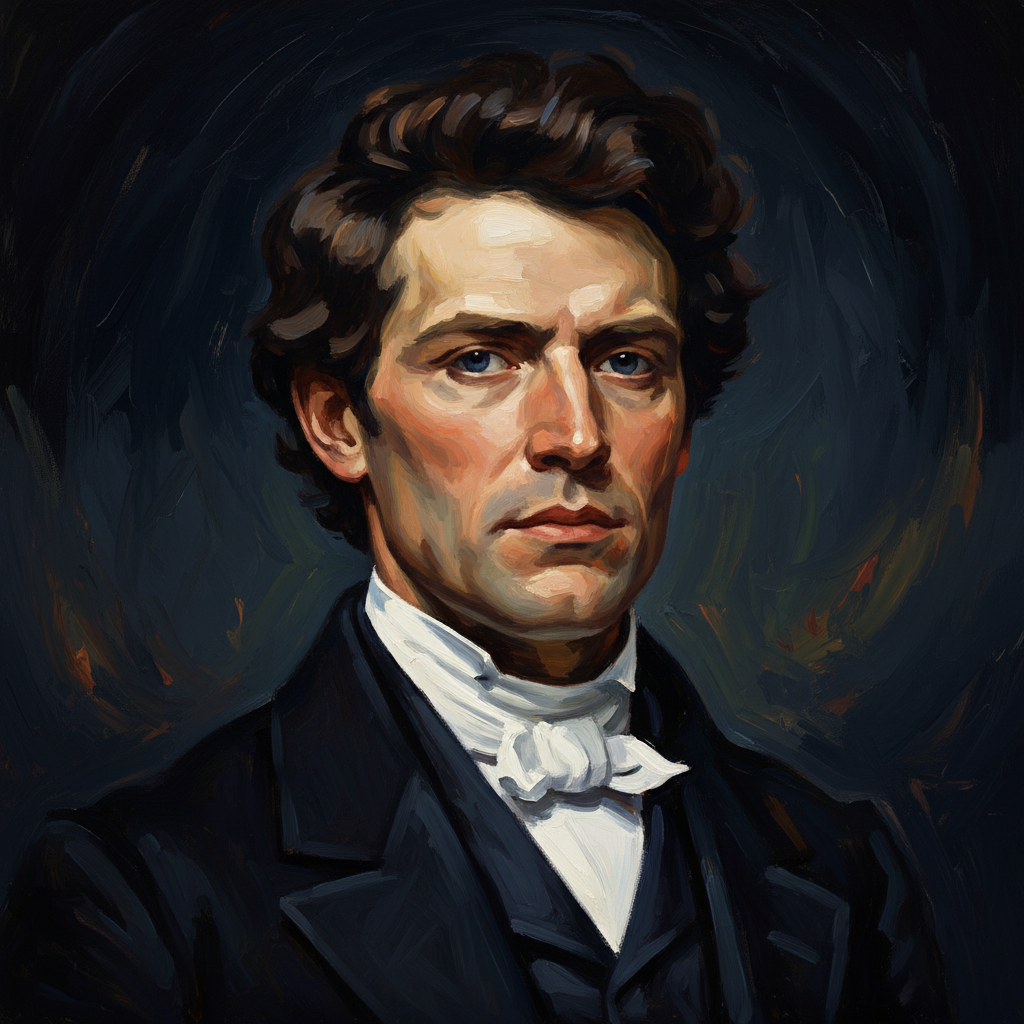
Joseph Smith — "I have the keys of the kingdom of God on the earth."
I have the keys of the kingdom of God on the earth.
I have the keys of the kingdom of God on the earth.
Click any product to generate a realistic preview. Up to 3 at a time.
* Initial load can take up to 90 seconds — revising the preview in another color is nearly instant.
"I am a rough stone, and the sound of the hammer and chisel are continually upon me."
"All spirits are pure that come from the presence of God."
"God himself was once as we are now, and is an exalted man, and sits enthroned in yonder heavens! That is the great secret. If the vail was rent today, and the great God who holds this world in its orb…"
"The reason why I cannot be a sectarian is because I am not a sectarian."
"I am a man of God, and I will stand for the truth, though the heavens fall."
Found in 1 providers: grok
1 source checked
This statement asserts exclusive divine authority and spiritual leadership over God's earthly church. It claims the possessor holds sacred power to perform binding religious ordinances, grant access to salvation, and govern the church on God's behalf. The 'keys' metaphor comes from biblical tradition where keys symbolize authority to open or close access to something—here, the pathway to heaven and the restored gospel.
Smith made this claim as the founding prophet of the Latter-day Saint movement, asserting he received these keys through direct restoration by angelic messengers Peter, James, and John. This belief was foundational to his authority: without divine keys, his ordinances, revelations, and church governance would carry no legitimacy. It defined his entire prophetic identity and why followers accepted his leadership as divinely mandated rather than self-appointed.
In early 19th-century America, the Second Great Awakening produced intense religious competition and fragmentation. Dozens of charismatic preachers claimed divine inspiration. Smith's 'keys' assertion cut through this cacophony by claiming not merely inspiration but exclusive institutional authority—a bold move distinguishing Mormonism from Protestant revivalism. It also fueled violent persecution, as neighbors saw exclusive divine claims as dangerous theocratic overreach in a pluralistic democratic society.
AI-generated insights based on extensive research and information for context. Factual errors? Email [email protected].
Your cart is empty