What it means
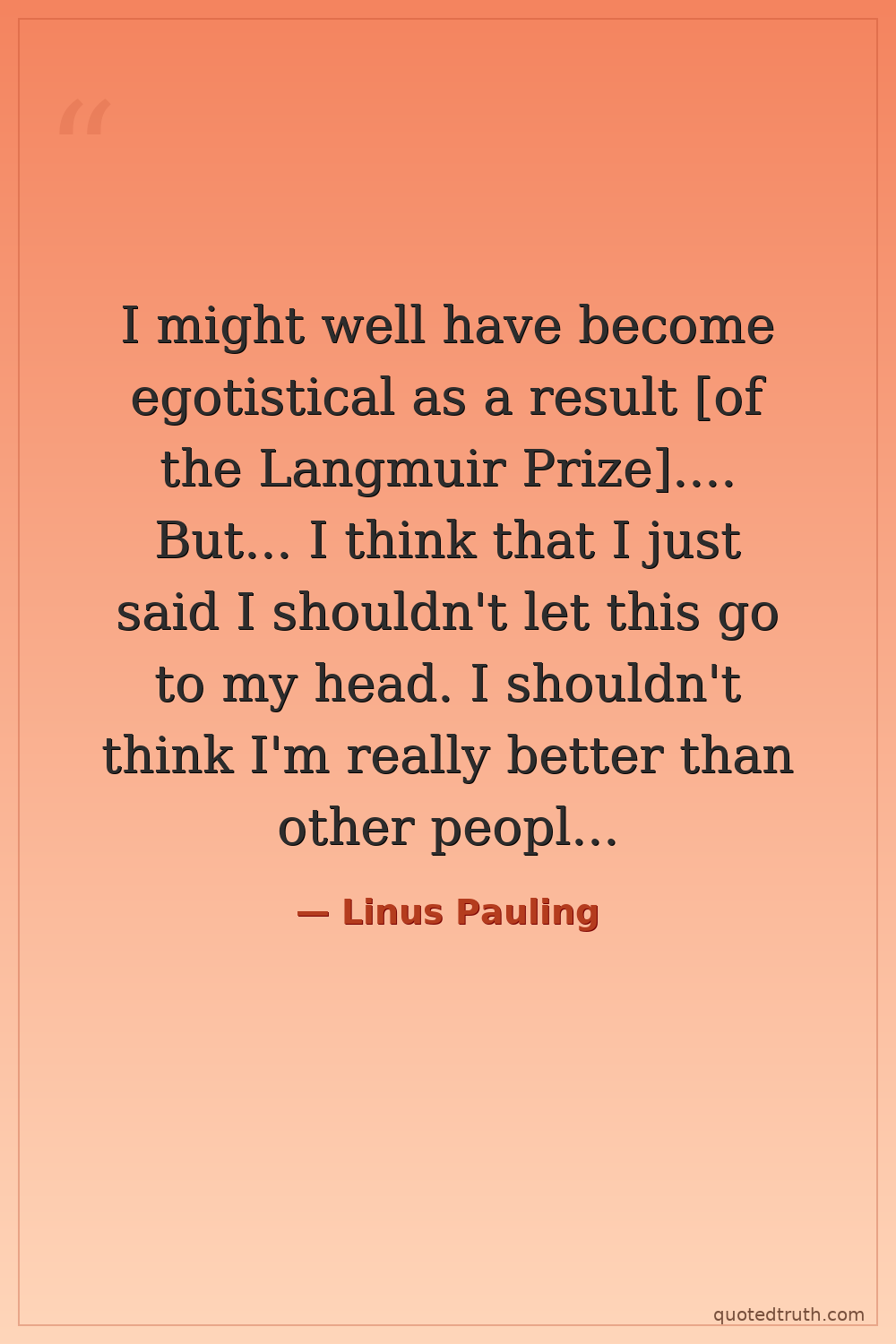
Recognition and skill don't make someone better than others as a human being. Excelling in one domain—even at the highest level—is separate from personal worth or moral superiority. The discipline here is resisting ego inflation after external validation. True self-awareness means holding achievement lightly: you can be the best at something specific while remaining equal to everyone else in the ways that actually matter.
Relevance to Linus Pauling
Pauling won two Nobel Prizes—Chemistry in 1954 and Peace in 1962—making this humility remarkable rather than performative. He routinely stepped outside chemistry into nuclear disarmament advocacy, accepting public ridicule and a State Department passport denial during McCarthyism. A man with genuine grounds for arrogance, he instead used his fame as a platform for others' survival. His consistent self-restraint against superiority thinking was structurally necessary for that work.
The era
Mid-20th century science occupied near-mythic cultural status after the Manhattan Project proved scientists could reshape history. The Cold War made American scientific genius national currency, and Nobel laureates became public intellectuals with outsized authority. In this climate, Pauling's deliberate refusal to leverage scientific prestige into personal superiority was countercultural—especially as he used his platform to challenge nuclear testing, drawing government surveillance and sustained professional ostracism.
AI-generated insights based on extensive research and information for context. Factual errors? Email [email protected].