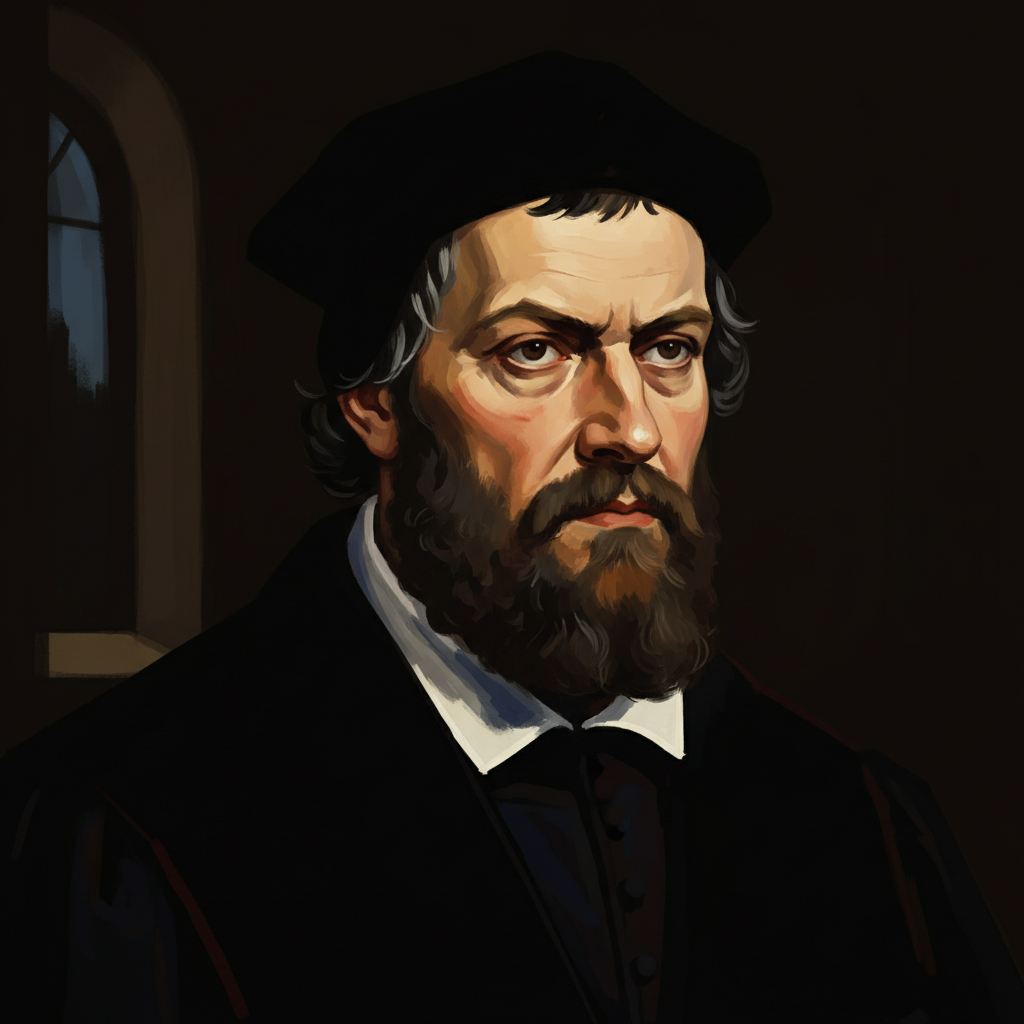
Martin Luther — "I never learned to pray as I ought until I had been scourged by the devil."
I never learned to pray as I ought until I had been scourged by the devil.
I never learned to pray as I ought until I had been scourged by the devil.
Click any product to generate a realistic preview. Up to 3 at a time.
* Initial load can take up to 90 seconds — revising the preview in another color is nearly instant.
"To kill a peasant is not murder; it is helping to extinguish the conflagration. Let there be no half measures! Crush them! Cut their throats! Transfix them!"
"A happy fart never comes from a miserable ass."
"A woman is a human being with a womb."
"If I am to be a Christian, I must be a Jew."
"The greatest blessing of God is a virtuous and pious wife, who fears God and loves her husband."
German theologian whose 95 Theses (1517) launched the Protestant Reformation and broke the Catholic Church's monopoly on Western Christianity. Closely associated with Philipp Melanchthon (Lutheran systematizer) and John Calvin (later Reformer who built on Luther's break). For an intellectual contrast, see Pope Leo X, Renaissance pope (1513-1521) — Leo X's indulgence sales triggered Luther's break and Leo excommunicated him in 1521 — Luther's entire Reformation is structured as a direct answer to the indulgence-funded Vatican Leo represented.
Found in 1 providers: grok
1 source checked
Real prayer doesn't come from comfort or routine practice. It's forged by suffering, doubt, and spiritual torment. Only when a person is battered by fear, guilt, or despair do they stop reciting words and start genuinely crying out for help. The hardest trials teach us how to pray with honesty and desperation, because easy circumstances produce shallow, mechanical prayers. Pain is the instructor that forces authentic dependence on God.
Luther wrestled constantly with what he called Anfechtungen: crushing bouts of spiritual terror, doubt, and despair he attributed to demonic assault. As an Augustinian monk obsessed with his own damnation, he beat himself, fasted, and confessed for hours. These torments drove his breakthrough on justification by faith. His theology of prayer was deeply experiential, not academic, born directly from a lifetime of battling inner darkness and accusing conscience.
In early modern Europe, the devil was a tangible daily presence, not metaphor. Witch trials, plague, and religious war shaped worldview. The pre-Reformation church sold indulgences and prescribed rote Latin prayers most laypeople didn't understand. Luther's 1517 Ninety-Five Theses and subsequent writings challenged this mechanical piety, insisting faith was a personal struggle. His era demanded prayer be reclaimed from ritual formula into direct, anguished encounter with God.
AI-generated insights based on extensive research and information for context. Factual errors? Email [email protected].
Your cart is empty